
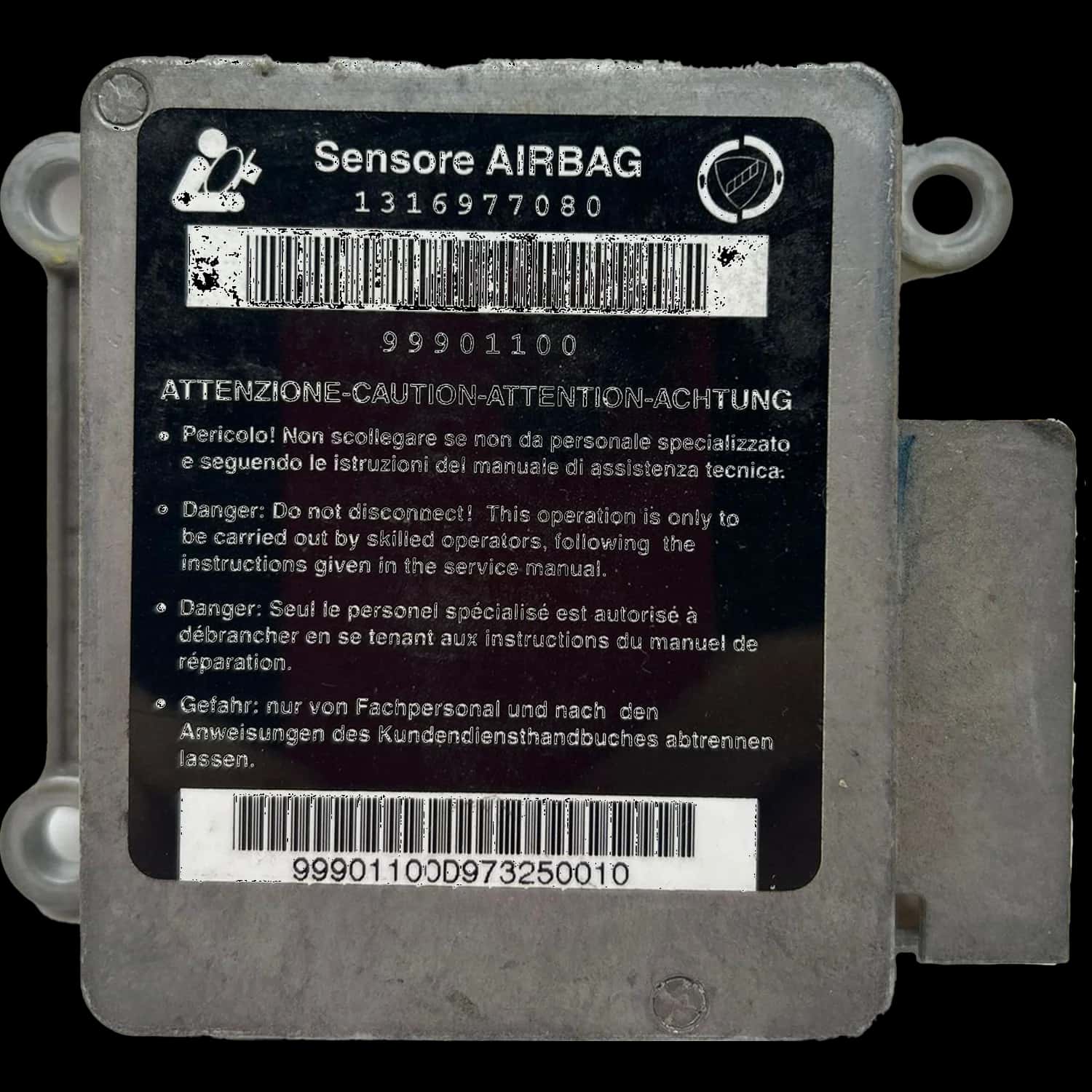

Citroën Jumper airbag control unit repair(3)
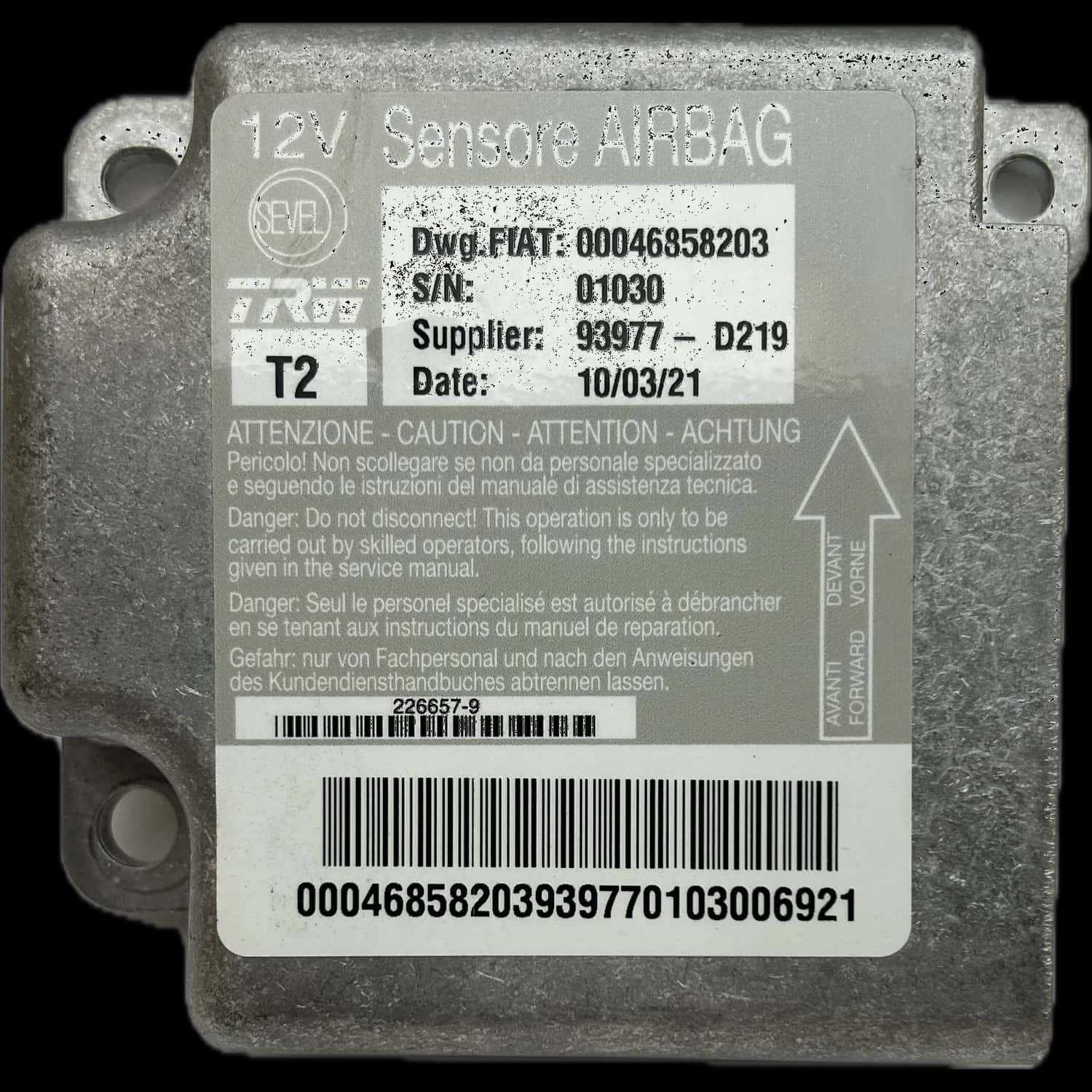
What should I pay attention to with Citroën Jumper airbag control units?
The airbag technology used in the Citroën Jumper varies depending on the model year and equipment. A professional repair of Citroën Jumper airbag control units restores the safety system's original functionality.
The Citroën Jumper is a versatile van that has been in production since 1994 and has undergone continuous development since then. From its beginnings as a robust commercial vehicle to today's modern variants, this evolution is also reflected in its safety systems.
The airbag system, in particular, has been modernized and expanded over the generations. While early models offered basic airbag functions, newer Relay models integrate advanced safety features and a more complex airbag control unit.
Which Citroën Jumper generations are there?
The Citroën Relay has been produced in two main generations, each using different airbag control units. The evolution of the safety system reflects technological advances from 1994 to the present.
The model history of the Citroën Jumper can be divided into two main generations. Within these periods, there were numerous facelifts and further developments, some of which are listed as separate series (such as Jumper III or Jumper IV in some catalogs).
Citroën Jumper I (1994 – 2006)
The first Citroën Jumper, produced from 1994 to 2006, laid the foundation as a spartan commercial vehicle. This model, often with rather basic equipment, shared its underpinnings with the Fiat Ducato.
The airbag technology of this early phase was simple and aimed at essential occupant protection. A defective airbag control unit in these generations requires precise repair to restore the safety standards of the model year.
Citroën Jumper II (2006 – present)
The second main generation of the Citroën Jumper began in 2006 and continues to be continuously developed to this day. This era brought with it a more modern design, a significant increase in car-like comfort, and enhanced safety features.
With the Jumper II, the airbag systems became significantly more complex and became a focus of attention as standard equipment. The usable volume increased from 14 m³ to up to 17 m³, and variants with a gross vehicle weight of over 3.5 tons, as well as environmentally friendly powertrains like the ë-Jumper, were introduced. The airbag control unit in these models therefore has to process a multitude of sensor data and is central to the entire safety chain.
Although some later developments are referred to as Jumper III or Jumper IV in practice, they are essentially based on the second-generation architecture. The airbag control units of these newer models are technically sophisticated and designed for the integration of additional assistance systems.
How do I identify my Citroën Jumper airbag control unit?
Citroën Relay airbag control units can be uniquely identified by part number, year of manufacture, and vehicle identification number. Each generation uses specific control unit variants for optimal compatibility.
Accurately identifying the airbag control unit is crucial for a successful repair and ensuring driving safety. The unit's part number is the most important clue; it is usually located directly on the control unit's housing.
Additionally, the vehicle's year of manufacture and the vehicle identification number (VIN) are helpful, as Citroën has used various suppliers and revisions of control units throughout production. In older Relay models, the location of the control unit may vary, often under the center console or driver's seat.
What airbag equipment does the Citroën Jumper have?
The airbag configuration of the Citroën Relay varies depending on the model year and trim level. While early models use basic airbag systems, newer generations feature enhanced safety packages with additional airbag modules.
In the first Jumper models (1994-2006), airbags were generally limited to driver and possibly passenger airbags. These were often optional or only available as standard in higher trim levels, which was standard for commercial vehicles at the time.
With the introduction of the second generation in 2006, airbag systems were increasingly integrated as standard. Driver and passenger airbags are standard on most modern Relay models to significantly improve occupant protection. These control units are designed for reliable repair should a defect occur.
Newer versions of the Citroën Relay may also feature additional safety packages that include side airbags or other advanced assistance systems. This reflects the general trend toward more comprehensive safety solutions, even in the light commercial vehicle segment, which is heavily used by tradespeople, delivery services, or the construction industry.
The continued development of the Citroën Jumper, geared to the target group and its diverse requirements for reliability and safety, has led to continuously improved equipment. This also applies to models with low-emission or electric drive systems, such as the ë-Jumper, which also feature state-of-the-art airbag systems and their associated airbag control units.
Common fault codes in this category
Shipping & repair from Germany
Airbag24 repairs your component in Berlin — usually within 3–4 working days.
Standard shipping within Germany is free; we normally return your part by UPS.
You pay for and insure the inbound shipment to us. On explicit request we ship by express — the extra cost is borne by the customer.
If you withdraw from the contract, you bear the cost of returning the item.