

Citroën Relay Airbag Control Unit Repair(3)
What should I pay attention to with Citroën Relay airbag control units?
The airbag technology used in the Citroën Relay varies depending on the model year and generation. Airbag control units for the Citroën Relay can be defective, requiring professional repair to restore original functionality.
The Citroën Relay's production history spans the 1990s to the present day, evolving from a simple commercial vehicle to a modern MPV. Each generation brought significant advances in vehicle safety, directly impacting the complexity and features of the airbag systems.
The development of the airbag system in the Citroën Relay began with basic driver airbags in the early models and has evolved over the years to comprehensive systems with multiple airbags and highly sensitive sensors. A professional repair takes these differences into account and ensures that the safety systems function properly again.
Which Citroën Relay generations are there?
The Citroën Relay has been produced in three main generations, each using different airbag control units. The evolution of the safety system reflects technological advances from the early 1990s to the present day.
The first generation, the Citroën Relay I, was produced from approximately 1994 to 2006. These models featured simpler airbag equipment, typically with a driver airbag as standard and a passenger airbag as an option.
The Citroën Relay II, produced from 2006 to 2014, already offered enhanced safety features. Driver and passenger airbags were usually standard, and the systems became more complex to meet the increased safety requirements.
The Citroën Relay III (4th generation) has been in production since 2014 and features state-of-the-art safety features. These include standard driver and passenger airbags, as well as advanced airbag systems and sensors that ensure maximum occupant safety. Electric versions have also been available since 2024.
All generations of the Citroën Relay are part of a joint project with Fiat (Ducato) and Peugeot (Boxer) and are manufactured in the Italian Sevel plant, which allows a certain degree of interchangeability of components within the respective model years.
How do I identify my Citroën Relay airbag control unit?
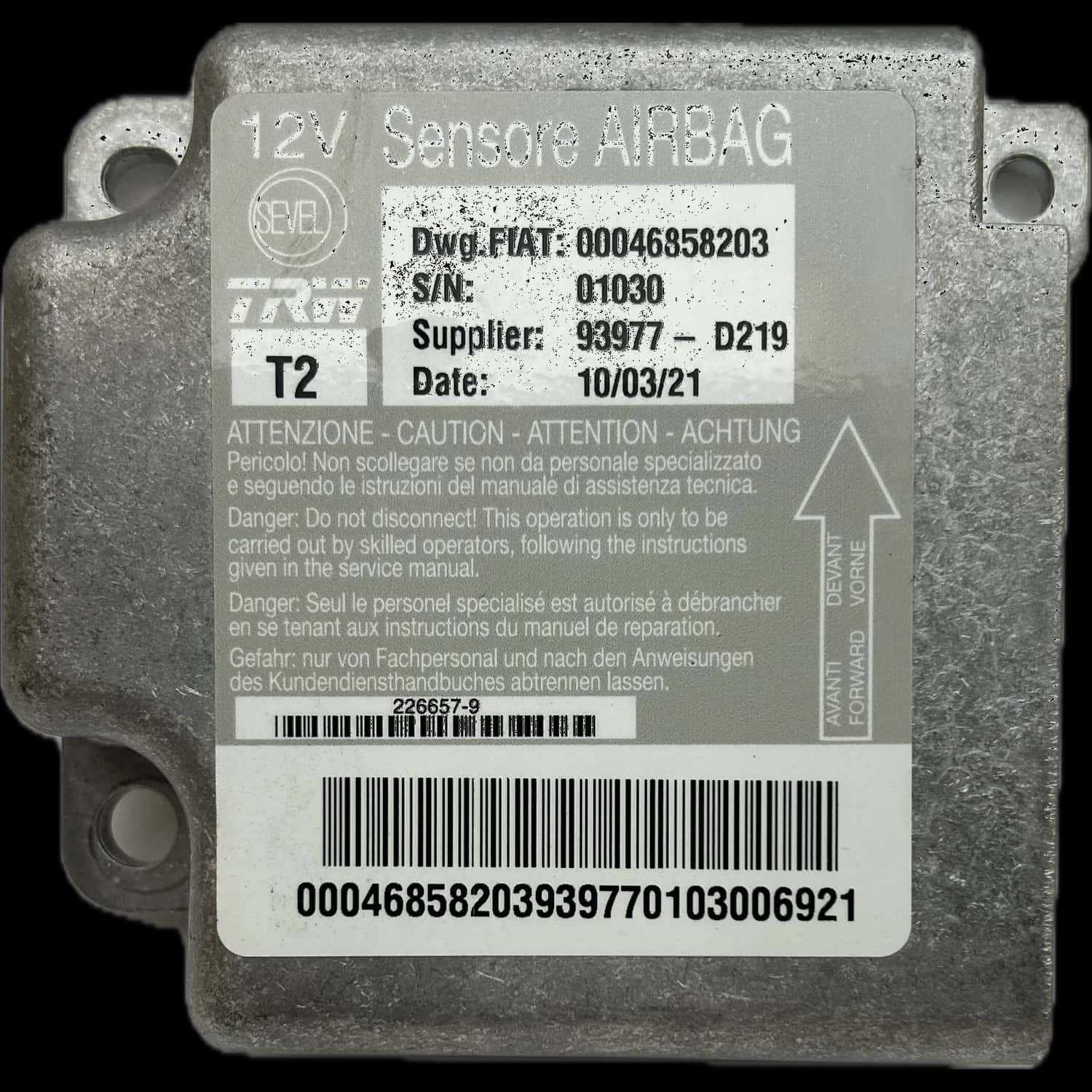
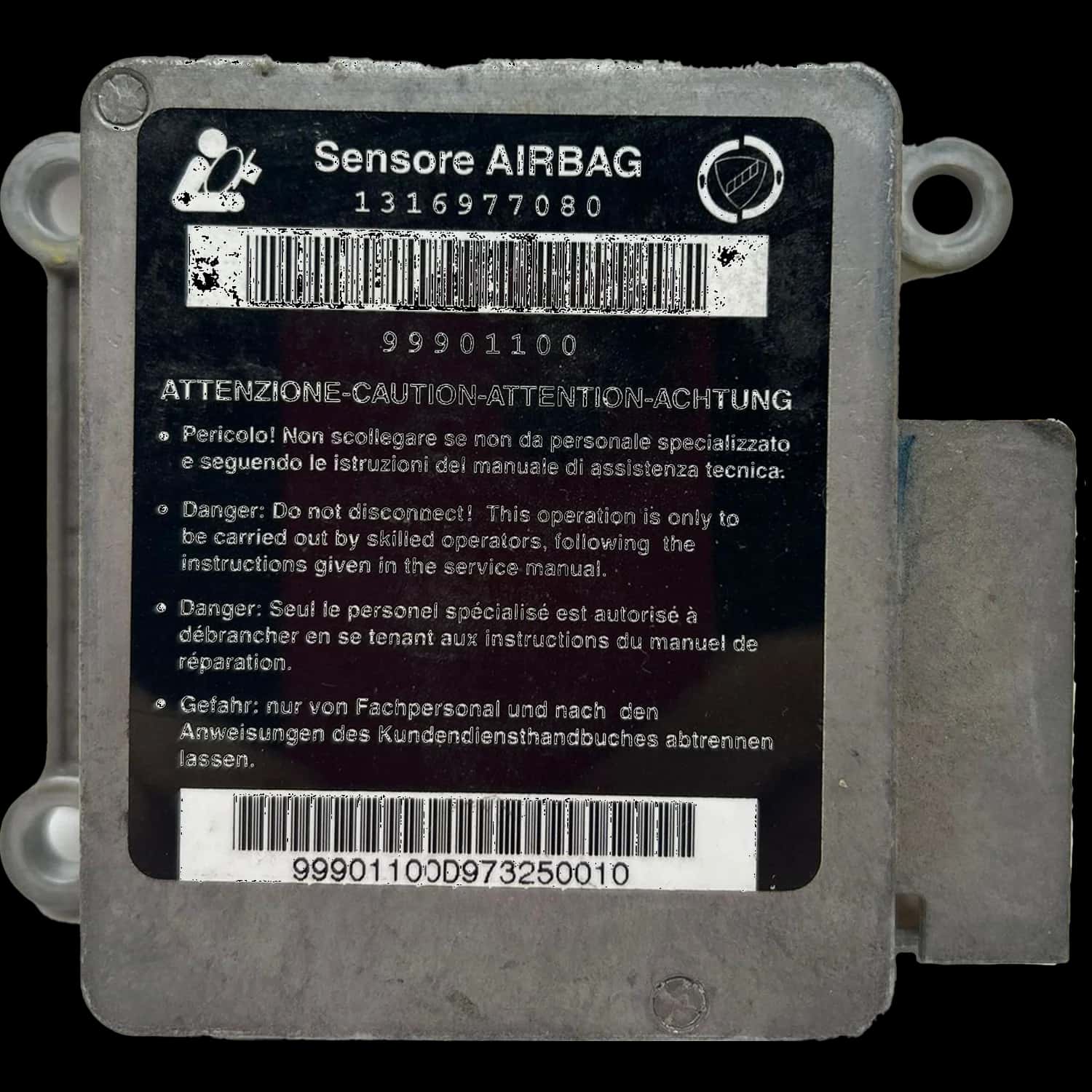
Citroën Relay airbag control units can be uniquely identified by their specific part number, vehicle year, and vehicle identification number (VIN). Each generation uses specific control unit variants for optimal compatibility and system integration.
The part number is the most important indicator for accurately identifying your airbag control unit. This number is printed directly on the control unit's housing and should be carefully recorded to ensure the repair or replacement is performed with the exact component.
The model year of your Citroën Relay is also crucial, as airbag systems and their control units have evolved over the years and can differ significantly from one generation to the next. Newer models, especially those from 2022 onwards, may have more complex airbag codes and sensor configurations.
Additionally, the Vehicle Identification Number (VIN) can be used to determine the exact configuration and equipment of your vehicle, including any airbag systems installed. This helps ensure the correct compatibility of the control unit with all networked safety components such as seat belt pretensioners or seat occupancy sensors.
What airbag equipment does the Citroën Relay have?
The airbag configuration of the Citroën Relay varies considerably depending on the model year and trim level. While early models used basic airbag systems, newer generations feature enhanced safety packages with additional airbag modules and more complex sensors.
In the first models of the Citroën Relay I, a driver's airbag was usually standard, while a passenger airbag was often only available as an option. The safety equipment of this era was generally simpler and focused on the most basic protective functions.
With the introduction of the Citroën Relay II in 2006, safety features were significantly improved. Driver and passenger airbags were now standard in most configurations. Side airbags were occasionally available as an option, further increasing passive safety.
The modern Citroën Relay III, on the market since 2014, offers a very comprehensive range of safety features. Driver and passenger airbags are standard. This generation also integrates advanced airbag systems and sophisticated sensor technology, including seat occupancy detection and seatbelt pretensioners for optimal protection.
It's important to note that the airbag control unit is closely linked to other components such as seat belts, belt pretensioners, and seat occupancy sensors. Malfunctions or modifications, such as changing seats, can trigger error codes in the airbag control unit, which can only be reset and reinitialized with professional diagnostic equipment to restore full functionality of the safety system.
Shipping & repair from Germany
Airbag24 repairs your component in Berlin — usually within 3–4 working days.
Standard shipping within Germany is free; we normally return your part by UPS.
You pay for and insure the inbound shipment to us. On explicit request we ship by express — the extra cost is borne by the customer.
If you withdraw from the contract, you bear the cost of returning the item.