
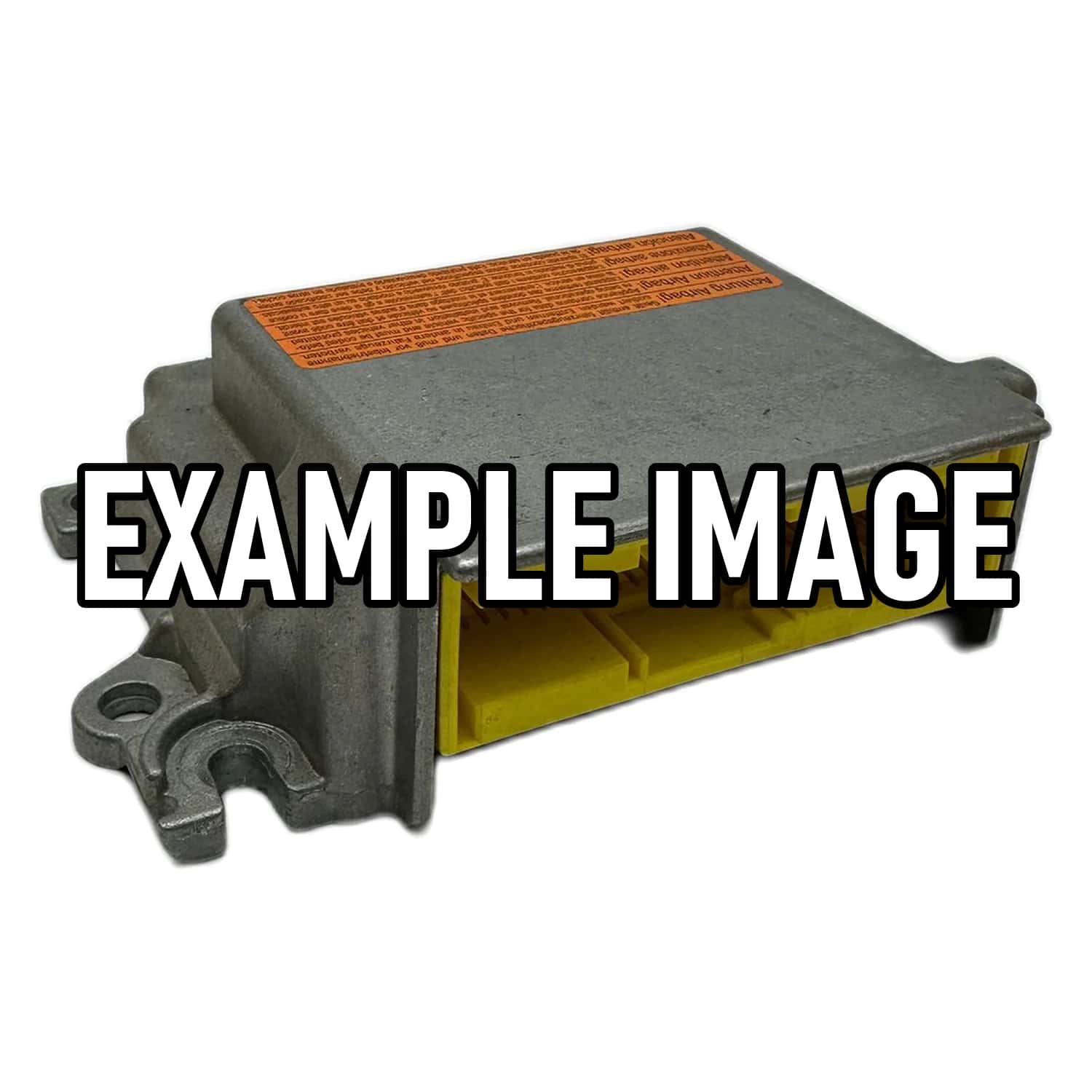
Honda Crossroad Airbag Control Unit Repair(1)
1 product
What should I consider with Honda Crossroad airbag control units?
The airbag technology used in the Honda Crossroad varies considerably depending on the model year and generation. Airbag24 professionally repairs control units for all Honda Crossroad generations with original functionality and a 2-year warranty to ensure the complete restoration of the safety systems.
The Honda Crossroad was produced in two different eras, resulting in significant differences in the airbag technology used. While the first generation (1993-1998) was based on the Land Rover Discovery, the second generation (2007-2010) was an independent Honda development.
This evolution is reflected in the airbag control units, which have evolved from simple systems with basic functions in early models to more complex, networked units in later vehicles. A defective airbag control unit requires professional repair to ensure the full functionality of the safety system.
Which Honda Crossroad generations are there?
The Honda Crossroad was produced in two distinct generations, each using different airbag control units. The development of the safety system reflects technological advances from 1993 to 2010.
The first generation of the Honda Crossroad (model code LJ/LJJ) was produced from 1993 to 1998 and was based on the Land Rover Discovery. This mid-size SUV was primarily intended for the Japanese market and featured standard safety features of the time, which were rather minimal compared to today's standards.
The second generation (often simply referred to as the Crossroad 2) was produced from 2007 to 2010. It was a compact SUV with up to seven seats, developed entirely in-house by Honda. This model was aimed at active families and incorporated a significantly more advanced airbag system that met Honda's standards at the time.
The differences between the generations are not just visual, but also profoundly affect the vehicle architecture and all electronics, including the airbag control units. Therefore, it is crucial to consider the exact year and generation of the Honda Crossroad when performing repairs.
How do I identify my Honda Crossroad airbag control unit?
Honda Crossroad airbag control units can be precisely identified by their unique part number, model year, and vehicle identification number (VIN). Each generation of the Crossroad uses specific control unit variants designed for optimal compatibility and functionality.
The part number is located directly on the housing of the airbag control unit and is the most important indicator of the exact model and compatibility. Additionally, the vehicle's year of manufacture provides information about the generation and, therefore, the technology installed in the vehicle.
The Vehicle Identification Number (VIN) can help with accurate identification, as it contains detailed information about the specific vehicle and its equipment codes. In the case of a defective control unit, correct identification is essential to ensure that the replacement or repair unit is a perfect fit for the vehicle and that full functionality of the security system is restored.
What airbag equipment does the Honda Crossroad have?
The Honda Crossroad's airbag equipment varies significantly between the two production periods, reflecting technological advances. While the first generation (1993-1998) featured basic airbag systems, the second generation (2007-2010) offered a comprehensive and modern safety package.
For the first-generation Honda Crossroad (1993-1998), based on the Land Rover Discovery, airbags were typically available as frontal airbags for the driver and front passenger, in line with the safety standards of the early 1990s. Specific details on optional equipment are scarce, but it was unlikely that full-length side or curtain airbags were standard at that time.
The second-generation Honda Crossroad (2007-2010), however, was equipped with a comprehensive Honda SRS airbag system that met SUV standards at the time. This included front airbags for the driver and front passenger, front and rear side airbags, and full-length curtain airbags that could also be deployed in a rollover.
Additionally, the system featured an electronic control unit that precisely deployed the airbags in the event of an accident. Sensors that detected the seating position and presence of the front passenger optimized airbag deployment. Seatbelt pretensioners and airbag warning systems were also part of this advanced safety package, designed to provide comprehensive occupant protection.
Common fault codes in this category
Shipping & repair from Germany
Airbag24 repairs your component in Berlin — usually within 3–4 working days.
Standard shipping within Germany is free; we normally return your part by UPS.
You pay for and insure the inbound shipment to us. On explicit request we ship by express — the extra cost is borne by the customer.
If you withdraw from the contract, you bear the cost of returning the item.