
Honda Grace airbag control unit repair(1)
1 product
What should I consider with Honda Grace airbag control units?
The airbag technology used in the Honda Grace varies depending on the model year, particularly due to model updates. Professional repair of the Honda Grace's control units ensures the restoration of original functionality and compliance with the highest safety standards.
The Honda Grace, a hybrid sedan model, was produced specifically for the Japanese market from December 2014 to June 2020. It is technically based on the Honda City series and was characterized by its efficiency and compactness, making it a popular choice for urban and environmentally conscious drivers.
The Honda Grace's airbag system underwent significant developments during its production cycle. In particular, the introduction of the Honda Sensing safety package with the facelift in May 2017 led to a more comprehensive and technologically advanced airbag system, which is directly reflected in the installed control units. This development must be taken into account when repairing defective airbag control units.
Which Honda Grace generations are there?
Although the Honda Grace was conceived as a single generation, it underwent a comprehensive facelift in May 2017, resulting in different specifications for the airbag control units. This evolution of the safety system reflects technological advances throughout the entire production period from 2014 to 2020.
The first version of the Honda Grace was built from December 2014 to June 2017. During this period, the vehicle established itself as an economical and comfortable compact sedan. The airbag systems were tailored to the requirements of the time and provided basic protection for the occupants.
With the facelift, introduced in May 2017, the Honda Grace was not only modernized visually and in its interior. A key focus was on improving active and passive safety through the integration of the Honda Sensing package. This means that airbag control units from pre- and post-facelift models may exhibit significant differences in functionality and compatibility.
This strategic development aimed to keep the Grace competitive in terms of safety and meet the increasing demands placed on driver assistance systems. Consequently, the repair and replacement of airbag control units in the Honda Grace are closely linked to the exact model year to ensure correct functionality.
How do I identify my Honda Grace airbag control unit?
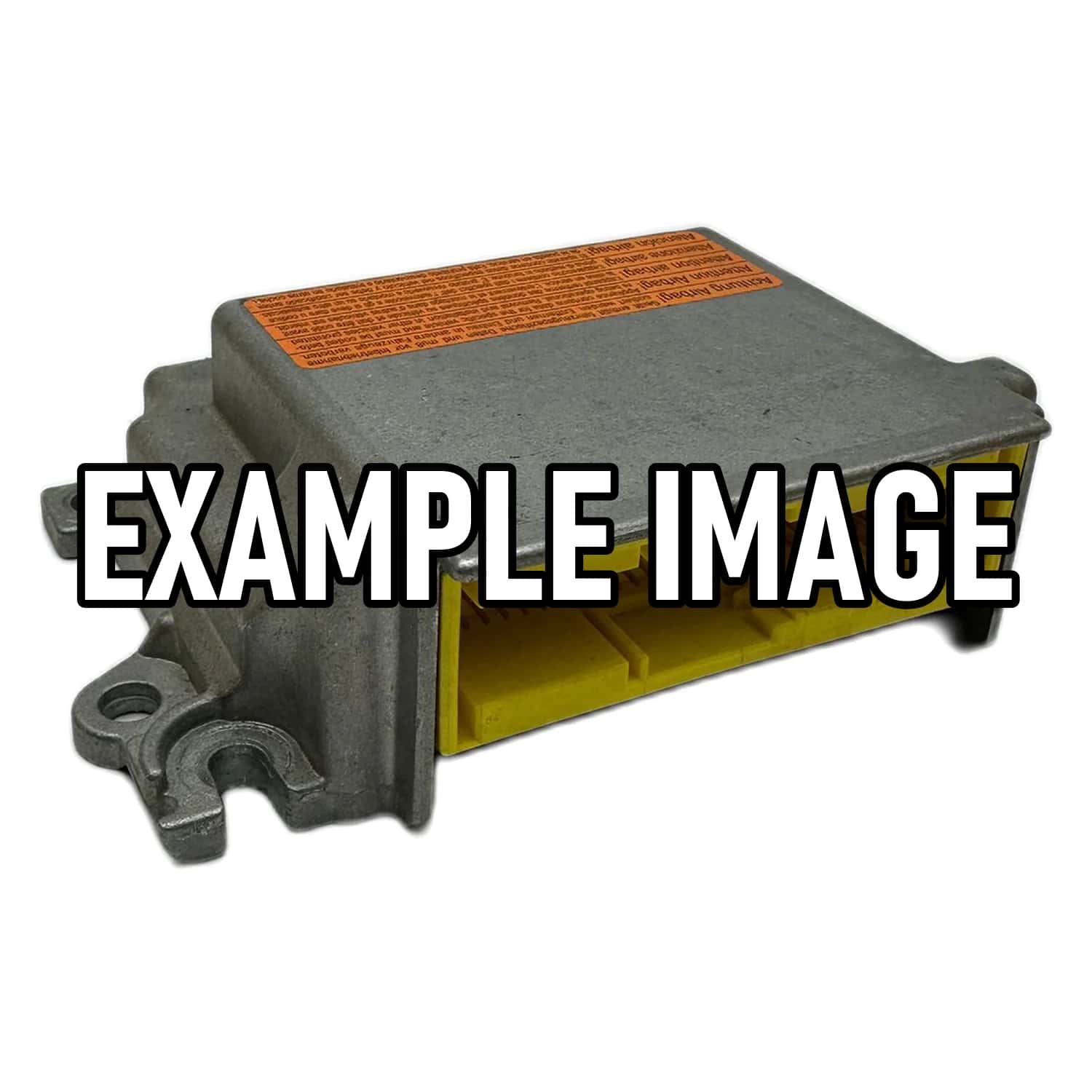
Honda Grace airbag control units can be reliably identified using the part number on the unit, the vehicle model year, and the vehicle identification number (VIN). This is crucial to ensure compatibility when repairing or replacing the defective module.
To determine the correct airbag control unit for your Honda Grace, check the part number printed on the housing or an attached sticker. This alphanumeric combination is the primary key to correct identification and ensures that the replacement or repair module is a perfect fit for your vehicle.
In addition, the exact year of manufacture and the vehicle identification number (VIN) are important criteria. Given the significant updates to the safety system as part of the 2017 facelift, even small deviations in the year of manufacture can lead to different control unit versions. Only with this information can a defective airbag control unit be repaired and its full functionality restored.
What airbag equipment does Honda Grace have?
The Honda Grace's airbag equipment was gradually expanded over the course of its production run and varies greatly depending on the model year and specific trim level. While early models offered a basic airbag base, later versions integrated comprehensive safety packages with an expanded number of airbag modules.
Honda Grace models produced before the May 2017 facelift (December 2014 – June 2017) featured a solid baseline of airbags. These typically included front airbags for the driver and front passenger, designed to provide primary protection in the event of a collision. Side airbags were often also installed to protect the occupants' upper bodies in the event of a side impact.
A decisive step in the safety development of the Honda Grace came with the introduction of the Honda Sensing package in May 2017. This advanced safety system was part of the model update and made the Grace one of the safest vehicles in its class. Honda Sensing included a variety of driver assistance systems such as adaptive cruise control, automatic emergency braking (CMBS), lane departure warning (LKAS), and traffic sign recognition.
Although the exact number and location of all airbags is not disclosed in detail, a significant improvement and expansion of passive safety can be expected as part of the Honda Sensing package. This typically includes additional curtain airbags that extend across the entire window front and possibly knee airbags to provide even more comprehensive occupant protection.
This extensive range of features underscores the Honda Grace's positioning as a technologically advanced vehicle tailored to the needs of a target audience that values efficiency, comfort, and, above all, a high level of safety. Therefore, the correct repair or replacement of a faulty airbag control unit is of utmost importance to maintain the full functionality of these complex safety systems.
Common fault codes in this category
Shipping & repair from Germany
Airbag24 repairs your component in Berlin — usually within 3–4 working days.
Standard shipping within Germany is free; we normally return your part by UPS.
You pay for and insure the inbound shipment to us. On explicit request we ship by express — the extra cost is borne by the customer.
If you withdraw from the contract, you bear the cost of returning the item.