
Honda Insight Airbag Control Unit Repair(3)
3 products
What should I consider with Honda Insight airbag control units?
The airbag technology used in the Honda Insight varies depending on the model year. Airbag24 professionally repairs control units of all Honda Insight generations with original functionality and a 2-year warranty.
The Honda Insight, a pioneer of hybrid vehicles, was produced over three different generations: from 1999 to 2006 (first generation), 2009 to 2014 (second generation) and finally 2018 to 2022 (third generation).
This long production history means continuous development of safety systems. While the first generation featured basic airbag systems, later models featured significantly more comprehensive airbag equipment, which directly impacts the complexity and required repair of Honda Insight airbag control units.
The development of the airbag systems in the Honda Insight reflects the general progress in vehicle safety. From simple front airbags in the early models to comprehensive multi-channel systems with side and curtain airbags in newer generations, a significant improvement is evident.
These advances require specialized expertise to repair defective airbag control units. Each generation of the Honda Insight uses specifically adapted control units that are precisely tailored to the installed sensors and airbags.
Which Honda Insight generations are there?
The Honda Insight has been produced in three generations, each using different airbag control units. The development of the safety system reflects technological advances from 1999 to 2022.
The first generation (1999–2006, internal code ZE1) was a two-seat, two-door liftback and, as a lightweight hybrid, aimed for maximum efficiency. The airbag configuration was still minimalist, focusing on driver and passenger airbags, and laid the foundation for Honda's hybrid technology.
The second generation (2009–2014, internal code ZE2) was a five-door, five-seat liftback designed as an affordable family hybrid. This model marked a significant leap in safety features, which could require a more complex airbag control unit repair.
The third generation (2018–2022, internal code ZE4) was introduced as a four-door sedan based on the Honda Civic. It featured the latest safety technologies and an even more complex airbag system, precisely coordinated with the extensive range of sensors and triggers.
Each of these generations required specific airbag control units tailored to the respective vehicle architecture, the number of airbags, and the installed safety systems. A defective module should always be repaired or replaced with a generation-specific and compatible part.
How do I identify my Honda Insight airbag control unit?
Honda Insight airbag control units can be uniquely identified by part number, model year, and vehicle identification number. Each generation uses specific control unit variants for optimal compatibility.
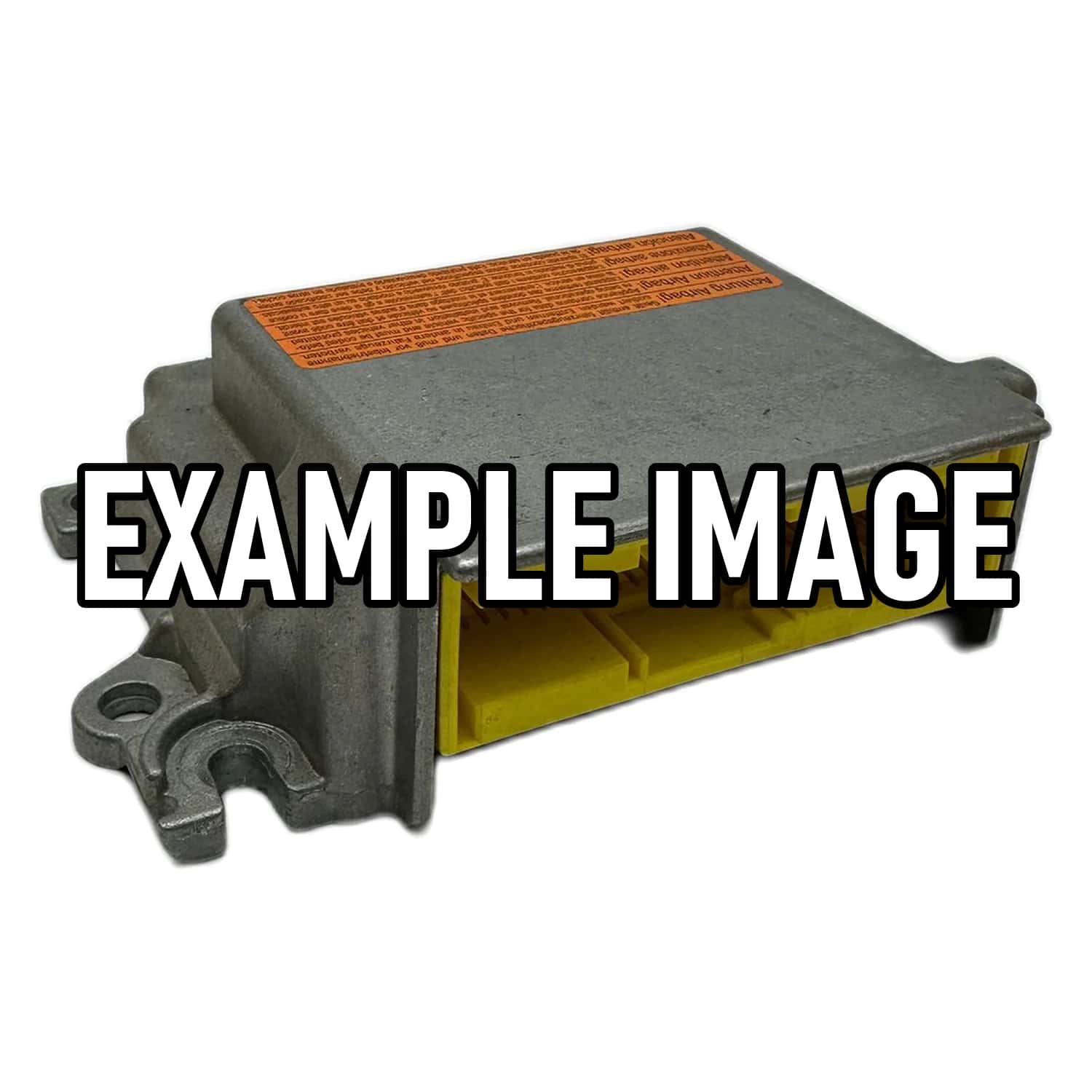
Correctly identifying the airbag control unit is crucial for a successful repair or replacement. The control unit's part number is usually located directly on the module itself, which is often installed under the center console, a front seat, or in the passenger footwell.
This number, combined with the exact year of your Honda Insight and ideally the vehicle identification number (VIN), allows for precise identification. This is the only way to ensure that the airbag control unit is repaired or replaced with a compatible model that correctly controls all functions of your Insight's safety system.
Internal codes such as ZE1, ZE2, or ZE4 can also help with a rough identification, as they identify specific model series. However, for a precise Honda Insight airbag control unit repair, the exact part number is always crucial.
What airbag equipment does the Honda Insight have?
The Honda Insight's airbag configuration varies depending on the model year and trim level. While early models use basic airbag systems, newer generations feature enhanced safety packages with additional airbag modules.
The first generation of the Honda Insight (1999–2006) was equipped with the standard driver and passenger airbags of the time. The primary goal of these models was efficiency, while safety met the standards of the time.
With the introduction of the second generation (2009–2014), safety features were significantly expanded. This model featured at least six airbags as standard, including driver, passenger, and side airbags, significantly improving occupant protection.
In addition to airbags, modern electronic safety systems such as ESP (Electronic Stability Program) were also available as standard from the second generation onwards. This illustrates the increased complexity of the systems networked with the airbag control unit.
The third generation (2018–2022) continued this trend, integrating even more comprehensive safety packages, often including curtain airbags and other assistance systems. This requires a high-performance and reliable Honda Insight airbag control unit capable of precisely controlling all components, making professional repair essential in the event of a defect.
Shipping & repair from Germany
Airbag24 repairs your component in Berlin — usually within 3–4 working days.
Standard shipping within Germany is free; we normally return your part by UPS.
You pay for and insure the inbound shipment to us. On explicit request we ship by express — the extra cost is borne by the customer.
If you withdraw from the contract, you bear the cost of returning the item.