
Jaguar X-Type airbag control unit repair(1)
1 product
What should I consider with Jaguar X-Type airbag control units?
The airbag technology used in the Jaguar X-Type has been continuously improved throughout its production run. Professional repair ensures the true functionality of these safety-relevant components, which are crucial for the safety of vehicle occupants.
The Jaguar X-Type, produced from 2001 to 2009, was Jaguar's ambitious entry into the compact premium sedan segment. As such, it featured state-of-the-art safety features for its time, the core of which was the airbag control unit.
This central component of vehicle safety continuously monitors all relevant sensors and is responsible for the lightning-fast deployment of the airbags in the event of an impact. A defect in the airbag control unit can impair the functionality of the entire airbag system and is often signaled by an illuminated airbag warning light on the dashboard.
The airbag system development in the Jaguar X-Type reflects the state of the art in the early 2000s. Back then, vehicle safety and occupant protection were already key selling points, which is why Jaguar placed great emphasis on a reliable airbag system. The airbag control units installed in these vehicles are complex electronic units that must function reliably for years.
Typical problems requiring repair on the Jaguar X-Type airbag control unit range from persistent crash data stored after an accident to internal electronic faults. These can manifest as communication problems or error messages. Repairing a defective control unit is often a more cost-effective and environmentally friendly alternative to replacing the entire component. A professional repair restores full functionality and ensures the necessary safety in the vehicle.
Which Jaguar X-Type generations are there?
The Jaguar X-Type was produced in a single generation, with the airbag control unit undergoing specific modifications throughout its production run. The development of the safety system reflects technological advances from 2001 to 2009.
The Jaguar X-Type, internally known as the X400, was produced in a continuous model series from 2001 to 2009. Unlike many other vehicle models, this period did not feature a classic generational change or several significant facelifts that resulted in fundamentally different platforms.
Nevertheless, the Jaguar X-Type's eight-year production run saw minor revisions and technical adjustments. These facelifts resulted in different part numbers for the airbag control units for different model years. Although the basic system architecture of the X400 series remained largely constant, components and software were optimized over time.
The specific design of the airbag control unit in the Jaguar X-Type may therefore vary slightly depending on the exact year of manufacture and equipment. These nuances are crucial when repairing a defective control unit to ensure compatibility and correct operation.
How do I identify my Jaguar X-Type airbag control unit?
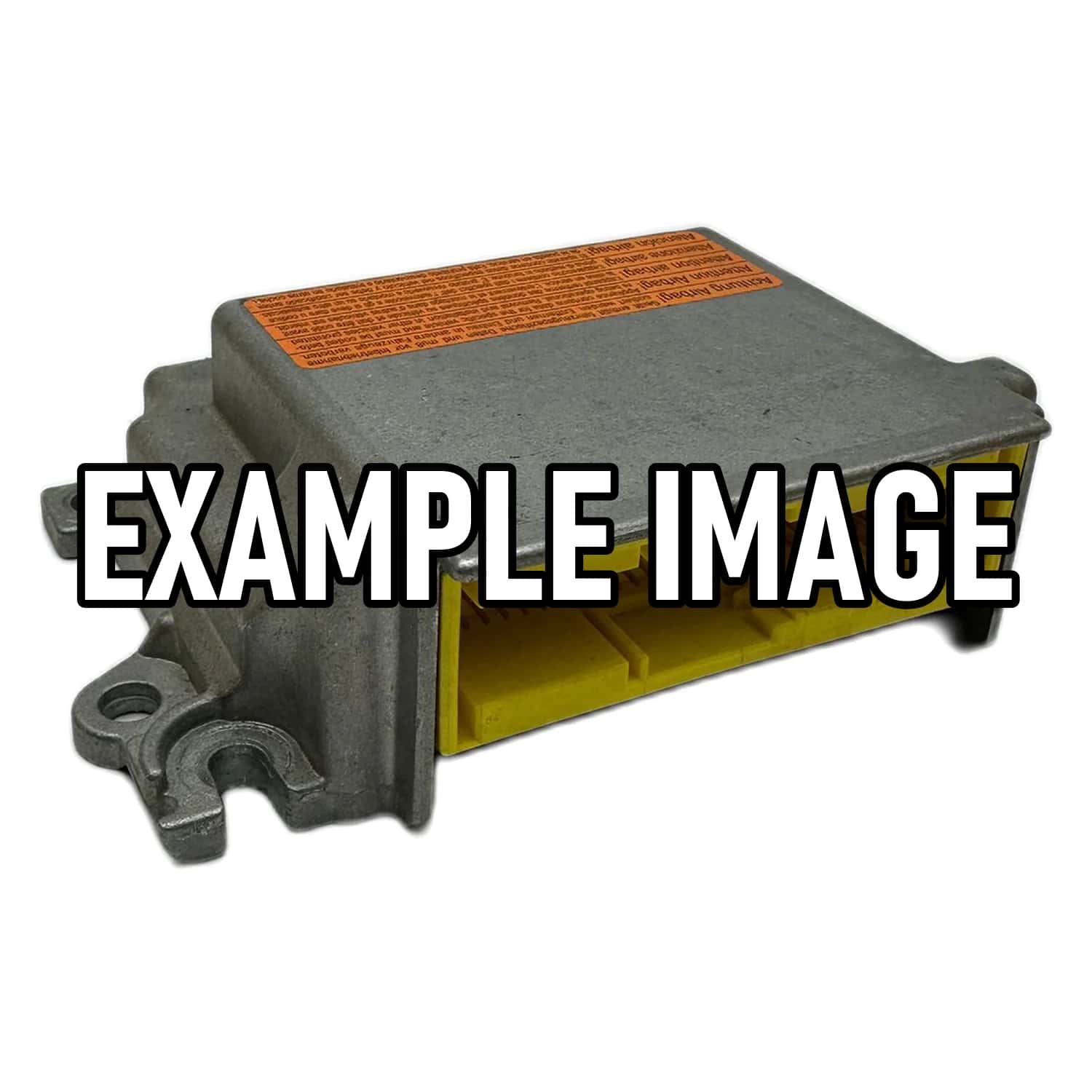
Jaguar X-Type airbag control units can be uniquely identified by their part number, year of manufacture, and vehicle identification number. This information is crucial for optimal compatibility during repair, as even minor deviations can affect functionality.
The part number is the most important identifier for your Jaguar X-Type airbag control unit. This number is printed directly on the control unit's housing or affixed to a sticker. For example, a common part number for the Jaguar X-Type is "4X43-14B321-AF," although the suffix may vary.
The airbag control unit is usually installed inside the vehicle, often under the center console, under the driver's seat, or behind the dashboard. To read the number, the component may need to be removed. This should always be done by trained personnel or at a workshop to avoid causing further damage.
In addition to the part number, the exact year of manufacture of your Jaguar X-Type and the vehicle identification number (VIN) play a key role in identification. Using the VIN, precise information about the factory equipment and installed components can be retrieved from the manufacturer's databases. This helps determine the exact control unit variant, even if there were minor modifications within the single X-Type generation. This careful identification is essential for a successful and safe repair of the defective component.
What airbag equipment does the Jaguar X-Type have?
The Jaguar X-Type's airbag system offered a comprehensive safety solution for its class and production era. While the base trim level already included essential airbags, higher trim levels could feature additional protection systems that further optimized occupant protection.
As a premium compact car produced from 2001 to 2009, the Jaguar X-Type was equipped as standard with a range of airbags that met current safety standards. These typically included driver and passenger airbags, providing protection in the event of a frontal impact.
Additionally, side airbags, often integrated into the seats, were an integral part of the safety equipment. These provided additional protection in side collisions, which was of great importance to the target audience, who valued a luxurious and safe car. The exact number and position of the airbags could vary depending on the market and trim level.
The Jaguar X-Type's airbag control unit is the brain of this complex safety system. It receives signals from impact sensors throughout the vehicle and decides in milliseconds which airbags should be deployed in the event of an accident. A malfunction in the control unit can affect the entire airbag readiness, emphasizing the need for immediate repair of a defective airbag control unit. This repair ensures that all existing airbags function properly when needed.
Common fault codes in this category
Shipping & repair from Germany
Airbag24 repairs your component in Berlin — usually within 3–4 working days.
Standard shipping within Germany is free; we normally return your part by UPS.
You pay for and insure the inbound shipment to us. On explicit request we ship by express — the extra cost is borne by the customer.
If you withdraw from the contract, you bear the cost of returning the item.