
Lamborghini Aventador airbag control unit repair(6)
What should I pay attention to with Lamborghini Aventador airbag control units?
The airbag technology used in the Lamborghini Aventador varies depending on the year of manufacture and the specific model variant. Airbag24 professionally repairs control units for all Lamborghini Aventador generations with original functionality and a 2-year warranty.
The Lamborghini Aventador, produced from 2011 to 2022, is a prime example of Italian engineering excellence in the super sports car segment. Its high performance and exclusivity require utmost precision, even in safety-relevant components such as the airbag control unit.
The Aventador's airbag systems are inherently complex and designed for maximum occupant safety. Every model variant, from the original LP700-4 to the final LP780-4 Ultimae, integrates a sophisticated airbag control unit, essential for reliable operation in an emergency.
A defective airbag control unit can compromise the vehicle's entire safety system. A professional repair is crucial to restoring this supercar's demanding safety standards and permanently resolving error codes such as "airbag error" or "crash data stored."
Which Lamborghini Aventador generations are there?
The Lamborghini Aventador has been produced in several distinctive variants, each featuring different technological advancements in its safety systems. The evolution of the super sports car reflects technological progress from 2011 to 2022.
The production history of the Lamborghini Aventador is characterized by a series of facelifts and performance-enhanced special models based on the same basic platform. These include the LP700-4, the limited-edition LP720-4 50th Anniversario, the high-performance LP750-4 SV and SV Roadster, and the revised Aventador S and S Roadster.
Later, the extreme SVJ and SVJ Roadster followed, offering even greater performance and aerodynamics. The final model was the LP780-4 Ultimae, which combined the best features of its predecessors. Each of these variants could feature specific modifications to the vehicle's electronics, including the airbag control unit.
Although there hasn't been a completely new "generation" in the traditional sense, these evolutions mean that airbag control units have also undergone subtle adjustments over the years to keep pace with evolving vehicle architecture and advanced safety systems.
For a repair, it is therefore essential to know the exact model variant and year of manufacture to ensure control unit compatibility. Different series, such as the Lamborghini Aventador LP700-4 or Lamborghini Aventador LP780-4 Ultimae Roadster, may use specific control unit types.
How do I identify my Lamborghini Aventador airbag control unit?
Lamborghini Aventador airbag control units can be reliably identified by their unique part number, the vehicle's year of manufacture, and the vehicle identification number (VIN). Each Aventador variant uses specific control unit versions for optimal compatibility and safety functionality.
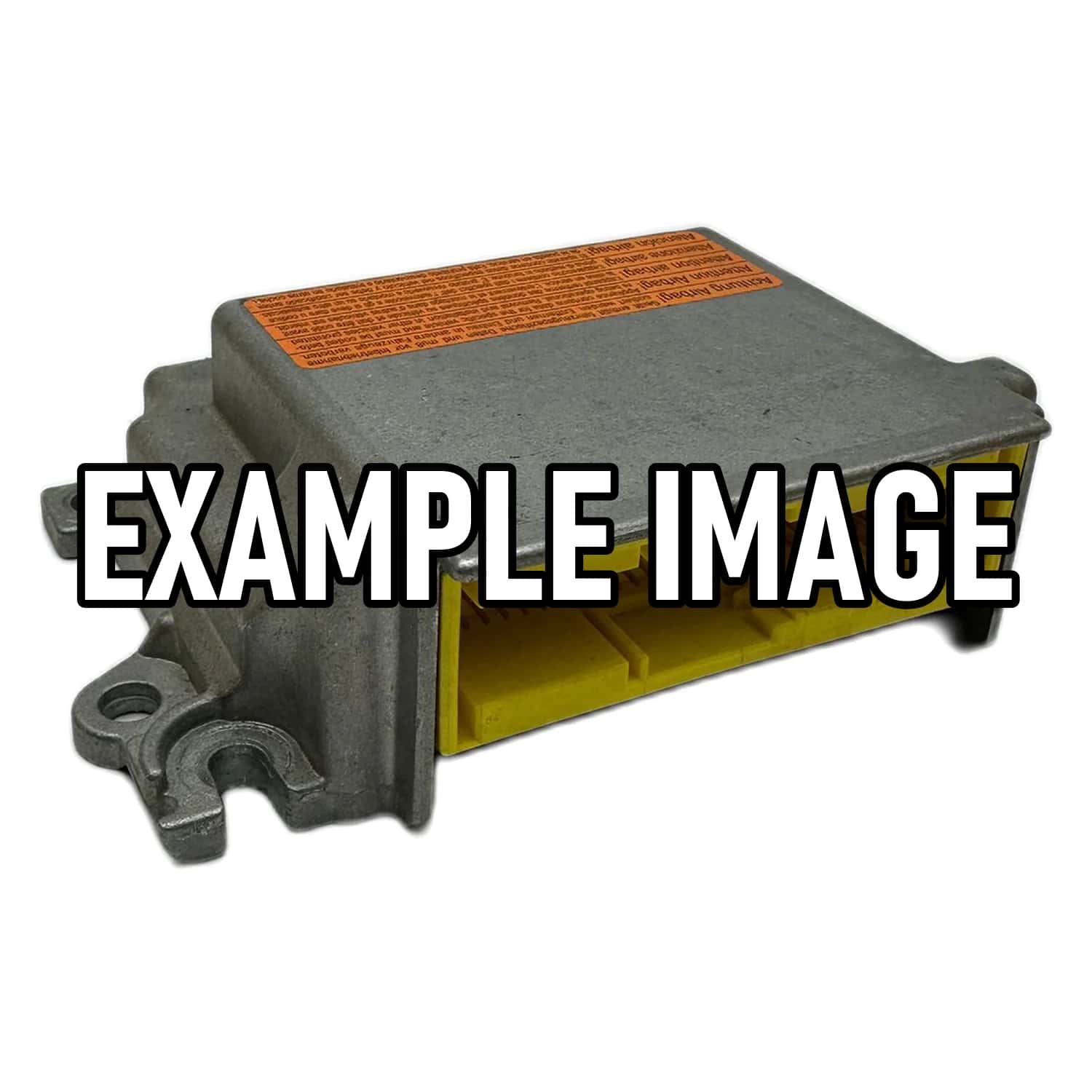
The part number is the most important identifier for your airbag control unit. It's located directly on the control unit housing, which is usually located under the center console or the carpet in the passenger footwell. Carefully record this number before attempting a repair.
In addition to the part number, the exact year of manufacture of your Lamborghini Aventador and the complete vehicle identification number (VIN) provide further crucial information. This data allows us to precisely identify possible revisions or model-specific features of the airbag system.
Since the Lamborghini Aventador was produced in various versions, such as the LP750-4 SV Roadster and the SVJ, even minor differences in equipment or bodywork can lead to different software versions or even hardware variants of the airbag control unit. Precise identification is therefore crucial for a successful repair and restoring original function, especially if the unit is defective.
What airbag equipment does the Lamborghini Aventador have?
The Lamborghini Aventador's extensive airbag system comes as standard and is designed for maximum safety. As a luxury super sports car, it features an advanced system that optimally protects the driver and front passenger.
All Lamborghini Aventador models, from the base model to the limited editions, come standard with a comprehensive airbag system. This always includes front airbags for the driver and front passenger, providing vital protection in the event of a frontal collision.
Side airbags are also an integral part of the safety equipment. These are typically integrated into the seats or door panels and protect the occupants in the event of a side impact. The positioning and size of these airbags are specifically tailored to the confined spaces of a super sports car.
The central airbag control unit continuously monitors a multitude of sensors in the vehicle. In the event of an accident, it deploys the relevant airbags quickly and precisely to provide optimal occupant protection. This high-end system is crucial to the Aventador's passive safety.
Due to the specific vehicle class and the sometimes varying roof designs, such as those found on roadster models (e.g., Aventador S Roadster, LP780-4 Ultimae Roadster), model-specific adjustments to the airbag software may have been made to ensure safety under all conditions. A defective control unit should therefore always be repaired by specialists who are familiar with these specific features and can restore the relevant software.
Shipping & repair from Germany
Airbag24 repairs your component in Berlin — usually within 3–4 working days.
Standard shipping within Germany is free; we normally return your part by UPS.
You pay for and insure the inbound shipment to us. On explicit request we ship by express — the extra cost is borne by the customer.
If you withdraw from the contract, you bear the cost of returning the item.