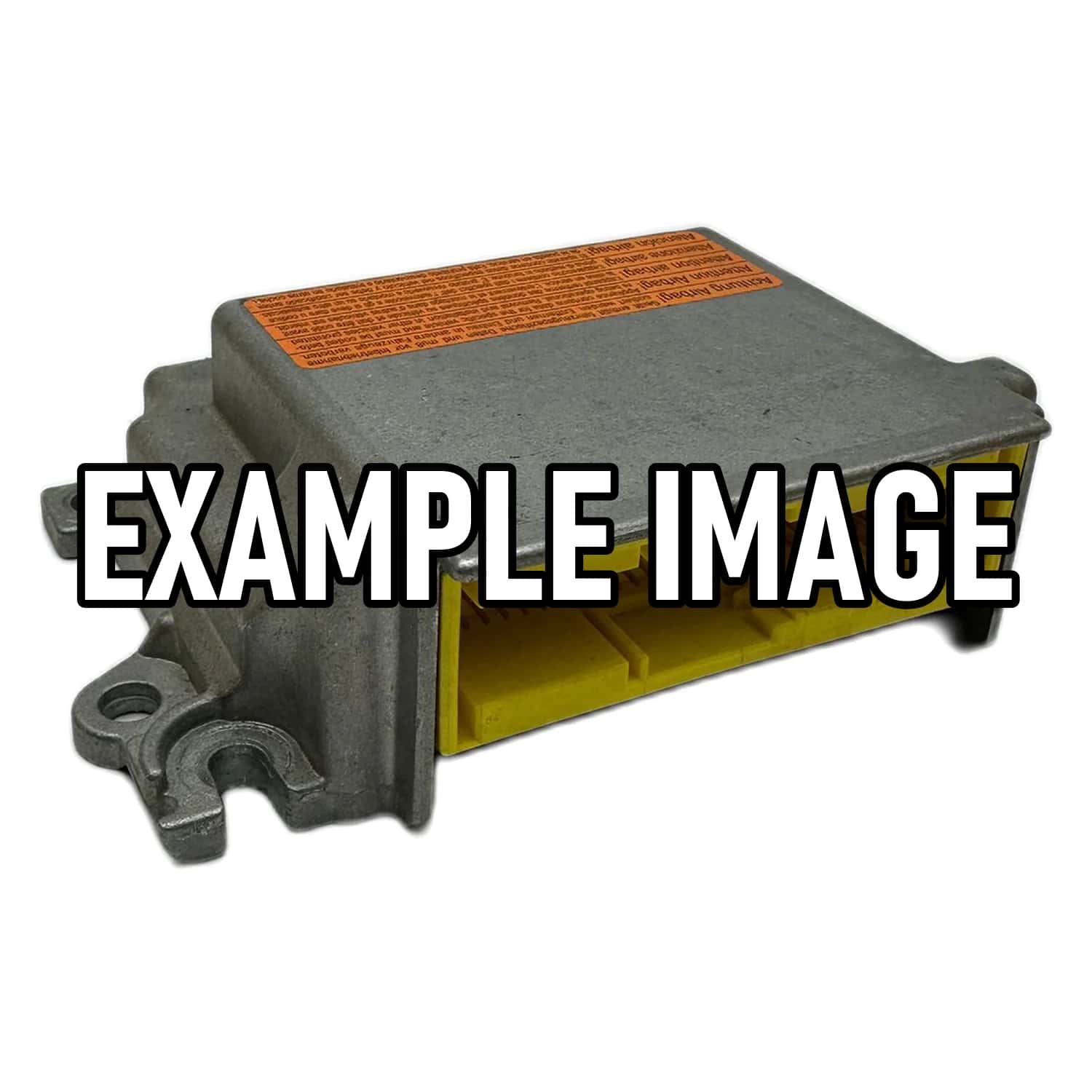
airbag control unit repair Opel Ampera A
from€79.00
 Quality since 2002
The airbag technology used in the Opel Ampera varies depending on the model year. A professional repair of the Opel Ampera's control units ensures original functionality and often comes with an extended two-year warranty.
The Opel Ampera, produced from 2012 to 2016, was a pioneer among electric vehicles with range extension in the compact class. As a technically closely related model to the Chevrolet Volt, it introduced innovative drive technology to the European market. Occupant safety was a key consideration, which is why it was equipped with an advanced, albeit standard for the time, airbag system. The airbag control unit is the heart of this safety system, responsible for recording crash data and deploying the airbags in an emergency. Over the years, these control units can become defective due to various factors, such as an accident, water damage, or age-related material fatigue. Early diagnosis and professional repair are essential to maintain the full functionality of the airbag system and avoid expensive replacements.The Opel Ampera was produced in one main generation from 2012 to 2016. A later, technically independent model series is the Opel Ampera-e, available from 2017. Each of these model series uses different airbag control units, which are specifically tailored to the respective vehicle architecture.
The first and only generation of the Opel Ampera (often referred to internally as the "Ampera A") was offered from 2012 to 2016 as a five-seat compact station wagon. This model was distinguished by its range extender, which enabled a purely electric range of 40 to 80 km and increased the total range to over 500 km. The focus here was on combining everyday usability with long-distance comfort without range anxiety. Technologically, this model was very advanced for its time, which is also reflected in the integrated safety systems. The Opel Ampera-e, which was launched in 2017, is a completely separate model despite the similar name. It is a pure battery electric vehicle (BEV), technically based on the Chevrolet Bolt EV and offers a significantly longer purely electric range of up to 520 km (NEDC). The differences in the vehicle architecture, the electrical platform, and the installed components – including the airbag control unit – are fundamental. This development reflects the rapid technological progress in the field of electromobility and passive safety systems within just a few years.Opel Ampera airbag control units can be clearly identified by their part number, year of manufacture, and vehicle identification number (VIN). It's crucial to distinguish between the original Opel Ampera (2012-2016) and the later Ampera-e (from 2017), as they use entirely different control units.
To identify the correct airbag control unit for your Opel Ampera model, always refer to the original part number printed on the unit itself. This number is key to compatibility and ensures that the replacement or repair part is a precise fit for your vehicle. In addition, the exact vehicle year and the full vehicle identification number (VIN) are helpful to account for any model variants or specific equipment features. The airbag control unit for the Opel Ampera (2012-2016) is specifically tailored to the platform of this range extender model. In contrast, the Opel Ampera-e (from 2017) uses a completely different control unit designed for the all-electric architecture and advanced safety features of the newer model. Confusing these two can compromise vehicle safety and lead to unrecoverable malfunctions of the airbag system. Therefore, pay close attention to the model designation and year of production to ensure correct identification.The airbag equipment of the Opel Ampera (2012-2016 models) included a comprehensive standard airbag system, typical for its compact class and the production period. Later versions, such as the Opel Ampera-e, integrated even more advanced safety packages and additional airbag modules.
The Opel Ampera from 2012 to 2016 came standard with a robust range of passive safety systems designed to protect occupants in the event of a collision. These typically included front airbags for the driver and front passenger, which are deployed in a frontal impact. Side airbags were also integrated to provide additional upper body protection in a side impact. Many models also featured curtain airbags, which extend along the window line from front to rear and protect the occupants' heads in the event of a side collision or rollover. At the time of the Opel Ampera's production (2012-2016), advanced or optional airbag systems, such as knee airbags or adaptive airbags with multi-stage deployment, were less common in the compact class or only available in specific trim packages. Nevertheless, the Ampera offered a high level of occupant safety that met the standards of its time and helped position it as a safe and reliable vehicle. Modern vehicles, including the Ampera-e, have further developed these systems and added additional sensors and intelligent control elements.Airbag24 repairs your component in Berlin — usually within 3–4 working days.
Standard shipping within Germany is free; we normally return your part by UPS.
You pay for and insure the inbound shipment to us. On explicit request we ship by express — the extra cost is borne by the customer.
If you withdraw from the contract, you bear the cost of returning the item.