
Alfa Romeo 155 airbag control unit repair(1)
1 product
What should I pay attention to with Alfa Romeo 155 airbag control units?
The airbag technology used in the Alfa Romeo 155 varies depending on the model year, but reflects the state of the art in the early 1990s. Professional repair of airbag control units in all Alfa Romeo 155 generations ensures true-to-original functionality and safety.
The Alfa Romeo 155 (Type 167), produced from 1992 to 1998, was designed as a sporty mid-size sedan and was intended to satisfy drivers with high demands on design and driving dynamics. This iconic model was the successor to the Alfa Romeo 75 and was launched in two main versions, each differing in its safety technology.
In the 1990s, airbag technology was still in its infancy, and the systems in the Alfa Romeo 155 were comparatively simple. Typically, a driver's airbag was integrated into the steering wheel, with a deployment mechanism that was mechanical rather than highly complex electronic. This simplicity is advantageous when diagnosing and repairing defective airbag control units, as the source of the problem is often easier to pinpoint.
Which Alfa Romeo 155 generations are there?
The Alfa Romeo 155 was produced in two distinct main generations, each with its own distinct developments in vehicle technology and, potentially, in airbag components. The evolution of the safety system reflects the technological progress from 1992 to 1998.
The first version of the Alfa Romeo 155 was produced from June 1992 to May 1995 and defined the sporty image of the series. The extensively revised "widebody" version followed in June 1995, and production continued until February 1998.
This facelift variant featured not only wider fenders and a modified front end design, but also a revised chassis and expanded equipment features. Although the core function of the airbag system remained the same, the control units used may differ between these model years due to modifications or changes in approval, making the correct selection essential for repairs.
How do I identify my Alfa Romeo 155 airbag control unit?
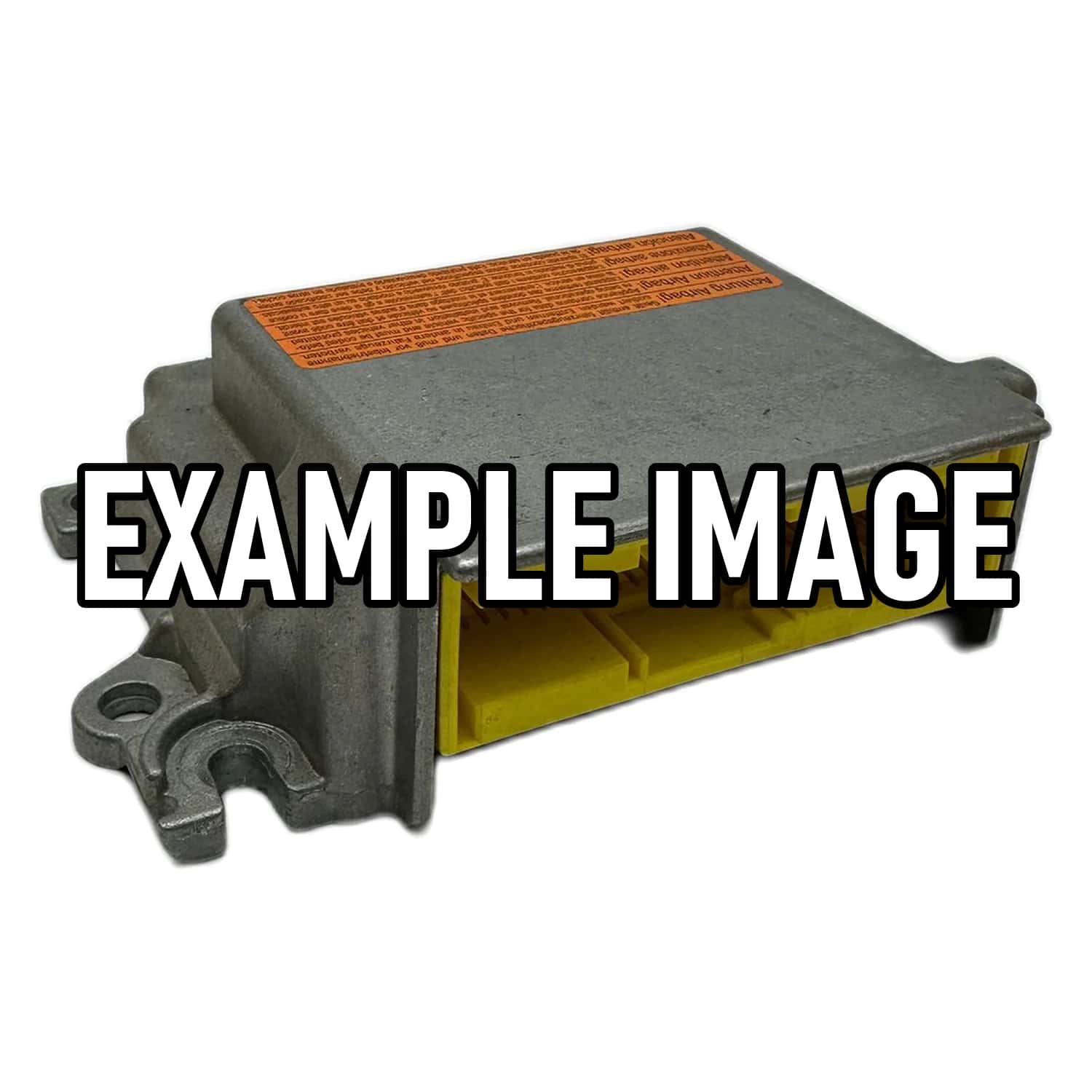
Alfa Romeo 155 airbag control units can be clearly identified by their unique part number, the specific model year of your vehicle, and the vehicle identification number (VIN). Each generation, and sometimes even individual trim levels, used specific variants of these control units to ensure optimal compatibility and functional reliability.
Precisely identifying the installed airbag control unit is the first and most important step for a successful repair. The crucial part number can usually be found directly on the control unit itself, which is usually located in the center console or under the driver's seat.
Additionally, information in the vehicle registration document, as well as the exact year of manufacture and the VIN, can provide valuable clues. Despite the relatively simple airbag systems of the Alfa Romeo 155, correctly identifying the control unit is essential to avoid compatibility issues and ensure the vehicle's safety after repairs. An incorrectly identified or incompatible control unit can lead to malfunctions in the airbag system.
What airbag equipment does the Alfa Romeo 155 have?
The Alfa Romeo 155's airbag equipment was typically limited to a driver's airbag mounted in the steering wheel, the presence of which varied depending on the model year and specific trim level. While airbags were often considered optional safety features in early models, they increasingly became standard in later generations or higher-end trim levels, although the basic system architecture remained simple.
The Alfa Romeo 155 primarily featured a driver's airbag integrated into the steering wheel. This safety feature was often optional in the early years of production and later became more common as standard equipment, with passenger airbags becoming less common.
The system featured a comparatively simple, mechanically based control system, with the airbag being deployed via a gas generator and a bayonet lock in the steering wheel. Reports of electrical failures are known, but these were rarely due to complex electronic control unit problems.
Instead, these were often easier-to-repair defects such as corrosion on contacts or broken wires, which could impair the functionality of the airbag system and required precise diagnosis. The straightforward structure of the airbag system in the Alfa Romeo 155 significantly simplifies the targeted repair of defective control units.
Common fault codes in this category
Shipping & repair from Germany
Airbag24 repairs your component in Berlin — usually within 3–4 working days.
Standard shipping within Germany is free; we normally return your part by UPS.
You pay for and insure the inbound shipment to us. On explicit request we ship by express — the extra cost is borne by the customer.
If you withdraw from the contract, you bear the cost of returning the item.