
Audi RS7 airbag control unit repair(2)
2 products
What should be considered with Audi RS7 airbag control units?
The airbag technology used in the Audi RS7 varies depending on the model year. Airbag control units of all Audi RS7 generations are professionally repaired with original functionality and a 2-year warranty.
The Audi RS7, known as a premium midsize luxury sportback that meets the highest standards of performance and design, places equal emphasis on safety. The production history of this dynamic vehicle is divided into two distinct generations: the Audi RS7 4G8 (2014-2018) and the Audi RS7 4K8 (since 2021).
With each development of the RS7, the passive safety system, at the heart of which is the airbag control unit, has also been continuously refined. These control units are crucial for the reliable deployment of the airbags in the event of an accident and often need to be reset or repaired after a crash to restore their full functionality.
Which Audi RS7 generations are there?
The Audi RS7 has been produced in two main generations, each with different airbag control units. The development of the safety system reflects technological advances from 2014 to the present.
The first generation of the Audi RS7, the 4G8, was produced from 2014 to 2018 and received a facelift in 2016. These models, powered by the powerful 4.0L twin-turbo V8, were already equipped with comprehensive airbag systems tailored to the safety standards of the time.
The second generation, the Audi RS7 4K8, has been on the market since 2021, further enhancing the performance and technology of its predecessor. This RS7 also features a state-of-the-art SRS system designed to meet the increased demands for connectivity and advanced assistance systems.
Each of these generations uses specific airbag control units that are precisely tailored to the respective electronic architecture and installed airbag components. Therefore, a professional repair always takes the specific features of the respective year and model into account to ensure the proper functioning of the airbag system.
How do I identify my Audi RS7 airbag control unit?
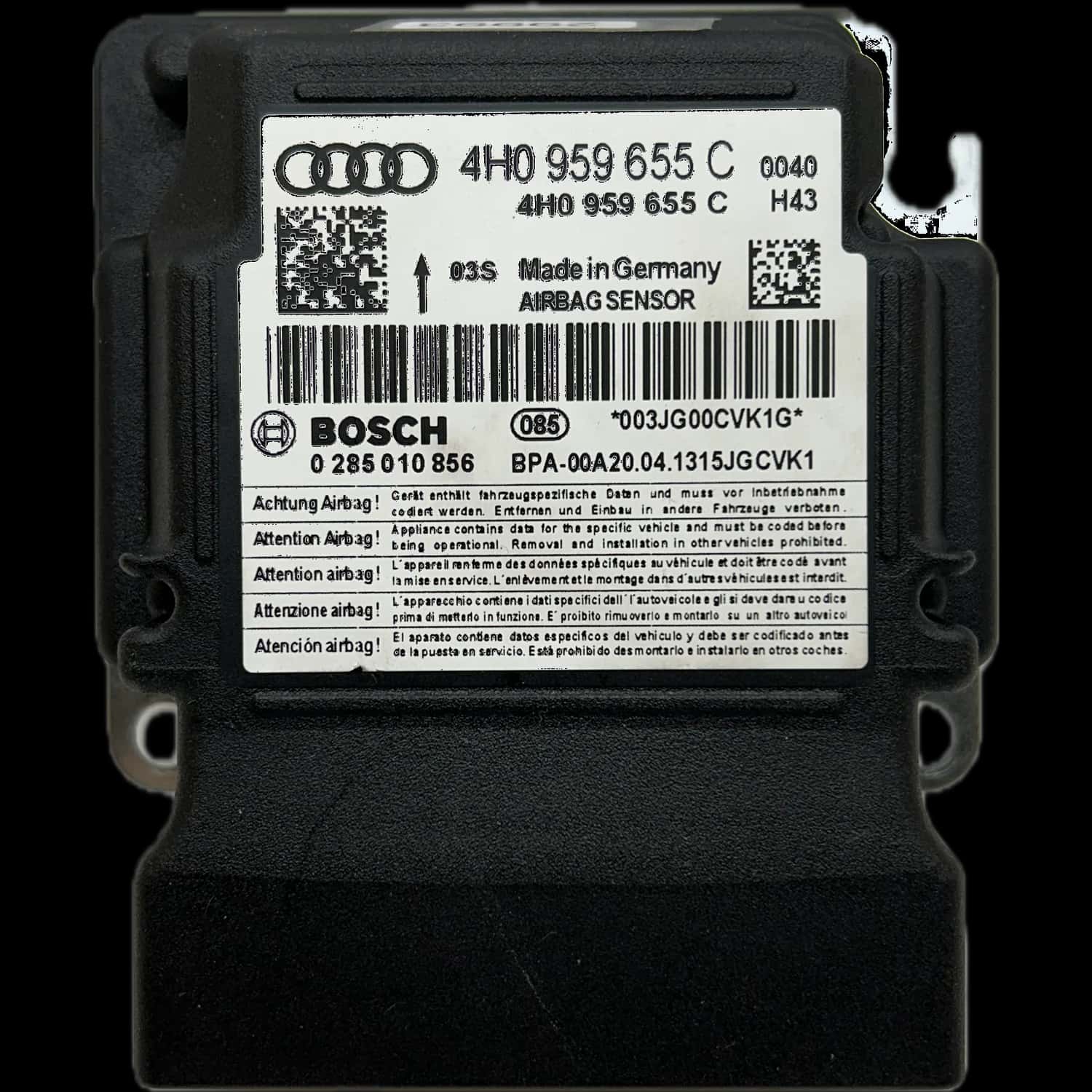
Audi RS7 airbag control units can be clearly identified by part number, year of manufacture, and vehicle identification number. Each generation uses specific control unit variants for optimal compatibility.
Precise identification of the airbag control unit is essential for a successful repair or professional reset after an accident. The part number is the most important clue; it is usually located on a sticker directly on the control unit. This number provides information about the exact specification of the module that fits your Audi RS7 4G or 4K.
Additionally, the exact year of manufacture of your Audi RS7 and the vehicle identification number (VIN) are crucial parameters. This information allows specialized services to check the control unit's compatibility and perform the correct repair processes or data resets to ensure your airbag control unit functions properly again and can be installed "plug and play" in the vehicle.
What airbag equipment does the Audi RS7 have?
The airbag configuration of the Audi RS7 varies depending on the model year and trim level. While early models use basic airbag systems, newer generations feature enhanced safety packages with additional airbag modules.
The Audi RS7 comes standard with at least six airbags, providing comprehensive protection for the driver and passengers. These include the essential driver and passenger front airbags, side airbags for upper body protection in side collisions, and curtain airbags that provide extensive head protection in various impact types.
The central airbag control unit (SRS control unit) of the Audi RS7 4G and 4K is responsible for analyzing sensor data and precisely and time-controlled deployment of these airbags in an emergency. The Audi RS7 performance sedan benefits from a highly advanced passive safety system, which can be further enhanced with additional optional airbag modules and assistance systems, depending on the trim level and model year.
For safety reasons, it is of utmost importance that this complex system is professionally inspected and repaired after an accident or in the event of a control unit failure. A malfunction of the airbag control unit in the Audi RS7 is usually signaled by a warning light illuminating in the dashboard and must be remedied immediately to ensure the airbag system's full protective effect.
Common fault codes in this category
Shipping & repair from Germany
Airbag24 repairs your component in Berlin — usually within 3–4 working days.
Standard shipping within Germany is free; we normally return your part by UPS.
You pay for and insure the inbound shipment to us. On explicit request we ship by express — the extra cost is borne by the customer.
If you withdraw from the contract, you bear the cost of returning the item.