
airbag control unit repair Audi S4 B9 8W
from€79.00
 Quality since 2002
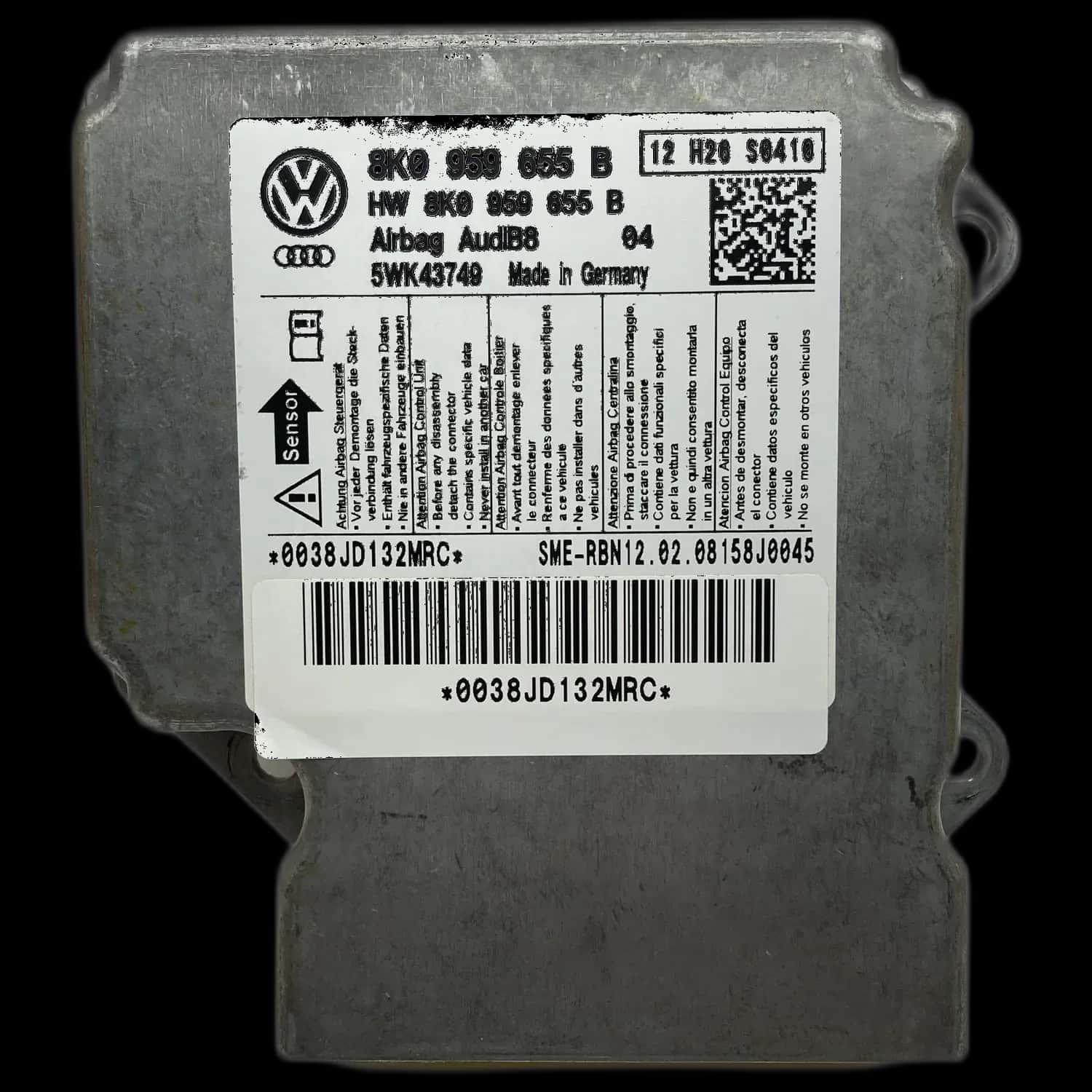
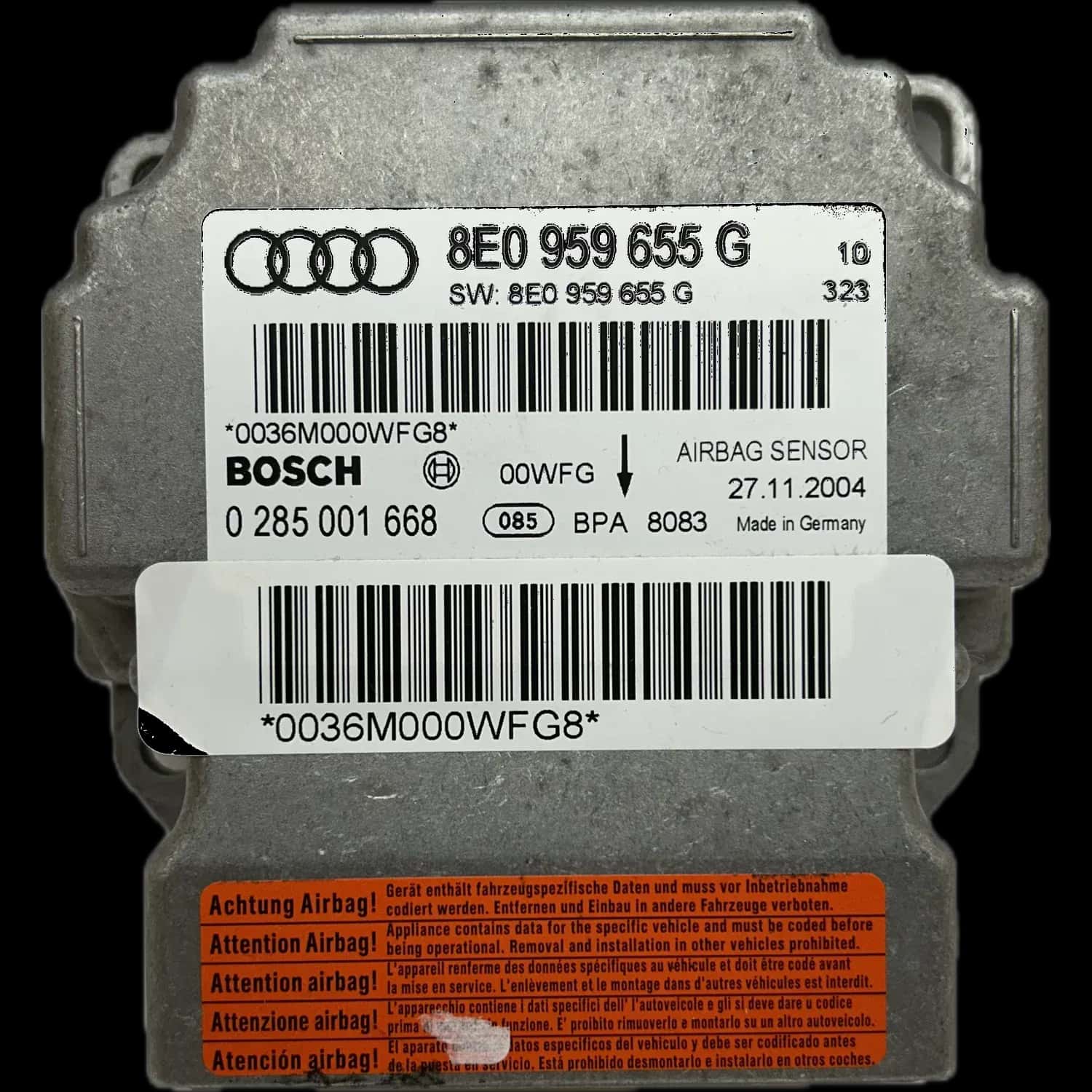
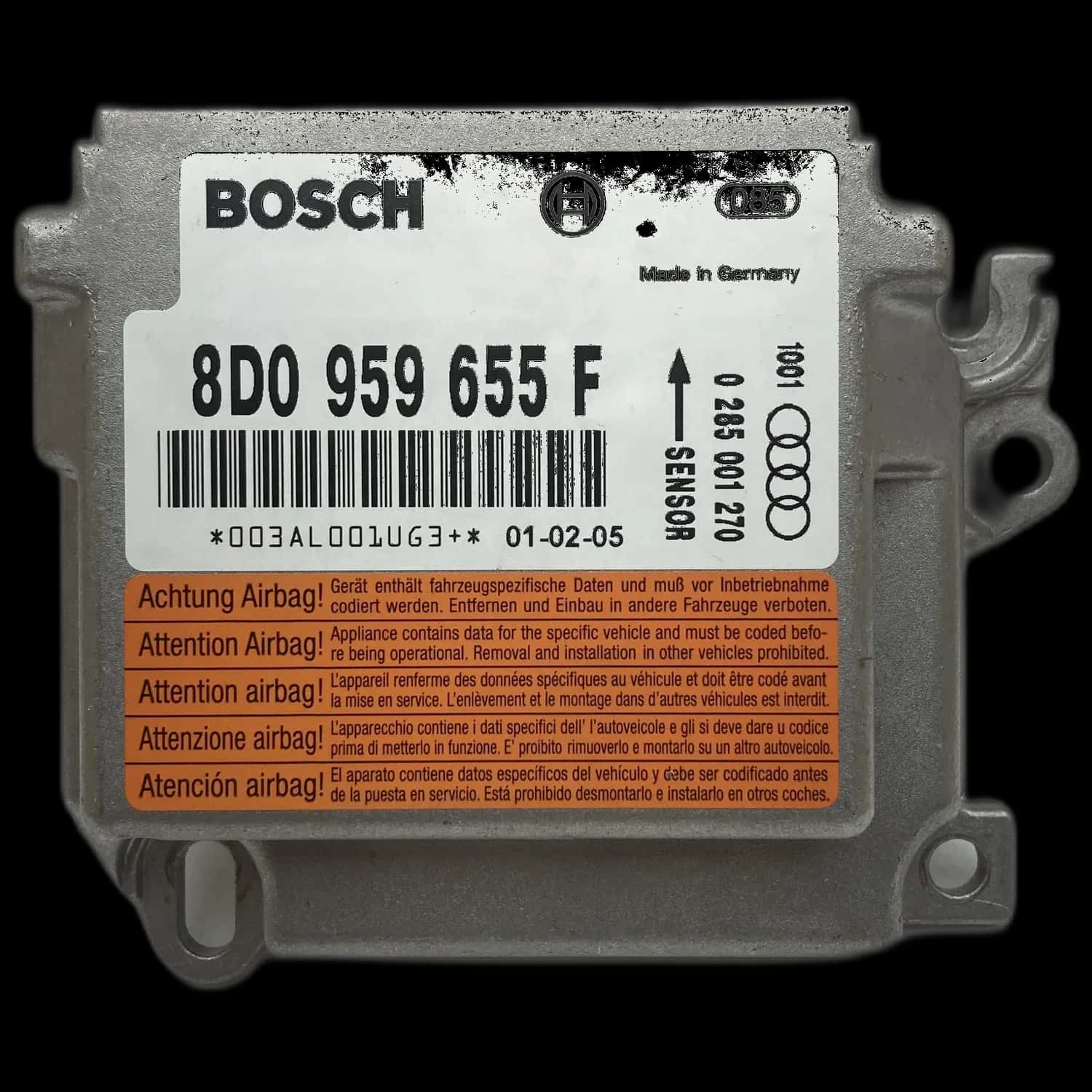
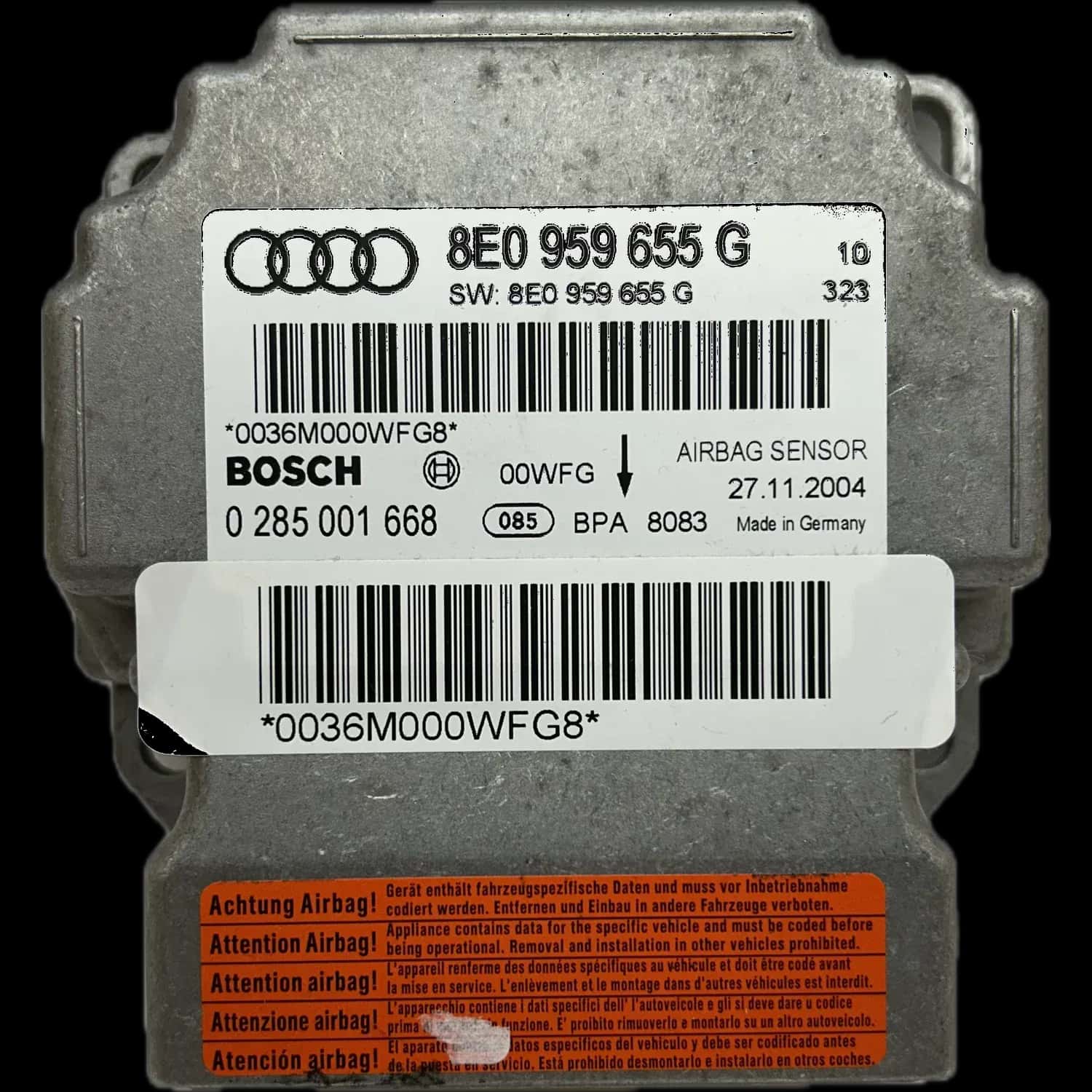
The airbag technology used in the Audi S4 varies depending on the model year and generation. Airbag control units of all Audi S4 generations can be professionally repaired with original functionality and a two-year warranty.
The Audi S4 has undergone remarkable development since its launch as a sporty version of the upper mid-size class. From the B5 series in 1997 to the current B9 generation, each model series reflects technological advances in vehicle safety, which directly impacts the complexity and features of the airbag systems and their central control units.
The development of airbag systems in the Audi S4 ranges from basic front and side airbags in earlier models to comprehensive safety packages with curtain, knee, and extended side airbags in newer generations. In line with this evolution, the airbag control units (often referred to as SRS control units) have also become increasingly powerful and complex to precisely control the multitude of sensors and airbags. If an airbag control unit fails, for example, after an accident or due to electronic failure, a professional repair is essential to restore the safety system to full functionality.
The Audi S4 was produced in five main generations (B5 to B9), each using different airbag control units. The development of the safety system reflects technological advances from 1997 to the present.
The history of the modern Audi S4 begins with the B5 series (production period 1997–2001), which laid the foundation for the sporty mid-size sedan. This was followed by the B6 generation (2003–2005) and the B7 series (2005–2008), often considered a facelift of the B6 platform and already offering improved airbag systems as standard.
The B8 generation (2009–2016, with a facelift starting in 2013) saw another significant leap in safety features, including more comprehensive airbag systems. The most recent incarnation is the Audi S4 B9 (2017–present, with a facelift starting around 2020), which integrates the most modern airbag systems that represent the latest state of the art.
Each of these generations brings with it specific requirements for the airbag control units, as the number, positioning, and sensor technology of the airbags have been continuously evolving. Therefore, knowing the exact generation and year of your Audi S4 is essential for any repair or maintenance.
Audi S4 airbag control units can be uniquely identified by their part number, year of manufacture, and vehicle identification number (VIN). Each generation uses specific control unit variants for optimal compatibility with the installed airbag modules and sensors.
To identify the correct airbag control unit for your Audi S4, the most important clue is the part number printed on the unit itself. This alphanumeric string provides precise information about the model, revision, and compatibility of the control unit. These numbers are often found in the format "8E0 959 XXX," "8K0 959 XXX," or similar, depending on the generation.
In addition to the part number, the exact year of manufacture of your Audi S4 is important, as even within a single generation, minor changes to the control units are often made. The vehicle identification number (VIN) in the vehicle registration document provides further detailed information about your vehicle's equipment and specifications, which can be helpful in identifying the exact airbag control unit.
Correct identification is crucial to ensure that the repaired or replaced airbag control unit works optimally with all safety system components in your Audi S4. An incorrect or incompatible control unit can cause malfunctions and significantly compromise safety in an emergency.
The airbag configuration of the Audi S4 varies considerably depending on the model year and trim level. While early models use basic airbag systems, newer generations feature enhanced safety packages with additional airbag modules and more complex control units.
The Audi S4 B5 (1997–2001) already set standards with standard front and side airbags for the driver and front passenger. A head airbag was also available as an option in some models, which represented advanced safety equipment at the time. The airbag control units of this generation were accordingly designed for these basic systems.
With the introduction of the Audi S4 B6 (2003–2005) and B7 (2005–2008), the airbag systems were further expanded. Front, side, and curtain airbags were included as standard, providing more comprehensive occupant protection. The control units of these models therefore had to manage more sensors and triggers.
The Audi S4 B8 (2009–2016) marked a further milestone in safety development. Comprehensive airbag systems were already installed as standard, including a driver's knee airbag in addition to the familiar front, side, and curtain airbags. These systems required even more powerful and complex airbag control units, processing a multitude of crash sensors and passenger occupant mats.
The current generation, the Audi S4 B9 (2017–present), features the most modern airbag systems. These include not only driver and front passenger airbags, but also knee airbags, front and rear side airbags, and full-length curtain airbags. This advanced equipment is managed by highly intelligent airbag control units that react to an impact in milliseconds and deploy the optimal airbags at the correct intensity. Repairing the airbag control unit is therefore essential to ensure the full functionality of these complex safety systems should the control unit fail.
Airbag24 repairs your component in Berlin — usually within 3–4 working days.
Standard shipping within Germany is free; we normally return your part by UPS.
You pay for and insure the inbound shipment to us. On explicit request we ship by express — the extra cost is borne by the customer.
If you withdraw from the contract, you bear the cost of returning the item.