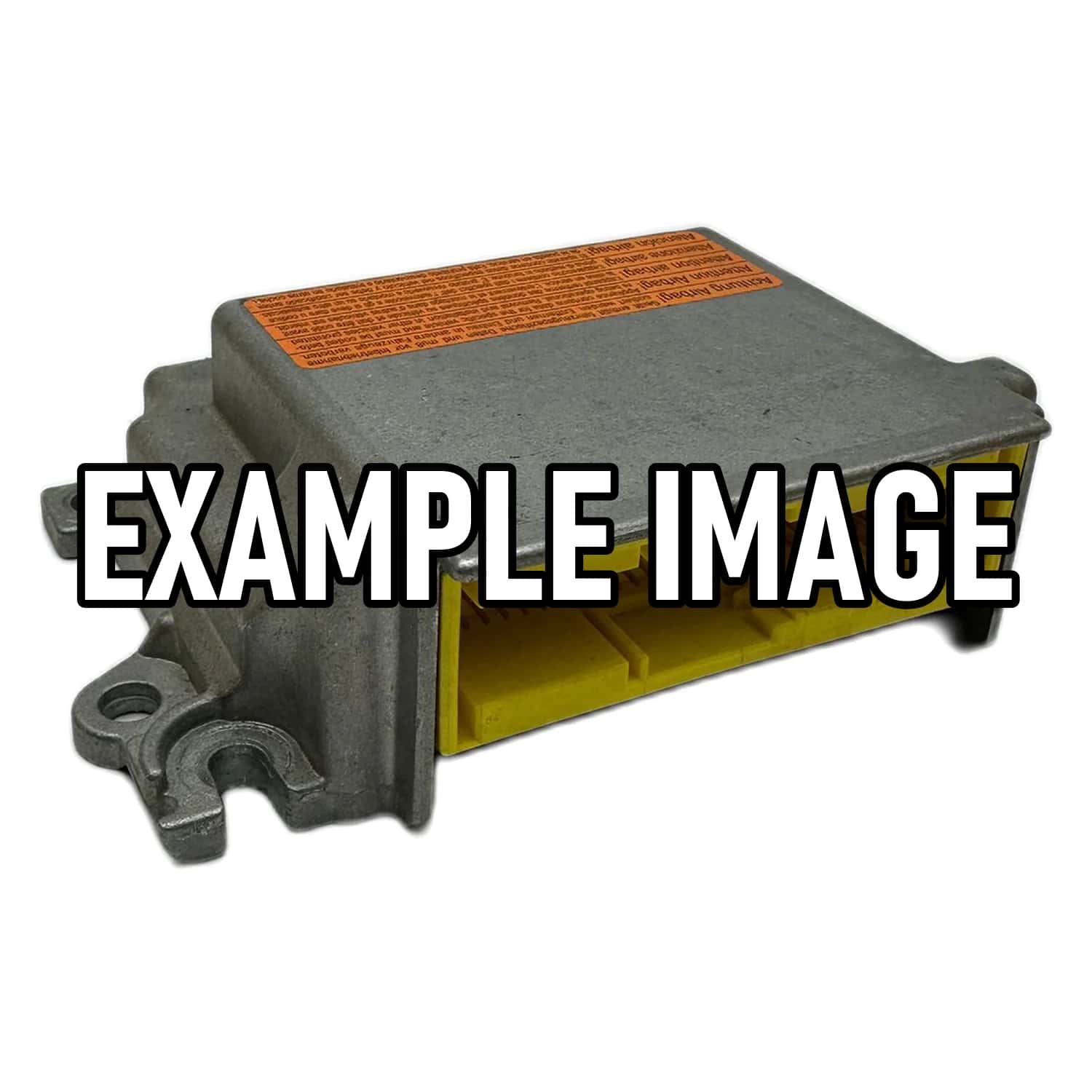
airbag control unit repair Audi SQ3 F3
from€79.00
 Quality since 2002
A functioning airbag control unit is the heart of the safety system in your Audi SQ3. It is responsible for the precise deployment of the airbags in the event of an impact and stores important accident data. In the event of a defect or after an accident, a professional repair of your airbag control unit is essential to restore the safety system's full functionality.
We offer specialized repair services for airbag control units for all Audi SQ3 model series, whether you drive a first-generation Audi SQ3 (8U) or the current model series (F3). Our goal is to provide you with a reliable and efficient solution that meets the highest safety standards.
The airbag technology used in the Audi SQ3 varies considerably depending on the model year and generation. Specialized service providers professionally repair control units of all Audi SQ3 generations with original functionality and a two-year warranty.
The Audi SQ3, a sporty version of the compact Q3 SUV, was first introduced with the 8U series starting around 2011. This first generation relied on proven safety technologies that were continuously developed over the course of its production years until 2018.
With the introduction of the F3 series from 2019 to the present, the airbag control unit underwent a comprehensive redesign. It is now even more deeply integrated with modern driver assistance systems and digital safety features, requiring specific expertise and up-to-date software for repairs.
The Audi SQ3 has been produced in two main generations, each with different airbag control units. The development of the safety system reflects technological advances from 2011 to the present.
The first generation of the Audi SQ3, based on the Q3 of the 8U series, was on the market from approximately 2011 to 2018. Within this series, there was a facelift from approximately 2015 to 2016, which also included minor adjustments to the vehicle electronics.
The current, second-generation Audi SQ3 belongs to the F3 series and has been in production since approximately 2019 and 2020, based on the Audi Q3 F3. This generation also saw the introduction of the sporty SQ3 Sportback as an additional body variant starting in 2019 and a facelift around 2022/2023, each of which brought further developments to the installed components, including the airbag control unit.
Audi SQ3 airbag control units can be uniquely identified by part number, year of manufacture, and vehicle identification number (VIN). Each generation uses specific control unit variants for optimal compatibility and correct integration into the vehicle systems.
The part number of the airbag control unit is the most important identifier and can be found directly on the module housing. It is crucial to determine this number correctly to ensure compatibility with the repair process and the vehicle. The exact year of manufacture of the vehicle also plays a role, as control unit revisions can occur within a generation during model updates.
The Vehicle Identification Number (VIN) provides additional security for correct identification, as it contains all vehicle-specific information. This data enables specialized repair services to find the right replacement part or precise repair instructions for your specific Audi SQ3 airbag module and ensure seamless plug-and-play functionality after the repair.
The Audi SQ3's airbag equipment is comprehensive across all model years and is a core component of active and passive safety. While earlier models offered a solid foundation, newer generations feature enhanced safety packages that interact closely with the airbag module.
The Audi SQ3, both in the 8U and F3 series, comes standard with a variety of airbags to provide optimal protection for occupants in the event of a collision. These include front airbags for the driver and front passenger, side airbags in the front seats to protect the upper body, and sideguard curtain airbags for the first and second rows to protect the head area.
Additionally, knee airbags for the driver and front passenger are fitted as standard, reducing the risk of injury to the lower extremities. Airbag occupancy sensors also detect whether a seat is occupied, allowing airbag deployment to be controlled as needed. Newer models in the F3 series feature advanced assistance systems that integrate the airbag control unit into a more complex network of safety technologies, underscoring the importance of proper repair.
Airbag24 repairs your component in Berlin — usually within 3–4 working days.
Standard shipping within Germany is free; we normally return your part by UPS.
You pay for and insure the inbound shipment to us. On explicit request we ship by express — the extra cost is borne by the customer.
If you withdraw from the contract, you bear the cost of returning the item.