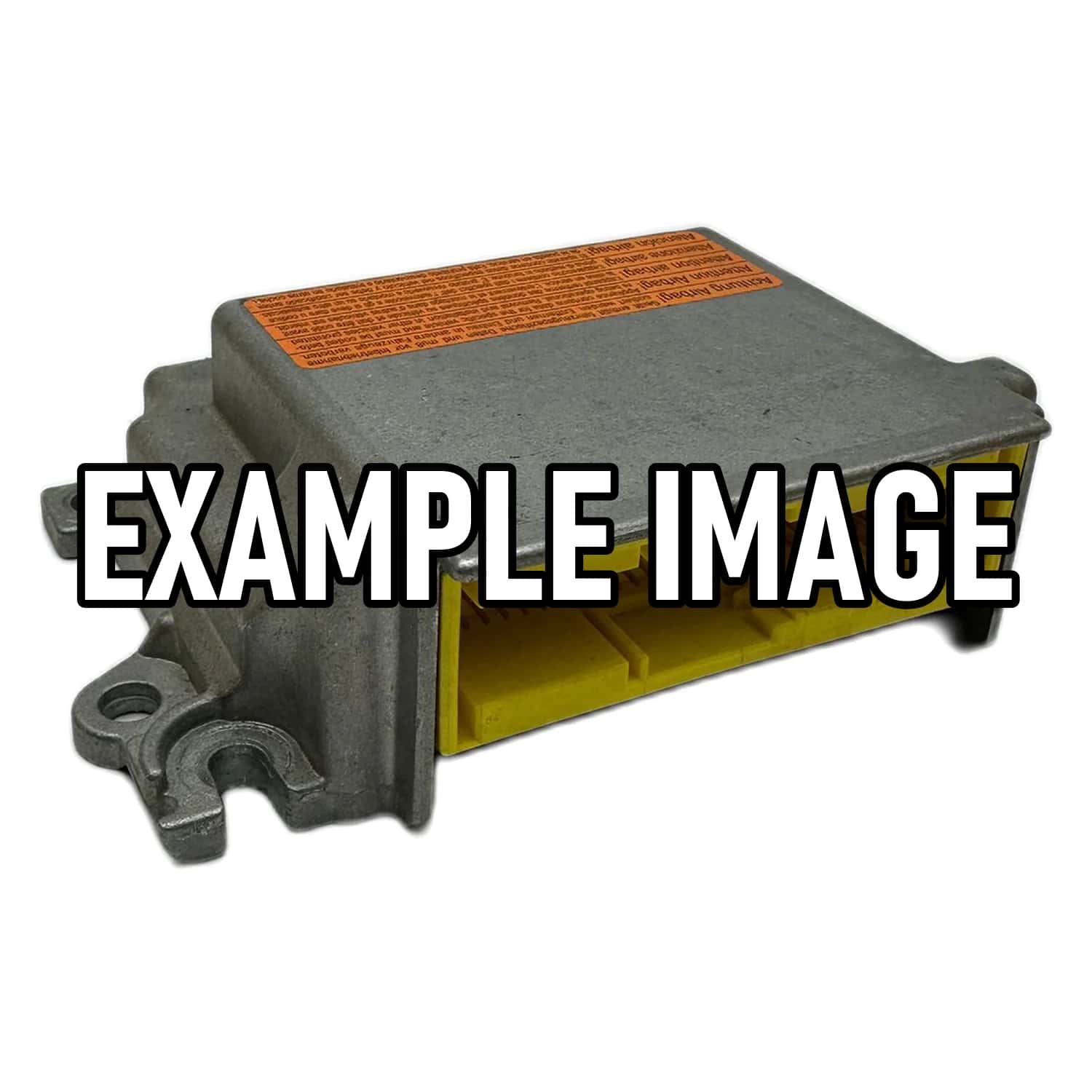
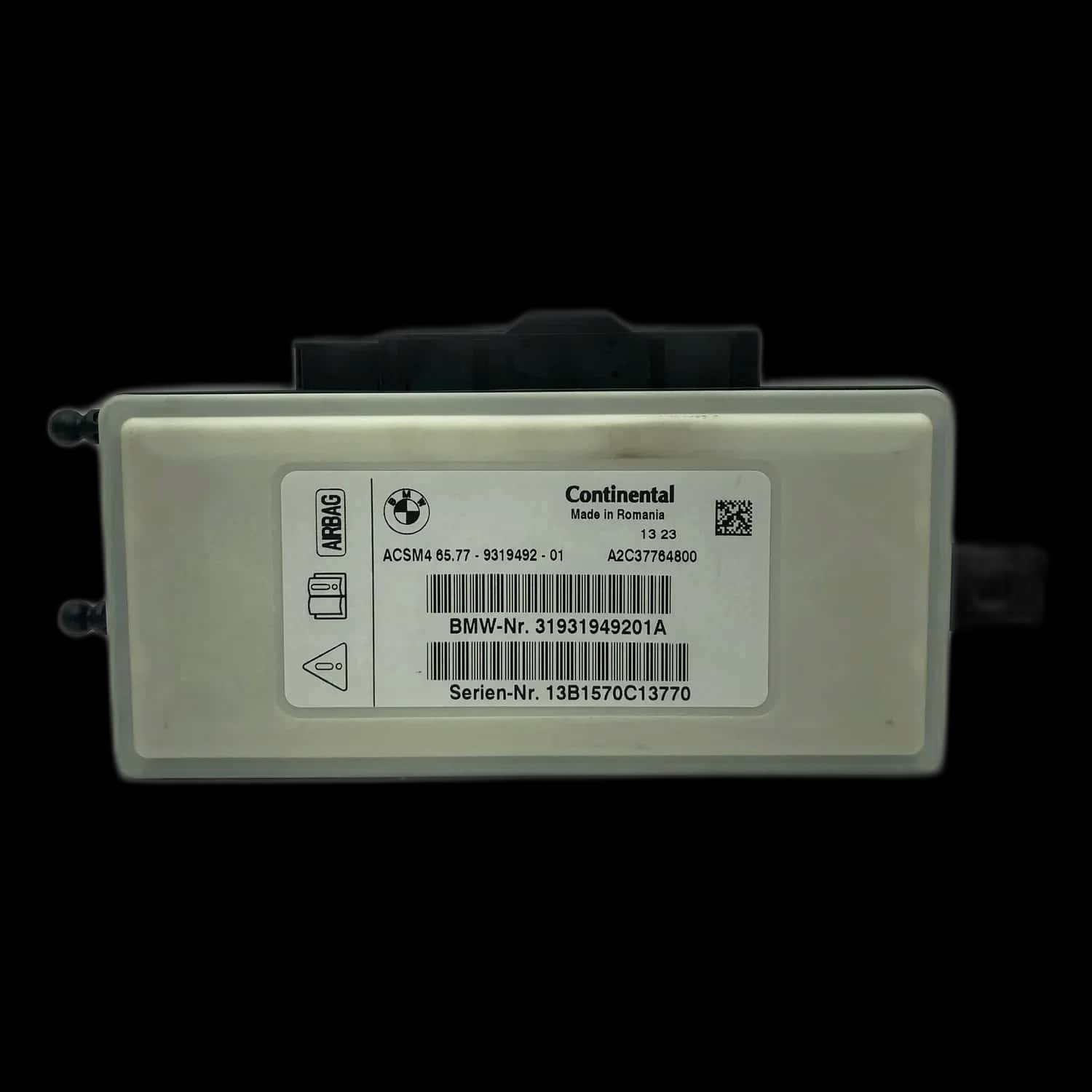
airbag control unit repair BMW X3 E83
from€79.00
 Quality since 2002
The airbag technology used in the BMW X3 varies depending on the model year and generation. For the professional repair of a defective BMW X3 airbag control unit, it is crucial to understand the specific requirements of each series to ensure true-to-original functionality and maximum safety.
The BMW X3, a premium mid-size SUV, was first introduced in 2003. Since then, it has evolved through several generations, with each new generation bringing advancements in safety and technology.
With the evolution of the BMW X3 from the first generation (E83) to the latest generation (G01), the airbag systems have also been continuously improved. This means that the airbag control units for each model series have specific features that must be considered during repair.
A defective airbag control unit can impair the function of the entire safety system and must be repaired or replaced immediately. These units often store crash data after an accident, which requires a reset or special repair to restore the system to full functionality.
A professional repair of an airbag control unit for your BMW X3 is essential. It ensures that all airbags deploy reliably when needed and that your vehicle meets the highest safety standards.
The BMW X3 has been produced in three main generations, each using different airbag control units and safety architectures. The development of the safety system reflects technological advances from 2003 to the present.
The first generation of the BMW X3, the E83, was produced from 2003 to 2010. This model established the X3 as a compact, sporty SUV in the premium segment and already offered multiple airbags as standard.
The second generation, the F25, followed from 2010 to 2017. This series not only featured a visual facelift but also further developed safety features. Airbags remained standard, supplemented by optional features such as knee airbags, which required modifications to the control units.
The third generation, the G01, has been on the market since 2017. It features comprehensive airbag systems, including front, side, curtain, and often knee airbags. The advanced safety technology used in this generation places the highest demands on the airbag control units.
Most recently, the BMW X3 was replaced by the fourth generation, the G45, in 2024. Each generation of the BMW X3 has specific technical characteristics that require precise knowledge of the respective airbag control units for repair purposes.
BMW X3 airbag control units can be uniquely identified by their specific part number, model year, and vehicle identification number (VIN). Each generation, and sometimes even certain trim levels, use specific control unit versions, which are crucial for optimal compatibility.
The part number is the most important indicator of the correct airbag control unit. This number can be found directly on the control unit housing itself, which is usually located near the center tunnel or under the carpet.
The year of manufacture of your BMW X3 is also a crucial criterion, as the airbag systems and thus the control units have changed significantly across the various model generations (E83, F25, G01).
Additionally, the vehicle identification number (VIN) can be used to determine the exact specification of the installed airbag control unit via the BMW database. This is particularly helpful if the part number is illegible or if there is uncertainty.
Correct identification ensures that the appropriate control unit is used during repair or replacement, which harmonizes perfectly with the existing security system of your BMW X3 and ensures its full functionality.
The airbag configuration of the BMW X3 varies significantly depending on the model year and the specific model generation. While early models like the E83 used basic airbag systems, newer generations like the G01 feature enhanced safety packages with additional airbag modules for comprehensive occupant protection.
In the first generation of the BMW X3, the E83 (2003-2010), front and side airbags for the driver and front passenger were standard equipment. This basic airbag configuration formed the basis for the vehicle's passive safety.
With the introduction of the F25 (2010-2017), airbag safety was further enhanced. In addition to the standard front and side airbags, optional knee airbags for the driver and front passenger were also available, increasing protection in frontal collisions.
The third generation, the G01 (since 2017), features an even more comprehensive airbag system as standard. Front, side, curtain (head), and sometimes knee airbags are usually standard equipment. This expanded configuration ensures maximum protection for all occupants in a wide variety of accident types.
The continuous development of airbag systems across generations underscores BMW's commitment to occupant safety. This is reflected in the increasingly complex airbag control units, which are precisely tailored to the respective equipment.
Airbag24 repairs your component in Berlin — usually within 3–4 working days.
Standard shipping within Germany is free; we normally return your part by UPS.
You pay for and insure the inbound shipment to us. On explicit request we ship by express — the extra cost is borne by the customer.
If you withdraw from the contract, you bear the cost of returning the item.