
BMW Z3 airbag control unit repair(2)
2 products
What should I pay attention to with BMW Z3 airbag control units?
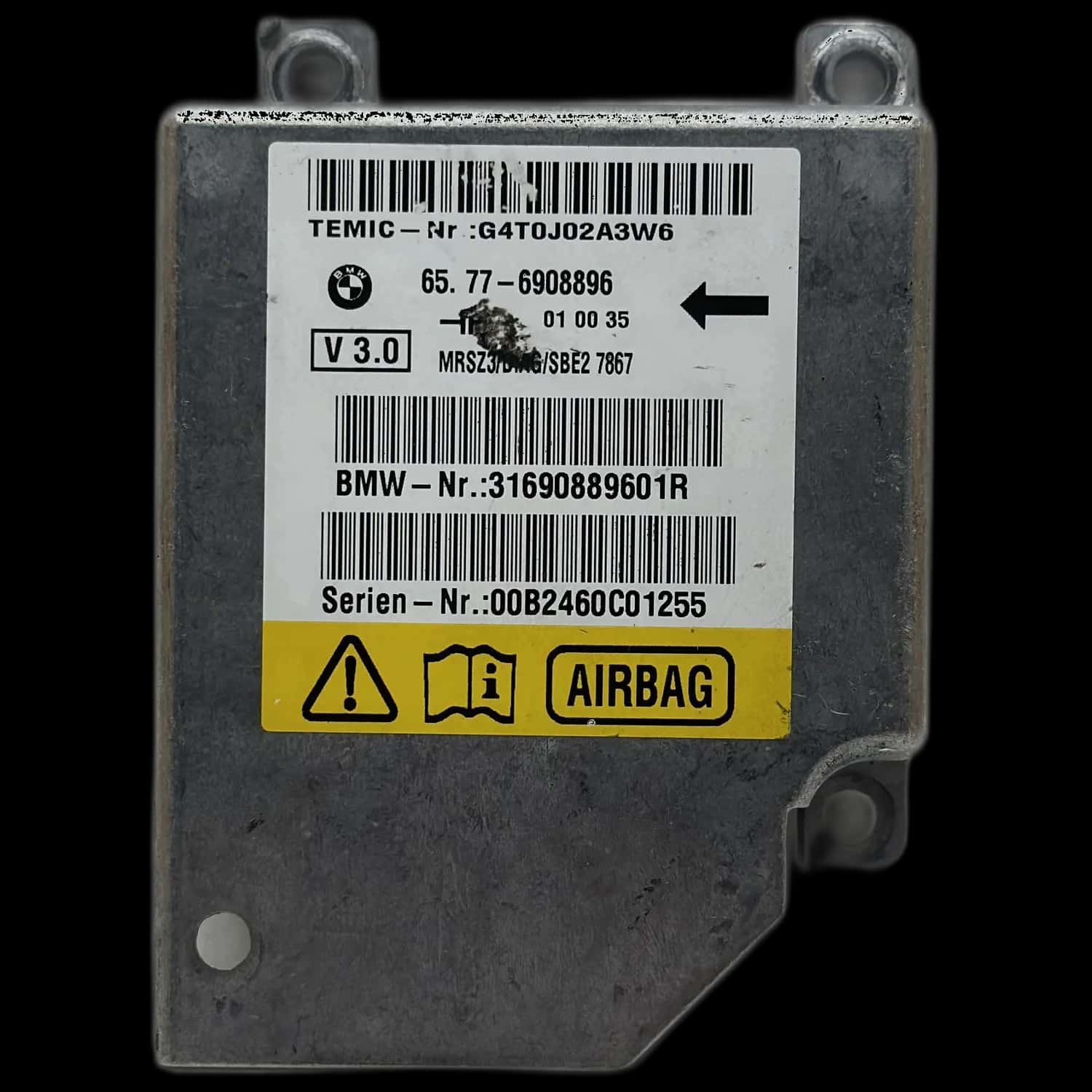
The airbag technology used in the BMW Z3 varies depending on the model year and trim level. To ensure a professional BMW Z3 airbag control unit repair, it is essential to identify the specific control unit variant so that all safety functions can be faithfully restored.
The BMW Z3, produced from fall 1995 to July 2002, was based on the proven E36 compact platform and was manufactured exclusively in the USA. Over this period, safety systems adapted to new standards, requiring in-depth knowledge of the respective airbag systems.
Initially, basic airbag systems were standard, but with the 1999 model update and the vehicle's further development, more advanced protection features were added. A defective BMW Z3 airbag control unit significantly compromises safety and should be repaired immediately to ensure full functionality of the passive safety system.
Which BMW Z3 generations are there?
The BMW Z3 was produced in one main generation, which underwent a comprehensive facelift in April 1999. This facelift version brought updates to the engines and equipment, which also affected the installed airbag control units and the development of the safety system from 1995 to 2002.
The first phase of the BMW Z3 includes the models from the start of production in 1995 until the facelift in spring 1999. During this time, primarily the roadster variants (E36/7) came onto the market.
From April 1999, the facelift marked the second phase of the Z3 series, which included both the roadster and the coupé (E36/E38) introduced in 1998. This facelift resulted in expanded engine ranges and improved interior equipment, accompanied by adjustments to the electronic systems, including the airbag control unit.
Although they represent a continuous generation, the differences between pre-facelift and facelift models are relevant for BMW Z3 airbag control unit repair, as different versions of the control unit may be installed. This underscores the need for precise identification by model year.
How do I identify my BMW Z3 airbag control unit?
BMW Z3 airbag control units can be uniquely identified by their specific part number, the exact year of manufacture, and often also by the vehicle identification number (VIN). Each generation and model update used specific control unit variants, which are crucial for optimal compatibility and functionality of the airbag system.
The part number is located directly on the housing of the airbag control unit and is the most important identifier for a professional repair. Since the Z3 is based on the E36 platform, some component numbers are shared with other models in this series, but the airbag control units are Z3-specific or customized.
The year of manufacture is also a critical factor, especially since the 1999 facelift brought significant changes. Correctly assigning the control unit to your BMW Z3 (E36/7 Roadster or E36/8 Coupé) ensures that the repair is precisely tailored to the installed safety components and that the airbag system is fully functional after the repair.
What airbag equipment does the BMW Z3 have?
The airbag configuration of the BMW Z3 varied considerably depending on the model year and the chosen trim level. While early models offered a basic safety package, later models and higher-end trim levels featured enhanced airbag modules that improved protection for the driver and front passenger.
The BMW Z3 was equipped with at least one driver airbag as standard to ensure basic protection. With increasing safety requirements, the Z3 could be upgraded with a passenger airbag (code S243A) as an optional extra.
For more comprehensive side impact protection, side airbags for the driver and front passenger (code S260A) were available in many trim levels or as an option. These enhancements to the airbag system made the vehicle safer and met the advanced standards of the time.
In addition to the airbags, the BMW Z3, depending on the model variant, also featured a rollover protection system with roll bars to protect the occupants in the event of a rollover. These integrated safety systems were an important component of the sporty roadster and coupe, making professional repair of the airbag control unit essential in the event of a defect.
Shipping & repair from Germany
Airbag24 repairs your component in Berlin — usually within 3–4 working days.
Standard shipping within Germany is free; we normally return your part by UPS.
You pay for and insure the inbound shipment to us. On explicit request we ship by express — the extra cost is borne by the customer.
If you withdraw from the contract, you bear the cost of returning the item.