
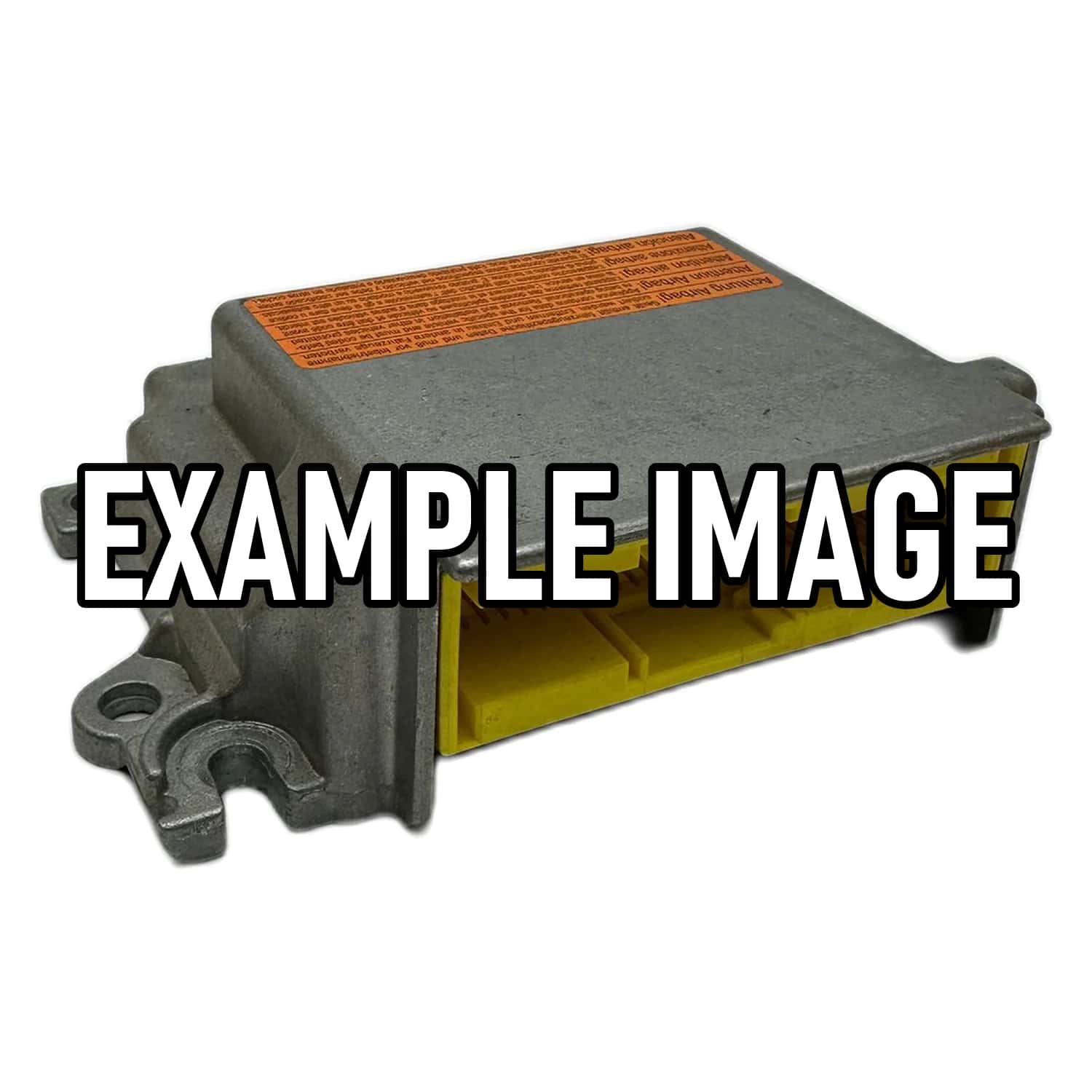
Chevrolet Captiva airbag control unit repair(1)
1 product
What should I pay attention to with Chevrolet Captiva airbag control units?
The airbag technology used in the Chevrolet Captiva varies considerably depending on the model year and generation. Airbag24 professionally repairs control units for all Chevrolet Captiva generations with original functionality and a 2-year warranty.
The Chevrolet Captiva, a versatile crossover SUV, was introduced worldwide in 2006 and has undergone various evolutions throughout its production run. The first generation, developed by GM Korea on the GM Theta platform, was available until 2018, while a second generation, based on the Chinese Baojun 530, followed in select markets from 2018.
The evolution of the Chevrolet Captiva airbag system reflects technological advances in vehicle safety. While early models already offered a solid baseline, later versions and facelifts were equipped with optimized safety systems, each placing specific demands on the airbag control module (SRS SDM). This means that the precise design and programming of the airbag control module is crucial for compatibility and proper function to ensure occupant safety.
Which Chevrolet Captiva generations are there?
The Chevrolet Captiva has been produced in two main generations, each with different airbag control units. The evolution of the safety system reflects technological advances from 2006 to the present.
The first generation of the Chevrolet Captiva (production period approximately 2006 to 2018) was a compact crossover SUV developed by GM Korea. This model was available as both a 5- and 7-seater and was primarily aimed at families and leisure-oriented customers. In 2012, the first generation received a facelift that not only brought visual changes but also technical adjustments that could affect the installed components, including the airbag control unit.
The second generation of the Chevrolet Captiva, introduced from late 2018 (e.g., in Colombia and Thailand), is a rebadged Baojun 530, manufactured in China by SAIC-GM-Wuling. This modern reissue retains the compact SUV segment, but with its new design and production base, it specifically targets global growth markets, particularly in Latin America and Asia. Due to different vehicle architectures and safety standards, each of these generations uses specific airbag control units tailored to the respective model and its equipment.
How do I identify my Chevrolet Captiva airbag control unit?
Chevrolet Captiva airbag control units can be uniquely identified by part number, model year, and vehicle identification number (VIN). Each generation, and even certain facelift models, use specific control unit variants for optimal compatibility and functionality.
Precise identification of the installed airbag control unit is essential for a successful repair or replacement. The control unit's part number, located directly on the housing, provides information about the exact specification. Furthermore, the vehicle's year of manufacture and the full vehicle identification number (VIN) play a crucial role, as airbag control units are often coded specifically for the vehicle and linked to the VIN. This ensures that the module communicates perfectly with the vehicle's other safety systems and deploys correctly in the event of an impact.
Errors or crash data stored in the control unit require repair or reset to restore the airbag system's functionality. Correct identification via the part number and model year of the Chevrolet Captiva is essential to avoid compatibility issues and ensure the vehicle's full safety.
What airbag equipment does the Chevrolet Captiva have?
The airbag configuration of the Chevrolet Captiva varies depending on the model year, trim level, and production market. While early models already offered extensive basic equipment, newer generations feature enhanced safety packages with additional airbag modules and advanced assistance systems.
The first generation of the Chevrolet Captiva (2006-2018) was already equipped with a solid passive safety system from the factory. This included at least two front airbags for the driver and front passenger, as well as roof airbags, also known as curtain airbags. Seat belt pretensioners and belt force limiters were also installed to optimally protect the occupants in the event of a collision. Depending on the trim level and model year, additional airbags, such as side airbags or knee bolsters, could be added as standard or optional.
Passive safety was supplemented by active systems such as Electronic Stability Control (ESP) and Brake Assist. All-wheel-drive versions of the first generation also included a hill descent control system. This combination of airbags and electronic assistance systems ensured a high level of vehicle safety in its class and underscored the role of the airbag control unit as a central component that coordinates all these systems in an emergency.
Similar or improved safety standards are expected for the second generation of the Chevrolet Captiva (from 2018), which will primarily be sold in growth markets. While the specific details of the airbag equipment may vary by market, it is expected to meet modern safety requirements and offer a comprehensive package of airbags for occupant protection. The Chevrolet Captiva's consistently solid safety features make it a trustworthy vehicle, where the proper functioning of the airbag control unit is of utmost importance.
Common fault codes in this category
Shipping & repair from Germany
Airbag24 repairs your component in Berlin — usually within 3–4 working days.
Standard shipping within Germany is free; we normally return your part by UPS.
You pay for and insure the inbound shipment to us. On explicit request we ship by express — the extra cost is borne by the customer.
If you withdraw from the contract, you bear the cost of returning the item.