
Chevrolet Evanda airbag control unit repair(1)
1 product
What should I pay attention to with Chevrolet Evanda airbag control units?
The airbag control unit in the Chevrolet Evanda is a key component for the vehicle's safety. While the Chevrolet Evanda was produced in a single generation, professional repair of the control unit in the event of a defect remains crucial to ensure the full functionality of the airbag system. A professional repair can restore the original operational reliability.
The Chevrolet Evanda, developed by Daewoo and marketed in Europe under the Chevrolet label from approximately 2002 to 2006, established itself as a spacious mid-size sedan. This model was characterized by a consistent design, without the facelifts or generational changes common in other vehicle series.
The airbag technology in the Evanda was based on the standard of the time, with a robust and reliable system. The control unit is the "brain" of this system; it receives data from various sensors and decides whether to deploy the airbags in the event of a collision. A malfunction of the control unit can seriously compromise safety and is often signaled by an illuminated airbag warning light.
Which Chevrolet Evanda generations are there?
The Chevrolet Evanda was produced in only one generation and remained essentially unchanged throughout its production run from 2002 to 2006. This means that the basic architecture of the airbag system and its control units remained consistent, which can simplify parts searches and repairs.
Unlike many other car models that have undergone multiple generations and extensive facelifts over the years, the Chevrolet Evanda has remained true to its first (and only) generation. This reflects its positioning as an affordable yet well-equipped option in the mid-size segment. Although there have been no official generational changes, minor adjustments by suppliers or firmware versions of the airbag control units may have occurred over the years, making accurate identification all the more important.
How do I identify my Chevrolet Evanda airbag control unit?
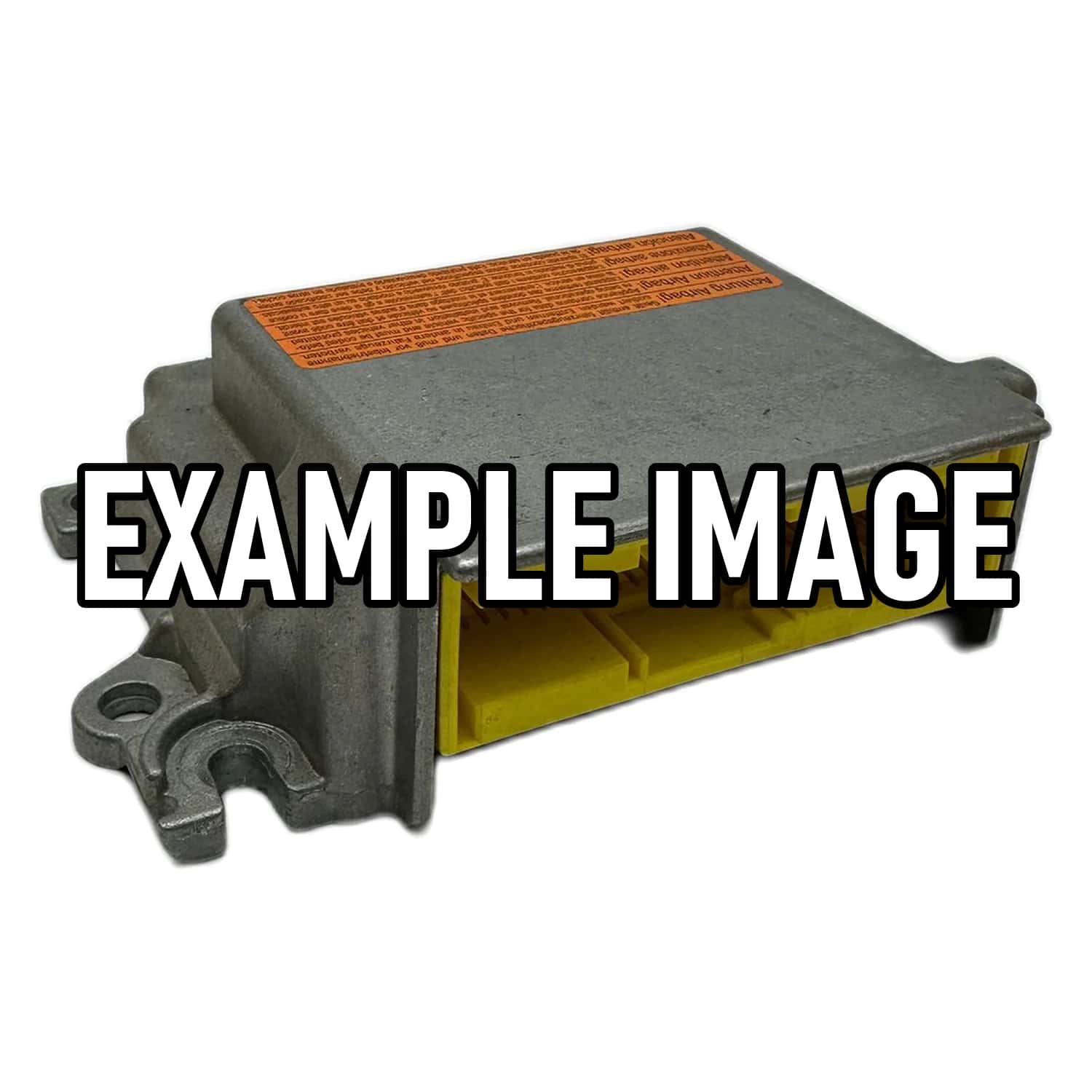
To identify the correct airbag control module for your Chevrolet Evanda and ensure a successful repair or replacement, the part number, the vehicle's year of manufacture, and ideally the vehicle identification number (VIN) are crucial. Each control module is identified by a specific part number that indicates the hardware and software version.
The part number of the airbag control unit can be found directly on the component housing. This number is crucial as it ensures compatibility with the specific vehicle model and its equipment. Despite the Evanda's single generation, different equipment levels or slight revisions by suppliers (such as Bosch or Siemens, who often acted as component manufacturers) can lead to different part numbers within the series. The VIN also helps to verify your vehicle's exact configuration and identify the appropriate module.
What airbag equipment does Chevrolet Evanda have?
The Chevrolet Evanda came standard with a robust airbag system tailored to the safety standards of its production era. All models featured front and side airbags to provide comprehensive occupant protection in collisions.
Standard equipment included large-volume full-size front airbags for the driver (60 liters) and front passenger (120 liters), designed to provide maximum protection in a frontal impact. Side airbags were also installed to protect occupants in side collisions. It's important to note that curtain airbags and an electronic stability program (ESP) were not available for the Evanda, reflecting cost pressures in this segment at the time. However, passive safety was enhanced by additional features such as ABS, traction control (anti-skid control), electronic brake-force distribution (EBD), and reinforced side impact protection through special doors, B-pillars, underbody, and roof. A fully functional airbag control unit is critical for the proper functioning of all these passive safety systems to save lives and minimize serious injuries in an emergency.
Common fault codes in this category
Shipping & repair from Germany
Airbag24 repairs your component in Berlin — usually within 3–4 working days.
Standard shipping within Germany is free; we normally return your part by UPS.
You pay for and insure the inbound shipment to us. On explicit request we ship by express — the extra cost is borne by the customer.
If you withdraw from the contract, you bear the cost of returning the item.