
Chevrolet Express Airbag Control Unit Repair(2)
2 products
What should I consider with Chevrolet Express airbag control units?
The airbag technology used in the Chevrolet Express varies depending on the model year. However, Chevrolet Express airbag control units of all generations are generally repairable and can be restored to their original functionality.
The Chevrolet Express has been a staple on North American roads since 1996 and is still produced today as a rugged full-size van for a wide variety of purposes. This exceptionally long production span, from 1996 to an expected 2027, represents a remarkable diversity in the technology used. Therefore, when servicing, and especially when repairing the airbag control unit, the exact model year is crucial to ensure compatibility with the vehicle's specific systems.
The evolution of the airbag system in the Chevrolet Express reflects the technological advances in the automotive industry over nearly three decades. From the initial basic systems in the early production phase to the introduction of more complex modules with more sensors and additional airbags, to systems networked with advanced assistance systems, the technology has continually evolved. A professional repair of a defective airbag control unit must take these evolutionary differences into account to maintain the full functionality of the safety system.
Which Chevrolet Express generations are there?
The Chevrolet Express has essentially been produced as one main generation, with each phase characterized by extensive revisions and different airbag control units. The evolution of the safety system reflects technological advances from 1996 to the present.
Although the Chevrolet Express has officially been listed as a single main generation since its debut in 1996, its long production history has seen several significant phases and facelifts that have had significant impacts on the components installed, including the airbag control units. The earliest models (1996–2002) were based on the GMT-600 platform and featured a specific electronics architecture. Later vehicles, especially from around 2014 onwards, switched to the more modern GMT-610 platform, which brought not only new engines but also adapted electronic modules.
Other major revisions occurred around 2015 with the introduction of digital radios, and from 2018 onward, when the vehicle received new headlights and the option of advanced driver assistance systems. Each of these updates could require changes to the wiring, communication protocols, or airbag control unit software. For a precise repair, it is therefore essential to know the exact "generation" or production phase of your Chevrolet Express in order to specifically repair the defective module.
How do I identify my Chevrolet Express airbag control unit?
Chevrolet Express airbag control units can be uniquely identified by part number, model year, and vehicle identification number (VIN). Each generation phase and model variant uses specific control unit variants for optimal compatibility with the vehicle's respective safety system.
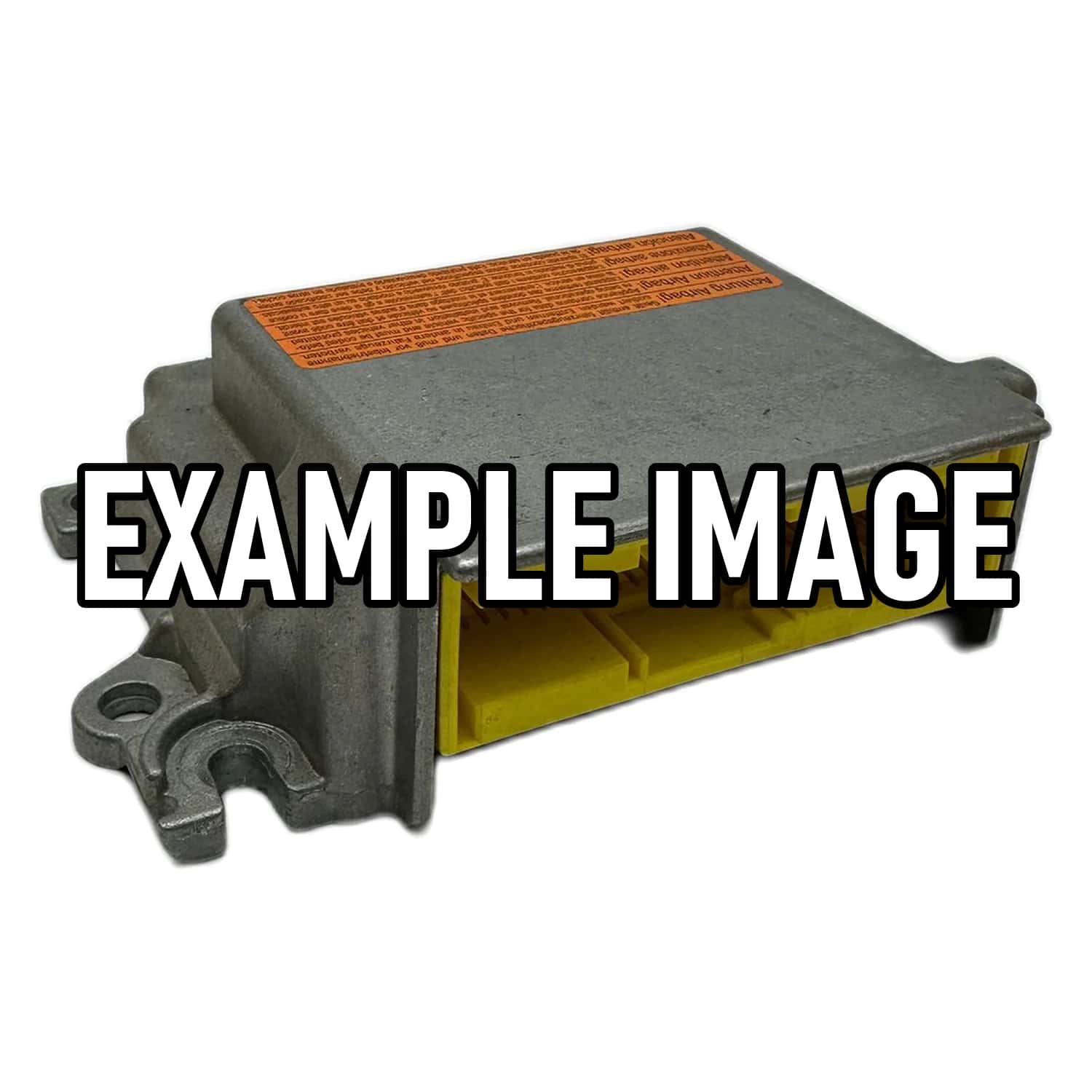
Correctly identifying your Chevrolet Express airbag control module is the first and most important step for a successful repair. The module's specific part number, often printed directly on the control module's housing, serves as a unique identifier and indicates compatibility with specific models and years. This number is crucial for ensuring the correct replacement part or repair procedure, especially since the control modules have evolved significantly over the Express's long production run.
In addition to the part number, the exact year of your Chevrolet Express and the vehicle identification number (VIN) provide valuable information for the precise specification of the airbag control module. This data can be used to account for even small differences between model years or specific trim levels that are relevant to the functionality of the safety system. A defective airbag control module is often indicated by a permanently illuminated airbag warning light in the instrument panel and requires a quick and accurate diagnosis to restore full system functionality through a targeted repair.
What airbag equipment does the Chevrolet Express have?
The airbag configuration of the Chevrolet Express varies depending on the model year, trim level, and intended use (e.g., Cargo Van vs. Passenger Van). While early models used basic airbag systems, newer generations feature enhanced safety packages with additional airbag modules.
The passive safety features of the Chevrolet Express have been continuously improved over the years and adapted to increasing vehicle safety requirements. Frontal airbags for the driver and front passenger are standard in all Chevrolet Express models. Depending on the configuration and model year, especially in the passenger variants, this basic equipment is supplemented by a range of additional airbag modules. These include knee airbags that enhance lower extremity protection, and seat-mounted side airbags for the driver and front passenger, which provide additional protection in side impacts.
Additional safety is provided by head airbags that extend along the roof rail and can protect not only the front occupants, but depending on the model, also the rear rows of seats from head injuries in side collisions. In addition to the airbags, seat belt pretensioners with three-point belts are standard in all seating positions, optimally positioning the occupants in the event of an impact and minimizing the risk of injury. Starting around 2018, active assistance systems such as lane departure warning, collision warning, and blind spot monitoring were also offered as options for the Chevrolet Express. These systems round out the van's safety concept and integrate the airbag control unit into a more comprehensive safety system.
Common fault codes in this category
Shipping & repair from Germany
Airbag24 repairs your component in Berlin — usually within 3–4 working days.
Standard shipping within Germany is free; we normally return your part by UPS.
You pay for and insure the inbound shipment to us. On explicit request we ship by express — the extra cost is borne by the customer.
If you withdraw from the contract, you bear the cost of returning the item.