
Chevrolet Tahoe airbag control unit repair(5)
5 products
What should I consider with Chevrolet Tahoe airbag control units?
The airbag technology used in the Chevrolet Tahoe varies considerably depending on the model year and generation. Repairing airbag control units for the Chevrolet Tahoe therefore requires specific expertise to ensure original functionality and full restoration of safety standards.
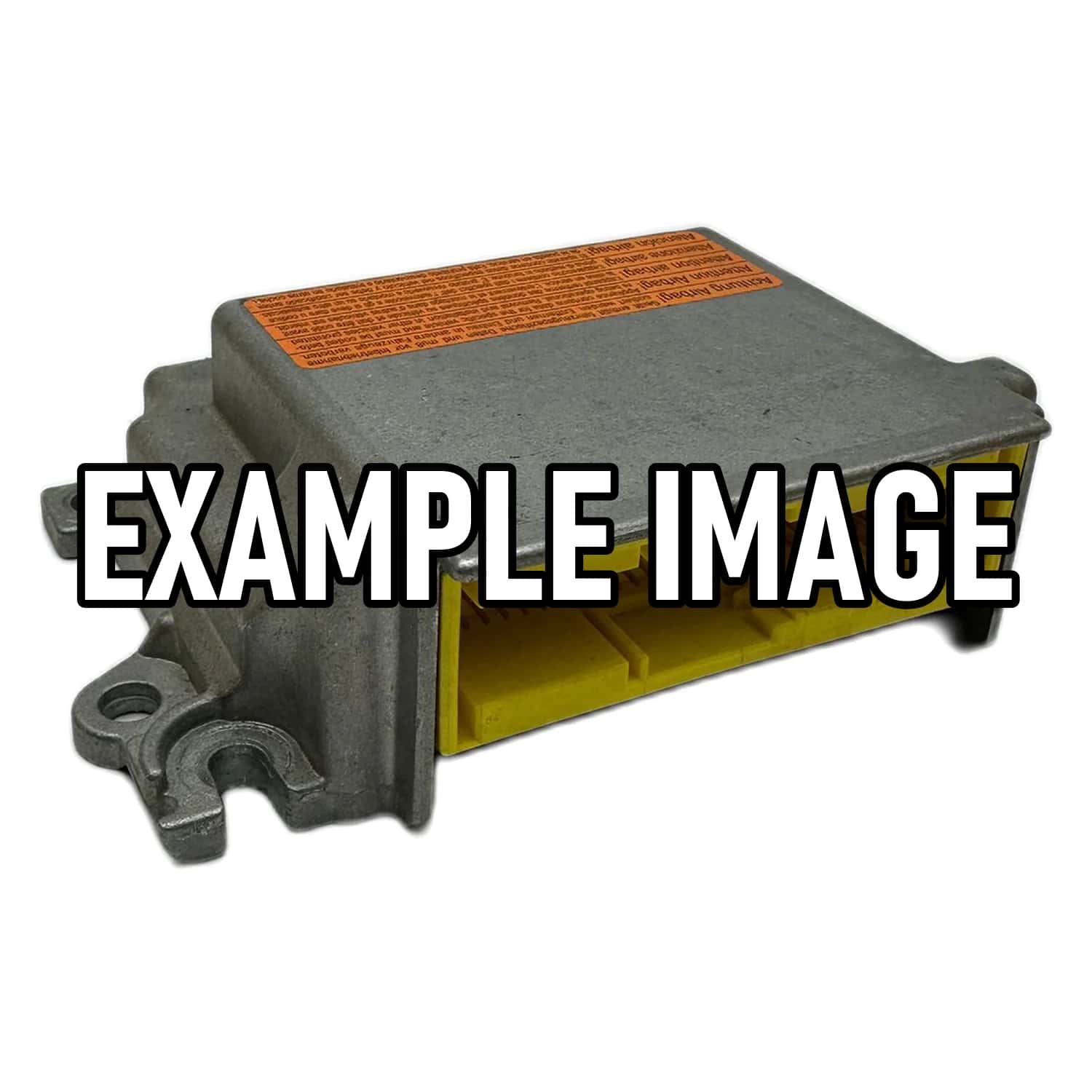
Since its introduction in 1995, the Chevrolet Tahoe has continuously evolved. From the rugged first generation to today's state-of-the-art models, increasingly complex safety systems have been integrated, including the airbag control unit, the Sensing and Diagnostic Module (SDM).
The evolution of airbag systems reflects technological advances, from simple front airbags in early models to comprehensive multi-zone airbag systems in the latest generations. Each of these systems relies on a specific control unit, the correct functioning of which is absolutely crucial for occupant safety.
Which Chevrolet Tahoe generations are there?
The Chevrolet Tahoe has been produced in a total of five generations, each with different airbag control units. The evolution of the safety system reflects technological advances from 1995 to the present.
The first generation (1995–1999) of the Chevrolet Tahoe was based on the GMT400 platform and was initially available as a 2- and 4-door. Front airbags were primarily standard during this era, while side airbags were not yet standard. This meant that the airbag control units in these models were designed for simpler systems.
The second generation (2000–2006), based on the GMT800 platform, marked a significant advance in safety technology. Now available only as a four-door, it introduced more advanced safety systems such as side airbags and improved stability control as standard equipment for the first time. The airbag control units in these models are correspondingly more complex.
The third generation (2007–2014), based on the GMT900 platform, brought with it a comprehensive redesign. These models offered up to nine seats and improved interior features. More comprehensive airbag systems with front, side, and curtain airbags were installed as standard, further increasing the demands on the airbag control unit.
The fourth generation (2015–2020) based on the GMTK2UC/G platform benefited from a quieter interior, increased space and efficiency, and more modern technology. The airbag systems were further refined, and the control units were designed for seamless integration with the advanced driver assistance systems.
The current fifth generation (since 2021), based on the GMT1YC platform and facelifted for 2025, represents the pinnacle of development. Featuring more powerful engines, optional diesel engines, and state-of-the-art safety and assistance systems, the airbag control units of these models are highly complex and require precise matching with the vehicle VIN when repaired.
How do I identify my Chevrolet Tahoe airbag control unit?
Chevrolet Tahoe airbag control units can be uniquely identified by part number, model year, and vehicle identification number (VIN). Each generation of the Tahoe uses specific control unit variants for optimal compatibility with the respective vehicle system.
The airbag control unit part number is the most important identifier and is located directly on the module, usually under the driver's seat, in the center console, or behind the dashboard. It is crucial to record this number accurately to ensure compatibility in the event of a repair or replacement.
In addition to the part number, the exact year of manufacture and the vehicle identification number (VIN) play a crucial role. Newer airbag control modules in Chevrolet Tahoes are often directly linked to the vehicle's VIN. This means that a replacement module, even if it has the correct part number, may need to be reprogrammed to communicate with the vehicle and avoid an airbag warning light.
What airbag equipment does the Chevrolet Tahoe have?
The airbag configuration of the Chevrolet Tahoe varies considerably depending on the model year and trim level. While early models use basic airbag systems, newer generations feature enhanced safety packages with additional airbag modules for comprehensive occupant protection.
In the first generation of the Chevrolet Tahoe (1995-1999), front airbags for the driver and front passenger were generally standard equipment. Side airbags were generally not available as standard equipment during this period, reflecting the complexity of the systems at that time.
Starting with the second generation (2000-2006), with the introduction of the GMT800 platform, more advanced safety systems became mandatory. These included side airbags in addition to front airbags, significantly improving crash protection and increasing the number of airbag modules to be monitored.
Newer generations of the Chevrolet Tahoe, especially from the third generation (2007-2014) and beyond, are equipped with comprehensive airbag systems. These include front, side, and curtain airbags, which are often installed as standard. The airbag control units (SRS SDM) of these models are therefore significantly more complex and require precise repair or professional replacement with appropriate programming in the event of a defect or an accident to ensure safety.
The Chevrolet Tahoe, a full-size luxury SUV, was always designed with a focus on comfort, space, and safety for families and frequent drivers. A functioning airbag system is a key component of the passive safety system, essential for the high level of safety offered by this vehicle class.
Shipping & repair from Germany
Airbag24 repairs your component in Berlin — usually within 3–4 working days.
Standard shipping within Germany is free; we normally return your part by UPS.
You pay for and insure the inbound shipment to us. On explicit request we ship by express — the extra cost is borne by the customer.
If you withdraw from the contract, you bear the cost of returning the item.