
Chrysler airbag control unit repair(44)
After deployment the control unit stays locked. Select your Chrysler airbag control unit and send it to us for testing or repair.
What should I consider with Chrysler airbag control units?
The airbag technology used in Chryslers varies depending on the model and year of manufacture. Airbag24 professionally repairs control units for all Chrysler model generations with original functionality and a 2-year warranty.
Chrysler, a brand with a long and diverse history, has produced a wide range of vehicles over the decades, from luxurious sedans like the Chrysler 300 to practical family vans like the Pacifica and iconic models like the PT Cruiser. This model diversity is also reflected in the development of its safety systems.
Chrysler's airbag systems have continually evolved to meet the highest safety standards. While early models may have only featured basic airbags for the driver and front passenger, newer Chrysler vehicles integrate comprehensive safety solutions with side airbags, curtain airbags, and knee airbags, forming a holistic protection system.
The airbag control unit, also known as the SRS control unit, is the heart of these safety systems. It is responsible for precisely coordinating the deployment of the airbags and seatbelt pretensioners in the event of a collision and storing critical crash data that causes the unit to deactivate after an accident.
If the airbag control unit is defective or has stored crash data, it must either be replaced or professionally repaired. A repair is a cost-effective alternative to purchasing a new unit, which can cost up to €800, while a specialized repair often costs only between €130 and €200.
Repairing a Chrysler airbag control unit involves erasing this crash data and restoring full functionality. This safety-critical task should only be performed by experienced professionals with the necessary specialized software and expertise for precise diagnosis and repair.
Which Chrysler models are available?
Chrysler has produced over 40 different models, with each model and series generation using different airbag control units. The development of the safety system reflects technological advances.
Chrysler's impressive model range encompasses a wide range of vehicle classes, each with specific requirements for its airbag system. From spacious family MPVs like the Chrysler Voyager and Pacifica to the sporty Chrysler Crossfire and the classic Chrysler LeBaron, there's a vehicle to suit every need.
The most prominent models include the luxurious Chrysler 300 in its various variants (including the 300C, SRT, Touring, and Limited), the versatile Chrysler Pacifica (also available as a hybrid), and the popular Chrysler PT Cruiser (as a sedan and convertible). Each of these models has been further developed over several model years and generations.
Even older icons like the Chrysler New Yorker, Fifth Avenue, Imperial, Dynasty, Concorde, LHS, Intrepid, Cirrus, and Stratus, as well as the compact models Neon, Acclaim, Spirit, Reliant, Aries, E-Class, 200, Laser, Daytona, Shadow, and Sundance, are part of Chrysler's history. This diversity also means a wide range of airbag control units used.
Special models such as the Chrysler 300M, Prowler, TC, and Conquest underscore the brand's philosophy, which was characterized by comfort, style, and sometimes even sporty performance. The development of the safety systems in these models went hand in hand with the respective technological innovations and the growing awareness of occupant protection.
The continued production and updating of models such as the Town & Country (including EV) and the Chrysler 200 demonstrates how airbag equipment has continually adapted to current standards and customer needs, with modern models generally featuring more comprehensive and complex safety systems.
How do I identify my Chrysler airbag control unit?
Chrysler airbag control units can be uniquely identified by part number, model year, and vehicle identification number. Each generation uses specific control unit variants for optimal compatibility.
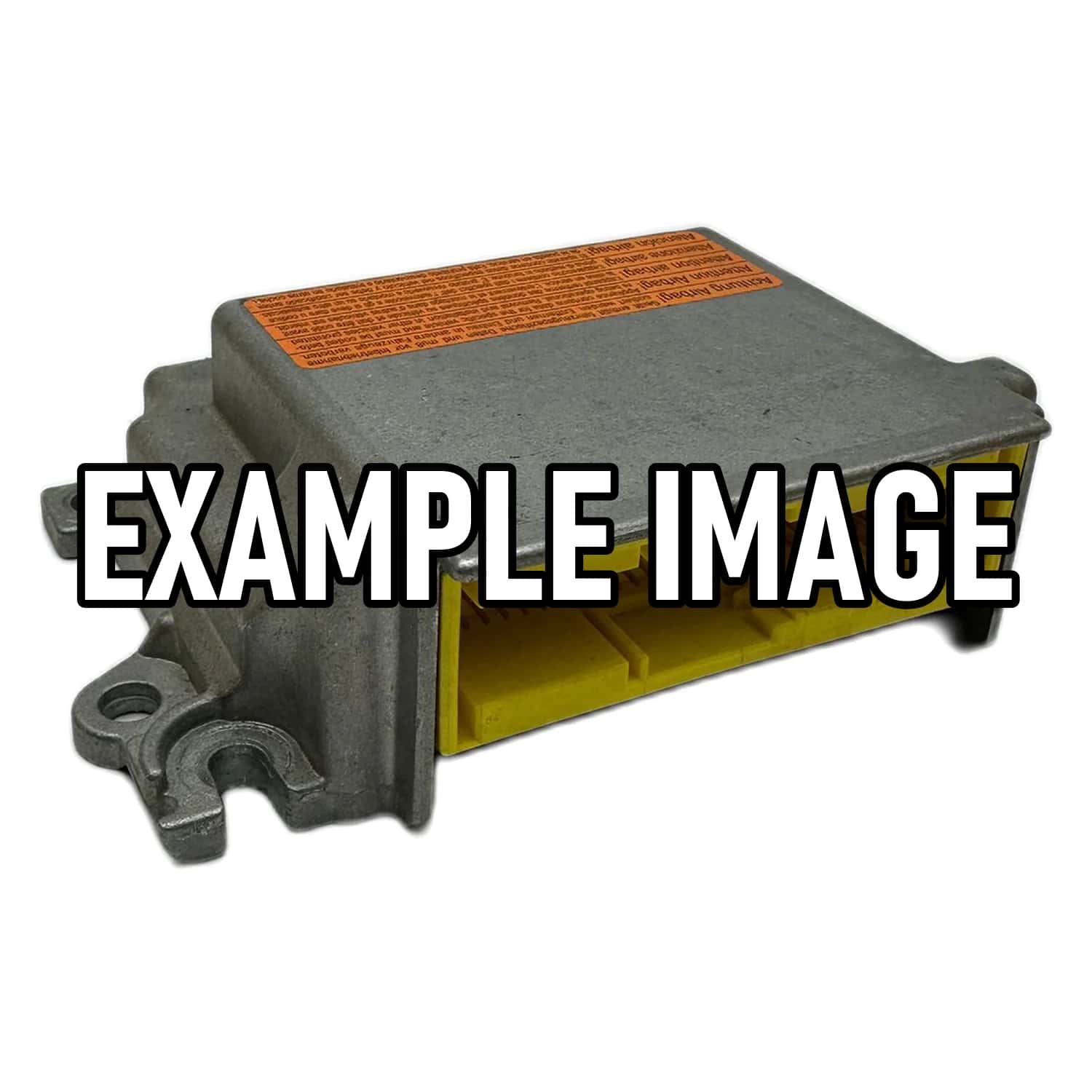
Correctly identifying the airbag control unit is crucial for a successful repair or replacement. The control unit's part number is the most important indicator and is usually found on a sticker directly attached to the unit after it has been removed. It provides information about the manufacturer, model, and specific configuration.
In addition to the part number, the vehicle's year of manufacture and the vehicle identification number (VIN) on the vehicle registration document are of great importance. Even within the same model series and year of manufacture, airbag control units can differ due to different equipment variants or regional specifications.
Professional repair services use this information to identify the exact control unit and ensure compatibility after repair or replacement. This is essential, as an incorrectly identified or incompatible control unit can impair the functionality of the entire safety system and pose serious safety risks.
A thorough understanding of the model and generation differences, such as those found in Chrysler's wide range from the Chrysler Cordoba to the current Pacifica, is essential for precisely identifying the airbag control unit. Error codes read by diagnostic tools can also provide important clues about the type of faulty control unit or its sensors.
What airbag equipment does Chrysler have?
Chrysler's airbag equipment varies by model year and trim level. While early models use basic airbag systems, newer generations feature enhanced safety packages with additional airbag modules.
In the early years of airbag implementation, Chrysler, like many other manufacturers, focused on protecting the driver and front passenger with front airbags. On older or entry-level models, airbags could even be optional, but they quickly established themselves as a basic safety standard.
Over time, the airbag system in Chrysler models such as the Chrysler 300, Pacifica, and Voyager was gradually expanded. This included the introduction of side airbags to protect the upper body in side collisions and head airbags (curtain airbags) that deploy along the front of the window to protect the head in side impacts or rollovers.
Newer and higher-end trim levels, especially premium models like the Chrysler 300C or the Pacifica Hybrid, often include additional airbag modules, such as driver knee airbags. These additional airbags are designed to further disperse impact energy and minimize the risk of injury.
The central airbag control unit is the brain that controls and monitors all of these different airbag modules, as well as the seat belt pretensioners. It receives signals from numerous sensors that detect impact force and direction and decides in milliseconds which airbags need to be deployed and with what intensity.
Recent manufacturer recalls, such as those affecting the Chrysler Pacifica and Voyager due to potential airbag problems, underscore the importance of the precise function of every single component within the complex airbag system. A professional repair of the control unit ensures that all airbag components function reliably in an emergency.
Shipping & repair from Germany
Airbag24 repairs your component in Berlin — usually within 3–4 working days.
Standard shipping within Germany is free; we normally return your part by UPS.
You pay for and insure the inbound shipment to us. On explicit request we ship by express — the extra cost is borne by the customer.
If you withdraw from the contract, you bear the cost of returning the item.