
Chrysler Crossfire Airbag Control Unit Repair(1)
1 product
What should I consider with Chrysler Crossfire airbag control units?
The airbag technology used in the Chrysler Crossfire is unique due to its unique production history and technical basis. Professional repair services ensure that your control unit operates as originally designed, thus restoring your vehicle's safety.
The Chrysler Crossfire was produced from February 2003 to the end of 2007, for the 2004 to 2008 model years. A total of approximately 76,000 units of this sporty two-seater were manufactured. Its distinctive feature lies in its technical similarity to the Mercedes-Benz R170 platform, the first SLK generation used in the DaimlerChrysler era.
The Crossfire's airbag system, known as the Occupant Restraint Controller (ORC) or SRS system, is responsible for deploying the airbags. After an accident or if a malfunction occurs, repairing or resetting the airbag control unit is often the most cost-effective solution. Such repair services allow for a "plug-and-play" rebuild without the need for further programming of the control unit.
Which Chrysler Crossfire generations are there?
The Chrysler Crossfire was produced in *one* single generation, covering the entire production range from 2003 to 2007 and marketed as model years 2004 to 2008. The development of the safety system reflected the state of the art in the sports car class at the time.
There was no second generation of the Chrysler Crossfire or major facelifts during its production run. The vehicle was offered as a coupe and roadster and was based entirely on the technical underpinnings of the Mercedes-Benz SLK-Class R170 series. This unique combination, in which a US manufacturer launched a vehicle with German technology and manufacturing (at Karmann in Osnabrück), makes the Crossfire a special niche product.
Production ceased after 2007, primarily due to insufficient sales, although various special models, such as the more powerful supercharged SRT6, were offered. Despite its brief market presence, the Crossfire established itself as a stylish, compact sports car, offering an exclusive alternative to the similarly engineered Mercedes SLK-Class. It was aimed at car enthusiasts who valued design and a sporty driving experience.
How do I identify my Chrysler Crossfire airbag control unit?
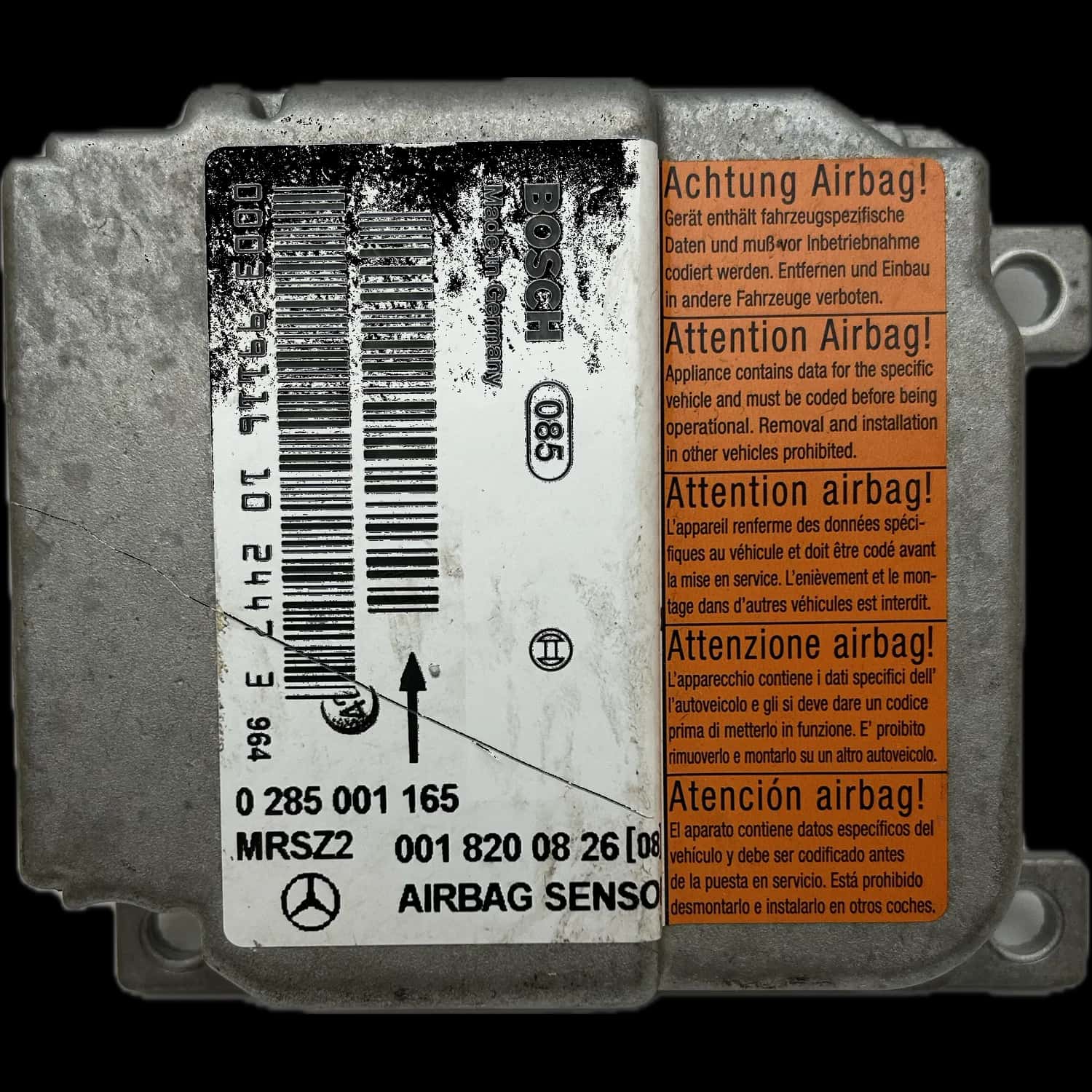
Chrysler Crossfire airbag control units can be uniquely identified by the part number printed on the unit and the vehicle's model year. This information is crucial to ensuring compatibility for repair or replacement, as each batch and model year may use specific control unit variants.
The part number of the airbag control unit, often referred to as the ORC (Occupant Restraint Controller), is usually located on a sticker directly on the unit. To locate the control unit, it must usually be removed. It is typically located in the center console area or under one of the front seats, protected by a panel. The Vehicle Identification Number (VIN) of your Chrysler Crossfire can also provide useful information about the exact specification of the control unit installed.
Since the Chrysler Crossfire only went through one generation, the basic airbag control units are very similar or identical across all model years (2004-2008), although minor revision numbers or country-specific adaptations may exist. Correct identification by part number is therefore essential to ensure that the repair or reset of the defective control unit can be carried out professionally and accurately. A professional diagnosis beforehand helps determine the exact nature of the defect and the compatibility of the unit to be repaired.
What airbag equipment does the Chrysler Crossfire have?
The Chrysler Crossfire's airbags were standard and comprehensive for its class, as it was designed as a small luxury sports car. It featured an integrated safety package with front and side airbags that provided enhanced occupant protection.
The Chrysler Crossfire was equipped with frontal airbags for the driver and front passenger as standard. The driver's airbag was integrated into the steering wheel, while the passenger airbag was mounted in the instrument panel. These frontal airbags were the primary components of the SRS (Supplemental Restraint System) for frontal collision protection.
In addition to the front airbags, the Crossfire featured standard door-mounted side airbags for the driver and front passenger. These side airbags, housed in the door panels, worked synergistically with the seatbelt pretensioners to enhance occupant protection in side collisions or rollovers. There were no known optional airbag variants beyond these standard features, underscoring the consistency of the safety system across all Crossfire models. In-vehicle instructions also advised drivers not to sit too close to the door panels to avoid injury from side airbag deployment, underscoring the presence of these protective components.
Common fault codes in this category
Shipping & repair from Germany
Airbag24 repairs your component in Berlin — usually within 3–4 working days.
Standard shipping within Germany is free; we normally return your part by UPS.
You pay for and insure the inbound shipment to us. On explicit request we ship by express — the extra cost is borne by the customer.
If you withdraw from the contract, you bear the cost of returning the item.