
Citroën airbag control unit repair(61)
Citroën vehicles are electronically demanding. Identify your airbag control unit here and send it to us for testing or repair.
61 products
airbag control unit repair Citroën DS3 I
from€79.00
airbag control unit repair Citroën DS5 I
from€79.00
airbag control unit repair Citroën DS4 I
from€79.00
airbag control unit repair Citroën C5 I
from€79.00

airbag control unit repair Citroën C1 I
from€79.00
What should be considered with Citroën airbag control units?
The airbag technology used in Citroën vehicles varies considerably depending on the model and year of manufacture. Airbag24 professionally repairs control units for all Citroën model generations with original functionality and a 2-year warranty.
Citroën, a brand with a long and rich production history, has launched an enormous variety of vehicles over the decades – from the iconic 2CV to modern electric models. This broad range means that the airbag control units have also evolved across many generations and technological stages.
The development of the airbag system at Citroën reflects the general progress in vehicle safety. While early models only had basic airbags, modern Citroën vehicles are equipped with complex, multi-stage airbag systems that integrate numerous sensors and control units. A defective airbag control unit is usually indicated by a permanently illuminated airbag warning light on the dashboard.
Especially after an accident, it's essential to know that airbag control units store so-called crash data. This data must be erased after the airbag is deployed or an accident occurs so that the control unit can function fully again. Repairing the control unit is possible in many cases and is a significantly more economical alternative to purchasing a new one, which can cost up to €750 or more.
Which Citroën models are there?
Citroën has produced over 60 different models, with each model and series generation using different airbag control units. The development of the safety system reflects technological advances.
Citroën's model range is impressively diverse, ranging from cult classics to cutting-edge electric vehicles. Each of these models, depending on the model year and equipment, is equipped with a specific airbag control unit optimized for the respective safety architecture.
Urban subcompacts include models such as the Citroën C1, C2, and C3, as well as their variants, the C3 Pluriel and C3 Aircross. These vehicles are often the first choice for city dwellers and are characterized by their compactness and maneuverability. Previous models such as the AX, Saxo, and ZX also fell into this category.
For families and long-distance trips, Citroën offers mid-size and luxury models such as the C4 (including the Coupé, Picasso, Grand Picasso, SpaceTourer, and C4X), C5 (including the Aircross and C5X), and the luxurious C6. Older but still popular models such as the Xsara, Xsara Picasso, Xantia, XM, CX, and BX also fall into this category.
In the commercial vehicle and van segment, there are models such as the Berlingo (including Multispace), Jumper, Jumpy, Nemo, Evasion, and SpaceTourer, as well as older cargo carriers such as the C15, C25, and C35. The British variant, the Citroën Relay, is also worth mentioning. These vehicles are designed for robustness and transport capacity, but also feature necessary airbag systems.
With the advancement of electromobility, Citroën has also added electric and hybrid models such as the C-Zero, ë-C4, ë-Berlingo, ë-SpaceTourer, ë-Jumpy, ë-Jumper, and ë-C4X to its portfolio. Sports and special models such as the C3 WRC, Saxo VTS, AX GTI, ZX 16V, Xsara VTS, C2 VTS, C4 VTS, and C2 GT, as well as the DS series (DS3, DS4, DS5), are also part of this broad model history.
How do I identify my Citroën airbag control unit?
Citroën airbag control units can be uniquely identified by part number, year of manufacture, and vehicle identification number. Each generation uses specific control unit variants for optimal compatibility.
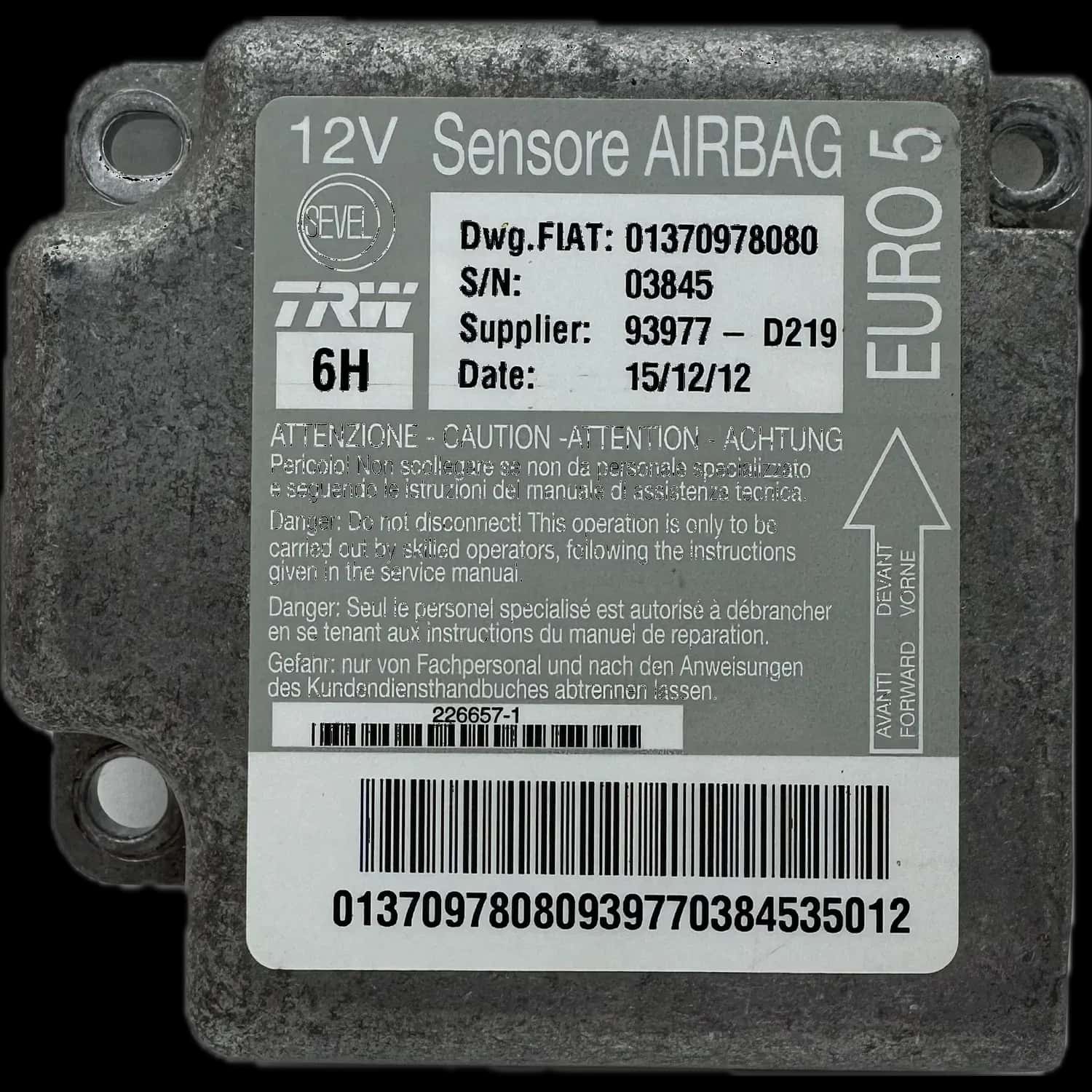
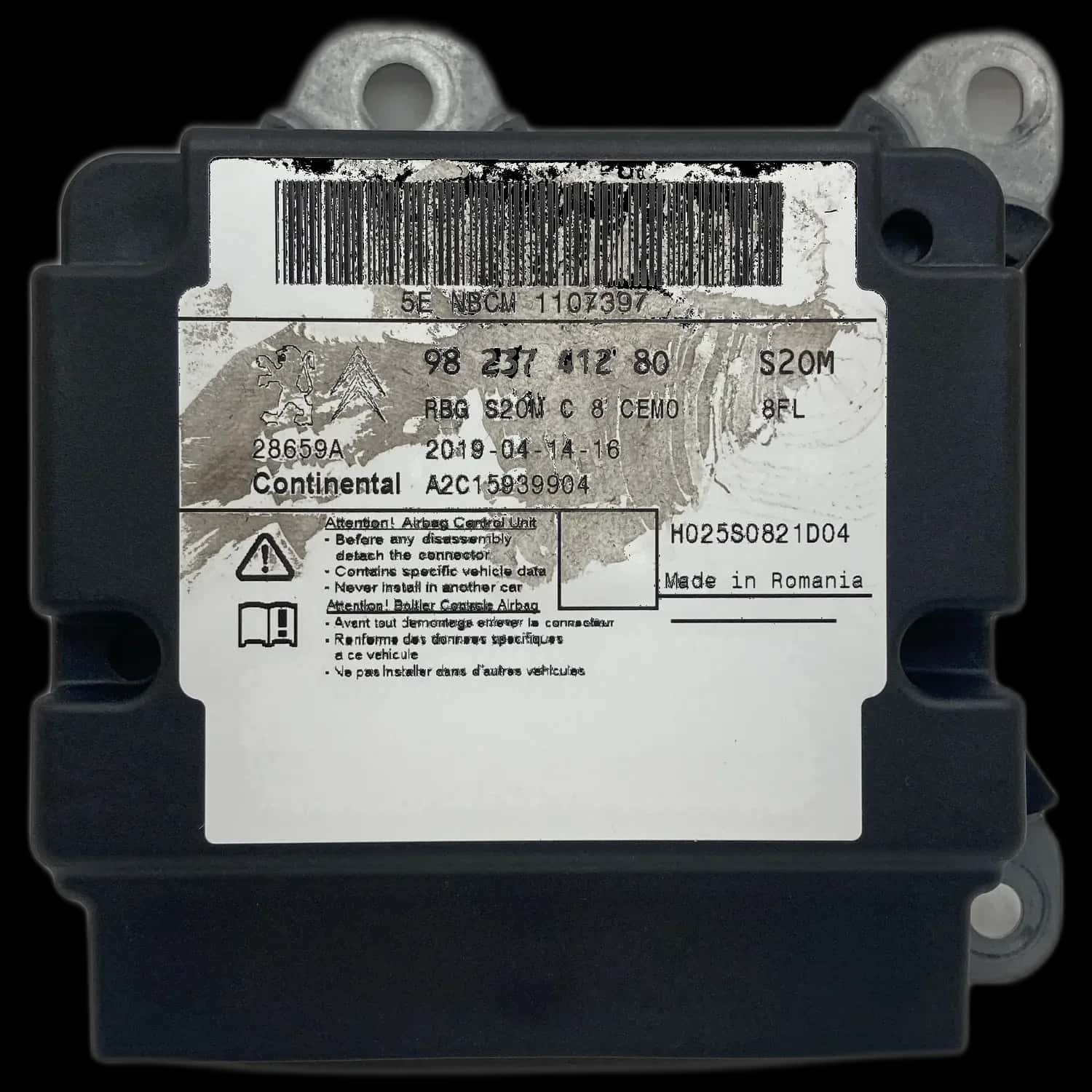
Correctly identifying the airbag control unit is crucial for a successful repair. The most important identifier is the part number, located directly on the control unit's housing. This number is often a long code of numbers and letters that indicates the exact specification of the component.
In addition to the part number, the manufacturer of the control unit (e.g., Bosch, Autoliv, Siemens, TRW) and the exact year of manufacture of the vehicle can also be helpful in identifying the vehicle. Even within the same model series, the control units installed can differ depending on the trim level, engine type, or year of manufacture.
To ensure a quick and correct repair, it is always advisable to read the vehicle's error log. The error codes and the part number of the defective control unit stored there provide the most precise information needed for repair or replacement.
What airbag equipment does Citroën have?
Citroën's airbag equipment varies considerably depending on the model year and trim level. While early models used basic airbag systems, newer generations feature enhanced safety packages with additional airbag modules.
In the early years, especially in models before the 2000s, such as the AX, Saxo, or ZX, a driver airbag was often optional or only standard on higher trim levels. A passenger airbag was even rarer. These systems were essential and provided basic protection in a frontal collision.
With the introduction of models like the C1, C2, C3, and C4 in the early 2000s, airbag equipment became more comprehensive. Front and side airbags for the driver and front passenger increasingly became standard. Later models like the C4 Picasso or C5 often also integrated head airbags (curtain airbags), which significantly improved occupant protection in side collisions and rollovers.
Modern Citroën vehicles, such as the C5 Aircross, C4X, or the ë models, feature sophisticated airbag systems. In addition to the airbags mentioned above, these often also include knee airbags, adaptive airbags that adjust their deployment based on the severity of the impact, and seat belt pretensioners. These systems are closely integrated with other safety systems such as seat belt warnings and crash sensors.
Airbags are also permanently installed in commercial vehicles such as the Berlingo, Jumpy, and Jumper, although the scope of equipment can vary depending on the specific model variant and selected configuration. Regardless of the scope of airbag equipment, the functionality of the control unit is crucial for the safety of all occupants. An illuminated airbag warning light is always a serious warning signal and should be checked immediately by a specialist workshop to restore the safety system's full functionality.
Shipping & repair from Germany
Airbag24 repairs your component in Berlin — usually within 3–4 working days.
Standard shipping within Germany is free; we normally return your part by UPS.
You pay for and insure the inbound shipment to us. On explicit request we ship by express — the extra cost is borne by the customer.
If you withdraw from the contract, you bear the cost of returning the item.