
Citroën C-Zero airbag control unit repair(1)
1 product
What should be considered with Citroën C-Zero airbag control units?
The airbag technology used in the Citroën C-Zero is remarkably consistent due to its consistent production time and generation. Repairs to the airbag control unit for the Citroën C-Zero must be performed with true-to-original functionality to ensure the full safety of the compact electric vehicle.
The Citroën C-Zero, a 100% electric compact car in the City Car (A) class, was produced by Citroën between 2010 and 2020. It was primarily designed for urban mobility and shares its technical basis with the Mitsubishi i-MiEV and the Peugeot iOn.
During its entire production run, there was only one generation without any significant facelifts or model changes. This results in remarkable continuity in the airbag technology and associated control units used, making compatibility across the different model years high.
A defective airbag control unit can impair the functionality of the entire passive safety system and lead to error messages in the cockpit. Such defects can occur, for example, after an accident, but can also be caused by internal component failures or age-related material fatigue.
Repairing an airbag control unit for a Citroën C-Zero requires specific expertise in the electrical and electronic systems of electric vehicles. It is crucial that all safety-relevant parameters are correctly reset and programmed to restore full system functionality after a repair.
Which Citroën C-Zero generations are there?
The Citroën C-Zero was produced in a single generation, without any major facelifts during the entire period from 2010 to 2020. The consistent development of the safety system reflects the technological design as an early, compact electric city car.
From its market launch in 2010 until the end of production in 2020, the Citroën C-Zero remained largely unchanged in its basic structure and technical features. This continuous single generation simplifies the maintenance and repair of components such as the airbag control unit, as there are fewer variant-specific differences to consider.
Production of the C-Zero initially took place at the Mizushima plant in Japan (2010–2012) and was later relocated to the Vigo plant in Spain (2012–2020). However, these relocations did not affect the underlying vehicle platform or key safety components such as the airbag system.
The close relationship with the Mitsubishi i-MiEV and the Peugeot iOn means that many system components, including parts of the airbag system, are based on a common architecture. This standardization contributes to component predictability across all model years of the single generation.
Therefore, when repairing a Citroën C-Zero airbag control unit, it's not necessary to distinguish between different generations, as there was only one. Instead, the focus is on the exact year of manufacture and specific part numbers to ensure exact compatibility if an airbag control unit is defective.
How do I identify my Citroën C-Zero airbag control unit?
Citroën C-Zero airbag control units can be clearly identified by part number, year of manufacture, and vehicle identification number (VIN). Since only one generation exists, the variation in control unit types is manageable, simplifying identification and repair.
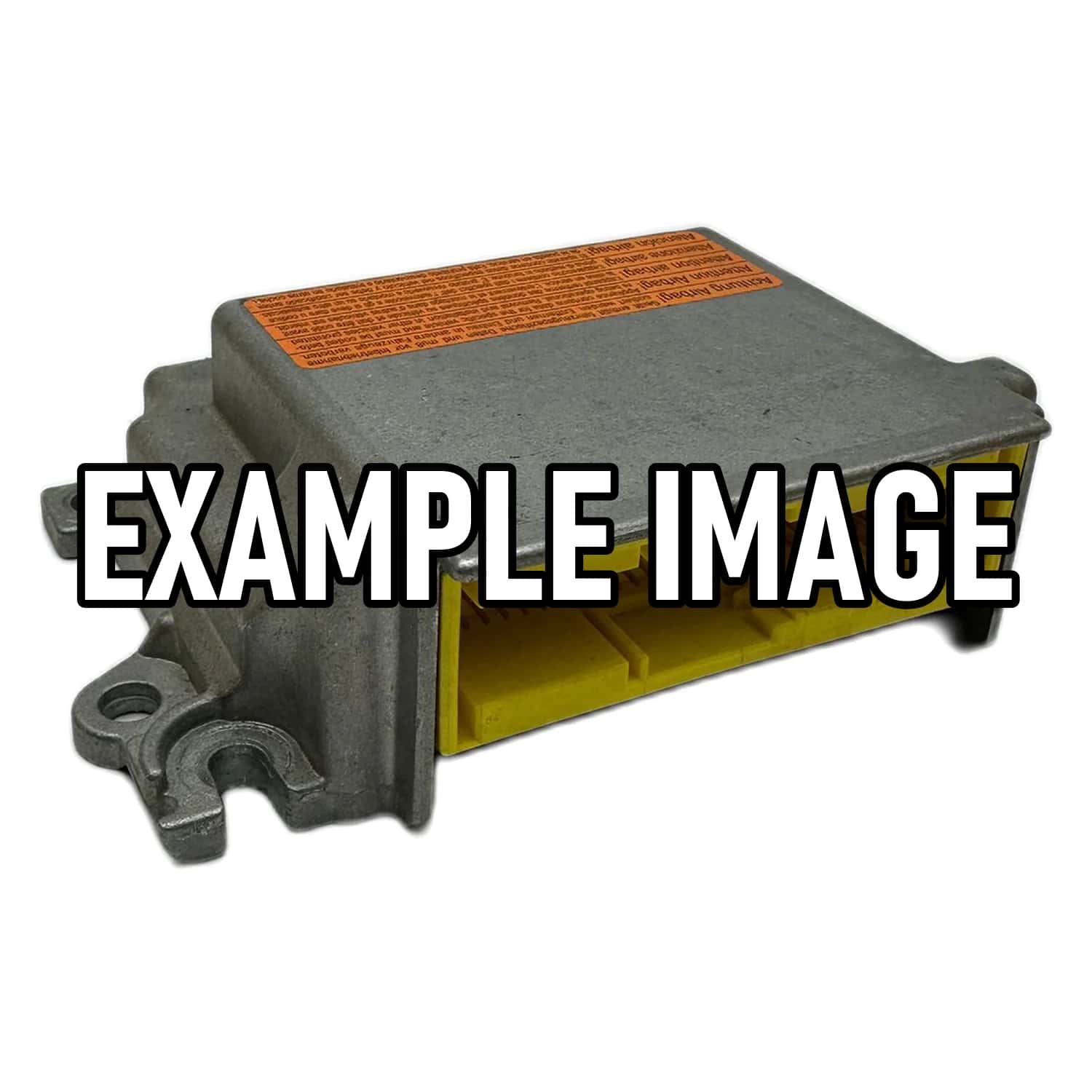
The unique part number is the most important identifier for each airbag control unit. It is usually printed directly on the control unit's housing and should be carefully recorded before repair or replacement to ensure compatibility with your Citroën C-Zero.
The airbag control unit is typically located in the center console, often under the dashboard or one of the front seats, to centrally collect sensor signals and deploy the airbags in the event of an accident. Access may vary depending on the vehicle model and often requires removing trim panels.
In addition to the part number, the vehicle identification number (VIN) also provides valuable information about the exact specifications of your Citroën C-Zero, including the year of production and trim level. This information can be found in the vehicle registration document and usually also on the vehicle itself, for example, on the windshield or in the engine compartment.
Although the C-Zero represents a consistent generation, minor updates to the control unit's software or hardware may have occurred over the years of production. Therefore, accurate part number and model year matching are crucial to ensuring a successful repair or functional replacement.
What airbag equipment does the Citroën C-Zero have?
The airbag equipment of the Citroën C-Zero is remarkable for its vehicle class: It is equipped with six airbags as standard, which offers a high level of passive safety for a city car and is above the average of many comparable small cars.
From the outset, the Citroën C-Zero was equipped with comprehensive passive safety features. The six standard airbags underscore Citroën's commitment to offering high safety standards, even in a compact and agile city car, to optimally protect its occupants.
This standard equipment typically includes front airbags for the driver and front passenger, which provide protection in the event of a frontal impact. These are complemented by side airbags integrated into the seats to provide protection in the event of a side collision.
Additionally, there are head airbags that deploy as a curtain along the side windows. These provide important protection for the occupants' heads in side collisions or rollovers and contribute significantly to reducing injuries.
The central airbag control unit continuously monitors the vehicle's sensors and is responsible for deploying the six airbags within milliseconds when needed. Proper functioning of this control unit is therefore essential for safety in the Citroën C-Zero.
The standardized airbag configuration across all model years of the single generation of the Citroën C-Zero ensures that all owners of this electric vehicle benefit from a consistently high level of passive safety, strengthening confidence in the system's reliability. Should an airbag control unit fail, prompt repair is essential.
Shipping & repair from Germany
Airbag24 repairs your component in Berlin — usually within 3–4 working days.
Standard shipping within Germany is free; we normally return your part by UPS.
You pay for and insure the inbound shipment to us. On explicit request we ship by express — the extra cost is borne by the customer.
If you withdraw from the contract, you bear the cost of returning the item.