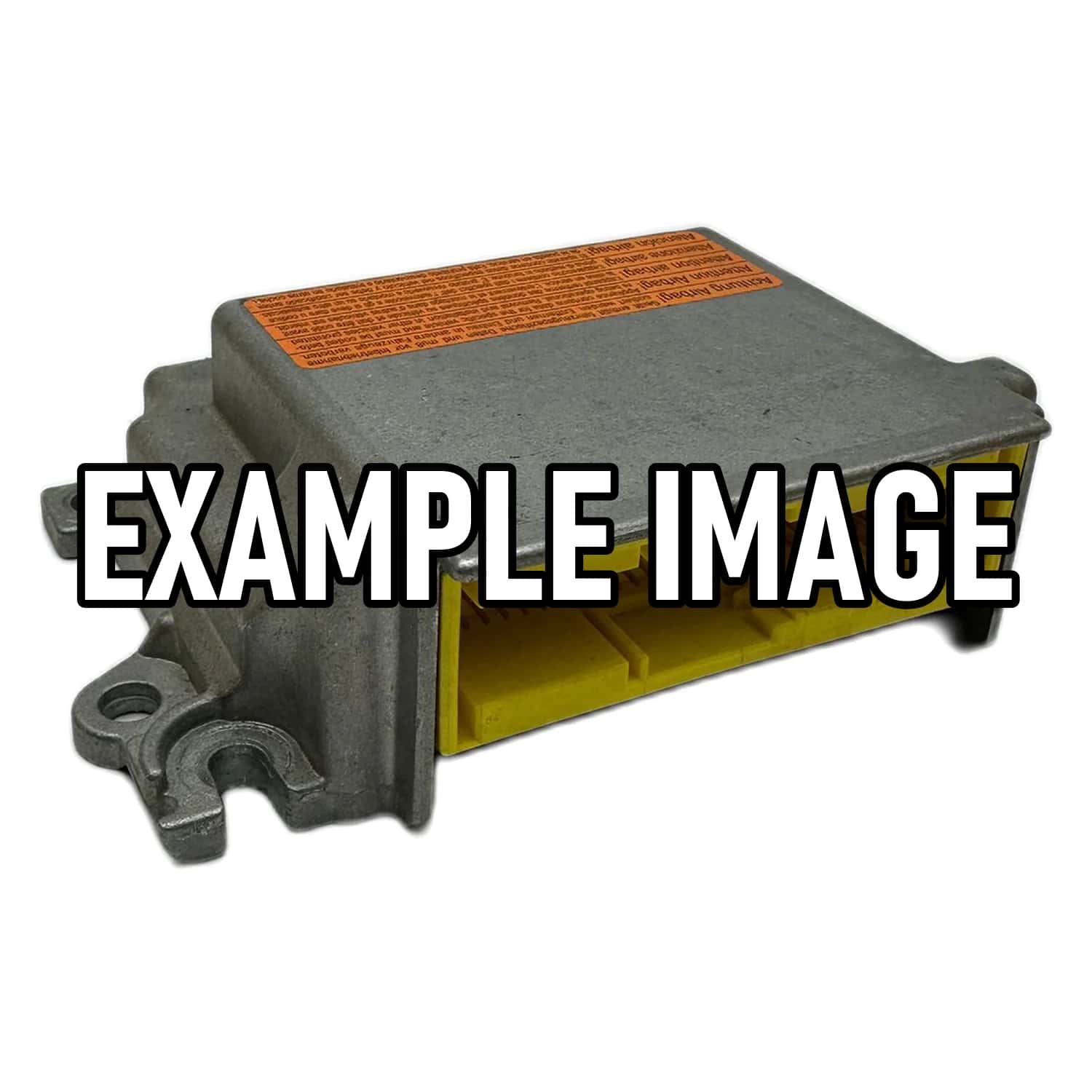
airbag control unit repair Citroën DS3 I
from€79.00
 Quality since 2002
The airbag technology used in the Citroën DS3 varies depending on the model year. Professional repair of the control units ensures true-to-original functionality and long-term safety in all DS3 generations.
The Citroën DS3, a stylish premium subcompact that later evolved into a modern crossover SUV, was produced for approximately 13 years. During this period, significant advances in vehicle safety technology were made, which were also reflected in the airbag systems and their control units.
The differences between the first generation, the Citroën DS3 (2009-2016), and the second generation, the DS 3 Crossback (from 2018), are particularly relevant here. Each further development of the vehicle brought with it adapted or completely new airbag control units, tailored to the respective safety concepts and installed sensors. A defective airbag control unit in a Citroën DS3 therefore requires precise diagnosis and a repair tailored to the specific model year and generation.
The Citroën DS3 was produced in two main generations, each using different airbag control units. The development of the safety system reflects technological progress from 2009 to 2022.
The first generation of the Citroën DS3 was officially launched in January 2010 and produced under the Citroën brand until 2016. From 2016 to 2019, the model continued as part of the independent premium brand DS Automobiles. This era was characterized by a three-door premium small car and a convertible version, aimed primarily at design- and customization-conscious customers.
The second generation, the DS 3 Crossback, was introduced in 2018 and produced until approximately 2022. This five-door crossover SUV responded to changing market demands. This repositioning also impacted the installed safety technology, including the airbag control units, which were adapted to the new vehicle concept.
The evolution from a compact, agile subcompact to a robust SUV required a redesign of the passive safety systems. This includes not only the number and position of the airbags, but also the complexity and performance of the airbag control unit, which processes all sensor data and coordinates deployment in the event of a crash. Repairs must take these specific adaptations of each generation into account.
Citroën DS3 airbag control units can be uniquely identified by part number, year of manufacture, and vehicle identification number. Each generation uses specific control unit variants for optimal compatibility.
Correctly identifying the airbag control unit in your Citroën DS3 is crucial for a successful repair. The most important identifier is the part number printed on the unit itself. This number is specific to the model, year of manufacture, and sometimes also the trim level of your vehicle.
In addition to the part number, the exact model year of the Citroën DS3 and the vehicle identification number (VIN) can provide valuable information. The VIN allows you to determine the exact factory configuration of your vehicle, including the airbag components originally installed. Since the DS3 was produced in various trim levels and over several years, minor variations in the installed control units may occur.
A defective airbag control unit can trigger various error messages that are stored in the vehicle's error log. During repair, it is essential that the replaced or repaired control unit is 100% compatible with the other components of the airbag system and the vehicle's electronics. This is the only way to ensure the system's full functionality and safety after repair.
The airbag equipment of the Citroën DS3 varies depending on the model year and trim level. While early models use basic airbag systems, newer generations feature enhanced safety packages with additional airbag modules.
The Citroën DS3 was designed to meet high safety standards from the outset and received good ratings in safety tests. Even in the first generation, the DS3 came with comprehensive features as standard. These included driver and front passenger airbags, with the front passenger airbag being deactivated for the safe installation of rear-facing child seats. Front side airbags and head airbags (curtain airbags) were also fitted as standard, providing comprehensive protection in side collisions and rollovers.
In addition to airbags, the Citroën DS3's safety technology included ABS (anti-lock braking system), electronic stability control (ESC), and brake assist systems such as EBD (electronic brake-force distribution) and EBA (electronic brake assist) as standard. Over the years of production and with the transition to the second generation DS 3 Crossback, these systems were further refined and potentially supplemented with additional active and passive safety features.
The evolution of the Citroën DS3 from a premium subcompact to a modern crossover SUV also led to an adaptation of the airbag strategy to the specific requirements of a larger and potentially differently used vehicle type. This may have manifested itself in the integration of additional sensors or a more complex airbag control unit activation logic to further optimize occupant protection in various accident scenarios.
Airbag24 repairs your component in Berlin — usually within 3–4 working days.
Standard shipping within Germany is free; we normally return your part by UPS.
You pay for and insure the inbound shipment to us. On explicit request we ship by express — the extra cost is borne by the customer.
If you withdraw from the contract, you bear the cost of returning the item.