
Citroën Evasion airbag control unit repair(1)
1 product
What should be considered with Citroën Evasion airbag control units?
The airbag technology used in the Citroën Evasion varies depending on the model year. Professional repairs of airbag control units generally offer true-to-original functionality and a comprehensive warranty for your safety.
The Citroën Evasion, a spacious MPV from the Eurovan project of PSA and Fiat, was produced from 1994 to 2002. Over this period, there was a constant development of vehicle technology, which also affected the installed airbag control units.
The airbag system is a key component of passive safety and is subject to high quality standards. However, in older vehicles like the Citroën Evasion, problems with the electronics, particularly the airbag control unit connectors, can occur, requiring professional repair.
Which Citroën Evasion generations are there?
The Citroën Evasion was produced in two main phases, which can be described as generations or significant facelifts, with each phase using different airbag control units. The development of the safety system reflects the technological progress from 1994 to 2002.
The first phase of the Citroën Evasion launched in 1994 as part of the Eurovan project. This model was produced until 1998 and established itself as a versatile family van with up to eight seats.
In 1998, the Evasion received a comprehensive facelift, which not only brought visual changes but also often included updates to the electronic components, including the airbag system. Although this isn't considered a completely new "second generation" in the traditional sense, it marked an important development stage within the Evasion lineup until production ended in 2002.
The direct successor from 2002, the Citroën C8, was also based on the Eurovan platform, but was launched under a new model name and with a completely revised architecture.
How do I identify my Citroën Evasion airbag control unit?
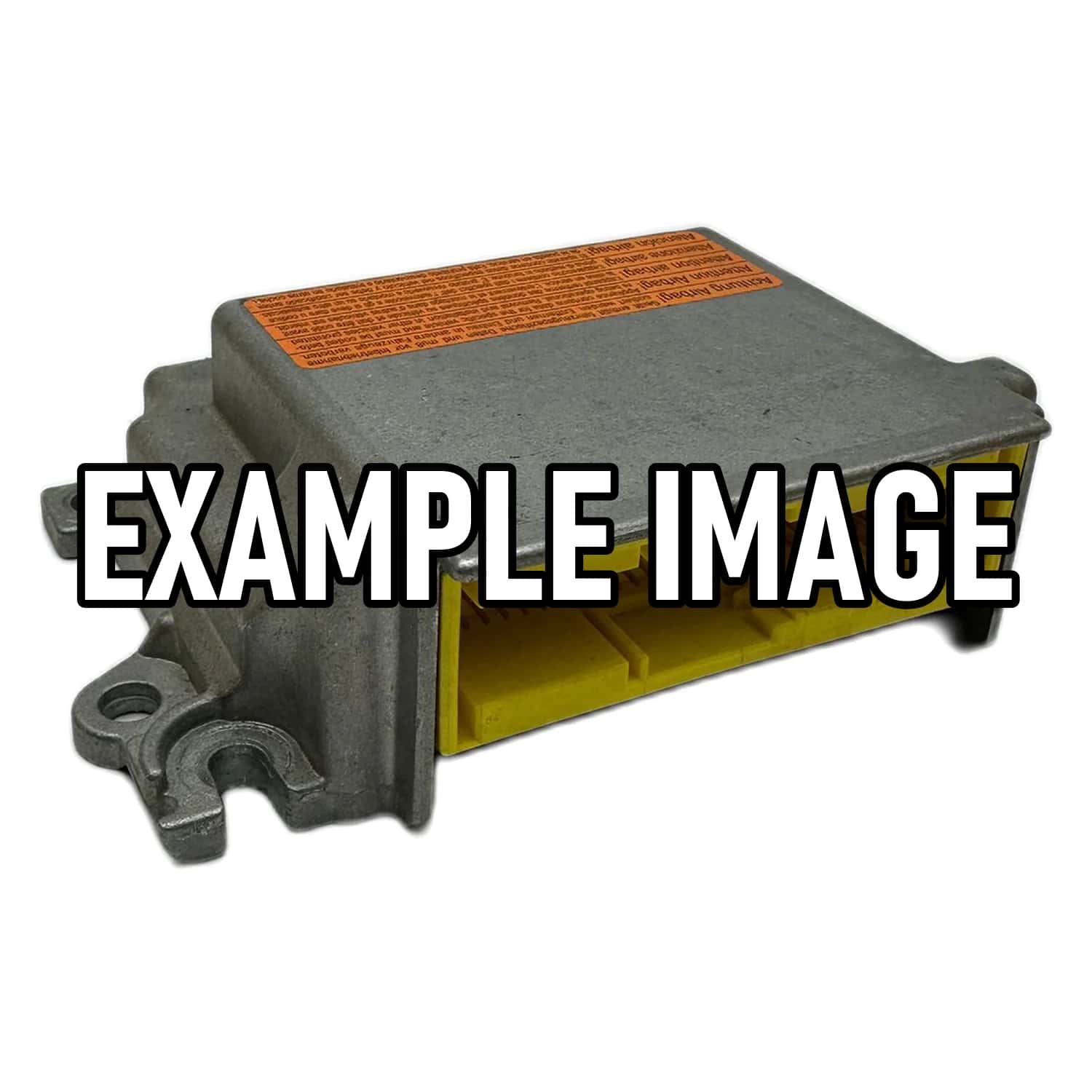
Citroën Evasion airbag control units can be uniquely identified by their specific part number, the vehicle's year of manufacture, and the vehicle identification number (VIN). Each "generation" or major facelift used specific control unit variants to ensure optimal compatibility with the respective vehicle systems.
The part number of the airbag control unit is usually printed or affixed directly to the component's housing. This number is crucial for correctly identifying and repairing the defective control unit, as it reflects the exact specification and compatibility.
The year of manufacture of the Citroën Evasion is also an important indicator, as the components installed could have changed over the course of production. The vehicle's chassis number (VIN) provides additional security for identification, as it digitally stores all vehicle-specific information.
What airbag equipment does the Citroën Evasion have?
The airbag configuration of the Citroën Evasion varies depending on the model year and the selected trim level. While early models were typically equipped with basic airbag systems for the driver and front passenger, later models and higher trim levels featured enhanced safety packages with potentially additional airbag modules.
As a family MPV of the 1990s, the Citroën Evasion placed a premium on passive safety from the outset. Driver and passenger airbags were therefore standard equipment to provide optimal protection for occupants in the event of a collision.
As model updates progressed and safety standards in automotive engineering increased, additional side airbags may have been available as an option or even standard in later models (especially after the 1998 facelift) and higher trim levels. These offered enhanced protection in side collisions and underscored the safety concept of the Evasion, which positioned itself as a competitor to the Renault Espace.
Although the Citroën Evasion was well-equipped for its time, forums and technical notes report potential problems with the vehicle's electronics, which may also affect the airbag control unit. Repairing such defective units is crucial to restoring the safety system's full functionality and ensuring safety for families and frequent drivers.
Shipping & repair from Germany
Airbag24 repairs your component in Berlin — usually within 3–4 working days.
Standard shipping within Germany is free; we normally return your part by UPS.
You pay for and insure the inbound shipment to us. On explicit request we ship by express — the extra cost is borne by the customer.
If you withdraw from the contract, you bear the cost of returning the item.