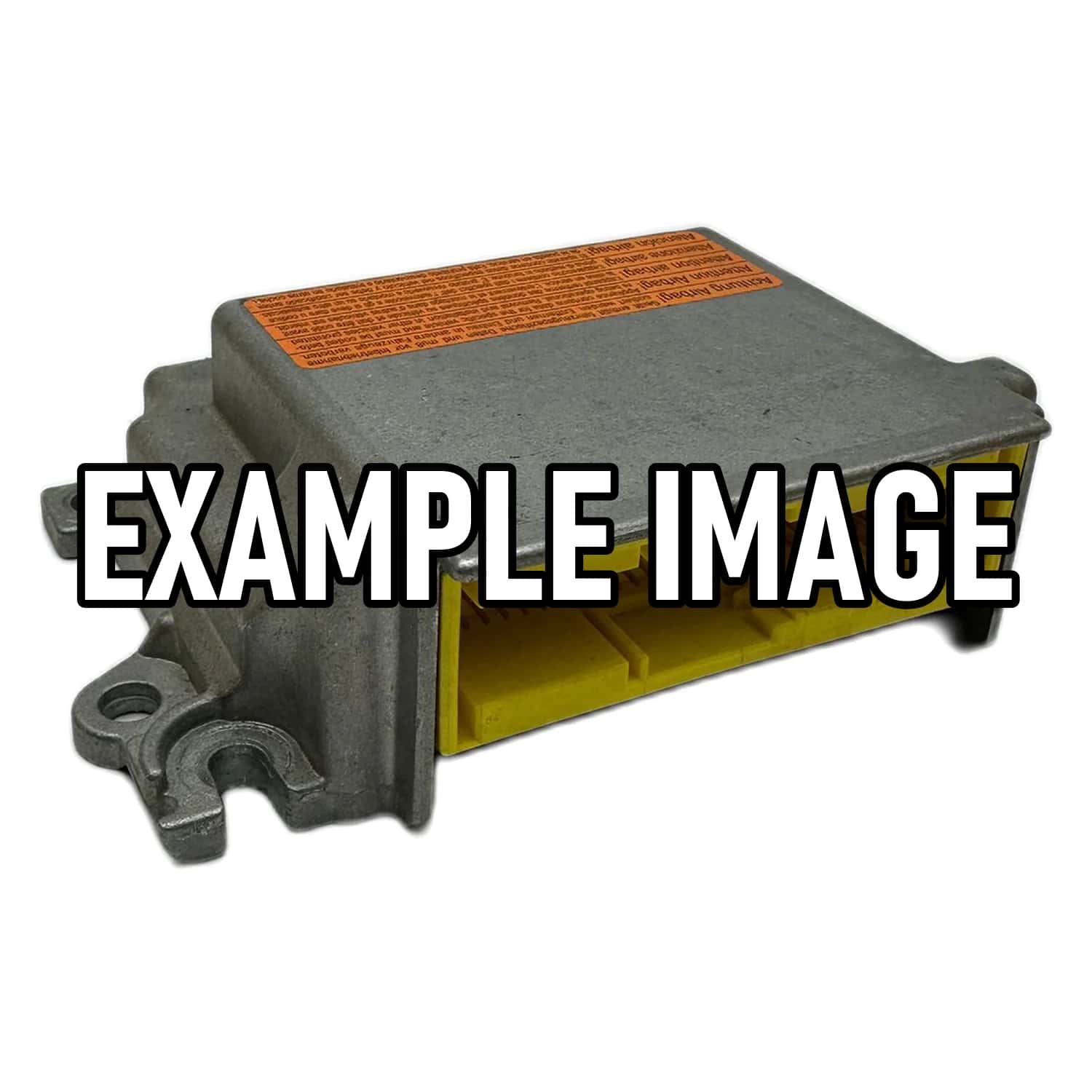
airbag control unit repair Citroën ZX I
from€66.39
 Quality since 2002
The airbag technology used in the Citroën ZX varies considerably depending on the model year and trim level. Professional repair is crucial to ensure original functionality and safety, especially in vehicles produced between 1991 and 1998.
The Citroën ZX, produced from 1991 to 1998, marked a significant step for Citroën in the compact class. Designed as a practical family car, it relied on proven technology and was available in various body styles, including hatchback and station wagon. The model's development included several facelifts, which could also impact the installed safety systems.
In the early 1990s, airbag technology was still in its infancy and not always standard in compact cars. Accordingly, airbags in the Citroën ZX were often offered as optional equipment or in higher trim levels. This means that the specific design of the airbag control unit depends heavily on the vehicle's model year and original equipment, making precise identification essential for any repair.
The Citroën ZX was produced in one main generation with several significant facelifts and body variants, spanning the range from 1991 to 1998. Although there were no officially declared, distinct "generations" in the modern sense, the technical development over the model years reflects the progress of safety systems.
The 5-door hatchback was launched in the spring of 1991, followed by a 3-door variant and the sporty ZX 16V in October 1992. These early models featured the basic technology for passive safety systems available at the time. A comprehensive facelift in 1994, accompanied by the introduction of the spacious "Break" station wagon, brought further adjustments, which also affected the electronics and thus potentially the airbag control units.
The hatchback versions were replaced by the Citroën Xsara at the end of 1997, while production of the station wagon and coupé continued until early 1998. Each of these development phases—from initial launch through the range of variants to model updates—is crucial for determining the exact airbag control unit. The evolutionary nature of the vehicle means that systems have been slightly modified over time to accommodate new standards or equipment options.
Citroën ZX airbag control units can be uniquely identified by the manufacturer's part number, the exact year of manufacture, and in some cases, the vehicle identification number (VIN). These specific characteristics are essential to ensure the control unit's compatibility with the specific vehicle model and its equipment.
Due to the variants and equipment options introduced over the course of production, the airbag control units in the Citroën ZX may vary. The part number, usually located directly on the control unit housing, is the most reliable indicator of the exact version. It is crucial to carefully record this number to ensure the correct repair or replacement.
The exact model year of the Citroën ZX also plays a role, as the installed systems could change during model updates. A control unit from an early model year (e.g., 1992) may differ technologically from that of a later model (e.g., 1997), even if they appear similar at first glance. The vehicle identification number can provide additional details about the original equipment and thus the installed system.
The airbag equipment of the Citroën ZX varied greatly depending on the model year and the selected trim level. While airbags were still a novelty in the compact class in the early 1990s, they became increasingly available over the course of the production run, often as an optional safety feature or part of higher-end equipment packages.
When the Citroën ZX began production in 1991, airbags were not yet a given in this vehicle segment. Driver and passenger airbags were often offered at extra cost or were only included as standard in top-of-the-line trim levels like the Aura or Volcane. Base models like the Reflex or Avantage might not have airbags at all or offered them only as an option, resulting in a wide range of installed systems.
The airbag system technology in the Citroën ZX is typical of the early phase of airbag development. These were generally basic systems with simple sensors and controls. Advanced functions familiar from modern vehicles (e.g., side airbags, intelligent deployment, or complex occupant detection) were not yet available in the Citroën ZX during this era. While this simplifies repair in principle, it still requires specialized knowledge of the specific characteristics of these early systems.
Airbag24 repairs your component in Berlin — usually within 3–4 working days.
Standard shipping within Germany is free; we normally return your part by UPS.
You pay for and insure the inbound shipment to us. On explicit request we ship by express — the extra cost is borne by the customer.
If you withdraw from the contract, you bear the cost of returning the item.