
Daewoo Heaven airbag control unit repair(1)
1 product
What should I pay attention to with Daewoo Heaven airbag control units?
The airbag technology used in the Daewoo Heaven H100 varied slightly depending on the model year, but remained true to the basic concept of a light commercial vehicle. Repairing these control units requires specialized expertise to ensure original functionality and thus the safety of the vehicle.
The Daewoo Heaven H100 was produced primarily in the 1990s and early 2000s. As a compact van or minivan, it focused on economy and practicality.
In this era, airbag systems were not as complex as they are today. Typically, the equipment was limited to a driver's airbag, which was often supplemented by an optional passenger airbag in later model years.
Which Daewoo Heaven generations are there?
The Daewoo Heaven H100 was primarily manufactured as a continuous model series throughout its entire production run, without the clear generational leaps common with many passenger cars. The development of the safety system reflects the technological advances of the 1990s to early 2000s.
Instead of several clearly defined generations, the Daewoo Heaven H100 experienced continuous model updates and minor technical adjustments. These updates typically affected the engine, the interior, and, to a lesser extent, safety components such as the airbag system.
Therefore, we speak of model years rather than different generations. Within this continuous production, the airbag control units were adapted to the respective production standards and the available airbag equipment.
When repairing a faulty Daewoo Heaven airbag control unit, it is crucial to consider the exact year of manufacture and the chassis number to ensure compatibility and to carry out the repair correctly.
How do I identify my Daewoo Heaven airbag control unit?
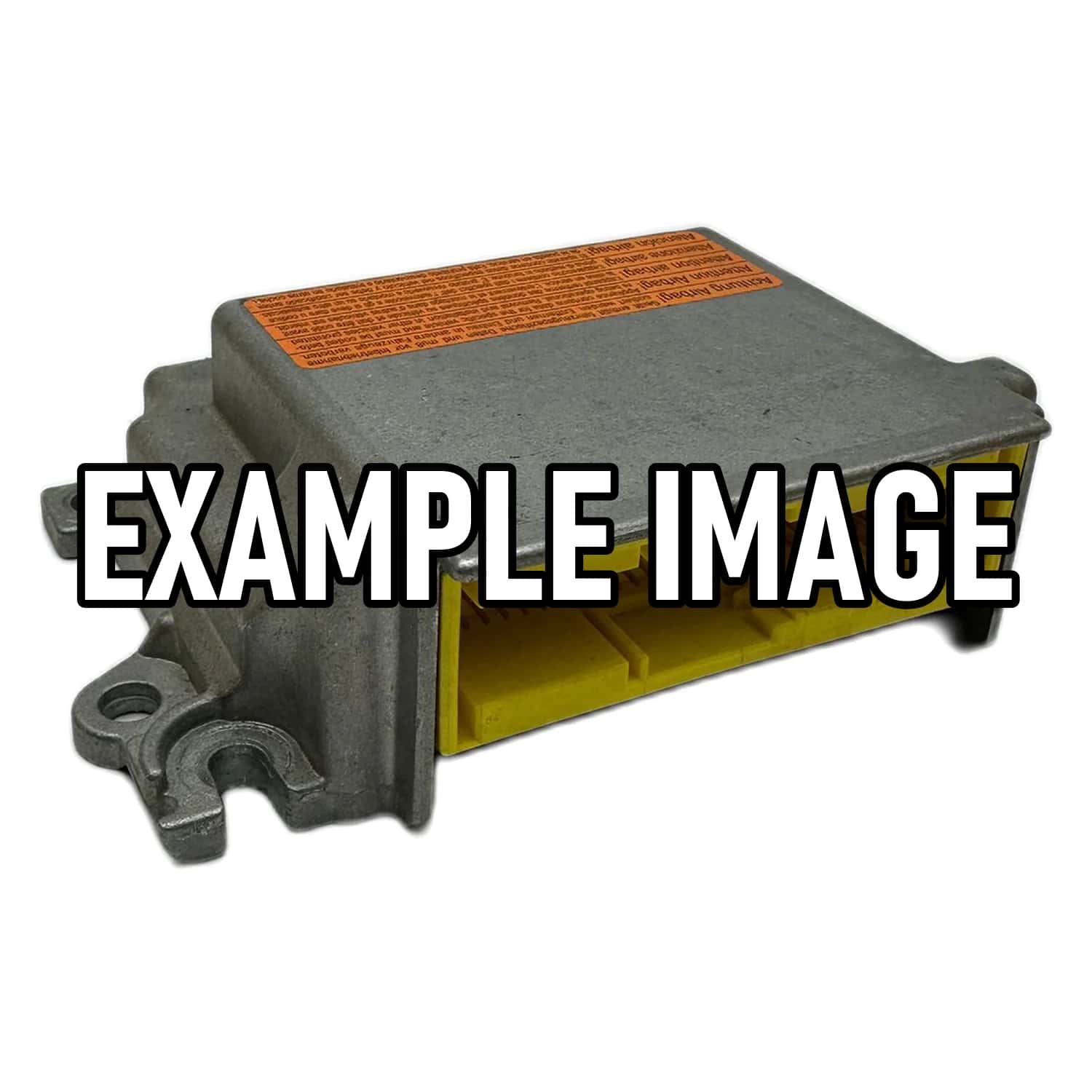
Daewoo Heaven airbag control units can be uniquely identified by the part number printed on the unit, the vehicle's year of manufacture, and the vehicle identification number (VIN). Each control unit is specifically designed for specific model years and trim levels to ensure optimal compatibility and functionality.
The airbag control unit's part number is the most important identifier. It's usually located on a sticker directly on the module's housing. It's advisable to note this number before requesting a repair.
Additionally, the exact year of manufacture of the Daewoo Heaven H100 and, ideally, the complete vehicle identification number (VIN) are helpful information. These details help account for any minor hardware or software variations in the control unit within the H100 model range.
Correct identification is crucial for a successful repair. An incorrectly identified airbag control unit can lead to incompatibilities and malfunctions in the safety system.
What airbag equipment does Daewoo Heaven have?
The airbag configuration of the Daewoo Heaven H100 varied depending on the model year and specific trim level. While early models usually only offered a driver's airbag as standard or optional, later model years often had the option of an additional passenger airbag, underscoring the focus on basic occupant safety.
In the 1990s, the Heaven H100's peak production period, airbags—especially in commercial vehicles and minivans—were often still optional features or available only to the driver. The Daewoo Heaven H100 followed this trend, offering a solid yet simple airbag configuration compared to modern vehicles.
Side airbags, head airbags, or more complex airbag systems, which are standard today, were extremely rare or even unavailable in the Daewoo Heaven H100 due to its vehicle class and production period. The focus was on basic safety for the front passengers.
A defective airbag control unit can impair the function of these important safety components and should be repaired immediately to restore full protection for vehicle occupants.
Common fault codes in this category
Shipping & repair from Germany
Airbag24 repairs your component in Berlin — usually within 3–4 working days.
Standard shipping within Germany is free; we normally return your part by UPS.
You pay for and insure the inbound shipment to us. On explicit request we ship by express — the extra cost is borne by the customer.
If you withdraw from the contract, you bear the cost of returning the item.