
Daewoo airbag control unit repair(47)
Repair remains worthwhile even for older Daewoo vehicles. Determine your airbag control unit here and send it in for testing or repair.
What should I pay attention to with Daewoo airbag control units?
The airbag technology used in Daewoos varies depending on the model and year of manufacture. Specialized workshops professionally repair control units for all Daewoo model generations with authentic functionality and offer a warranty on the repair.
Daewoo, as a South Korean automaker, has produced a wide range of vehicles spanning various markets and generations over the decades. From compact city cars to more robust SUVs, model development reflects the respective state of vehicle safety.
Initially, Daewoo vehicles focused on basic safety features, which were gradually expanded over the years. Early models often offered only driver and passenger airbags, while later models and higher-end trim levels integrated additional protection systems. This required customized airbag control units tailored to the specific vehicle configuration.
Which Daewoo models are there?
Daewoo has produced over 50 different models, with each model and series generation using different airbag control units. The development of the safety system reflects technological advances and growing demands.
Daewoo's model range is extremely diverse and covers virtually every vehicle class. Well-known small cars such as the Daewoo Matiz, Kalos, and Tico have shaped the cityscape and offered practical mobility for price-conscious customers.
Compact and mid-size models such as the Daewoo Lanos, Nubira, Leganza, Lacetti, and Evanda appealed to a broader audience, including families and mid-size buyers. Practical station wagons such as the Daewoo Nubira Wagon and vans such as the Tacuma and Rezzo were also part of the range.
The range was supplemented by more robust models such as the Daewoo Korando and Musso SUVs, as well as niche and specialty vehicles for commercial purposes such as the Daewoo Damas, Labo, and Honker. Each of these models features a specific airbag system and a matching airbag control unit, tailored to the vehicle architecture and safety standards of the respective production period.
How do I identify my Daewoo airbag control unit?
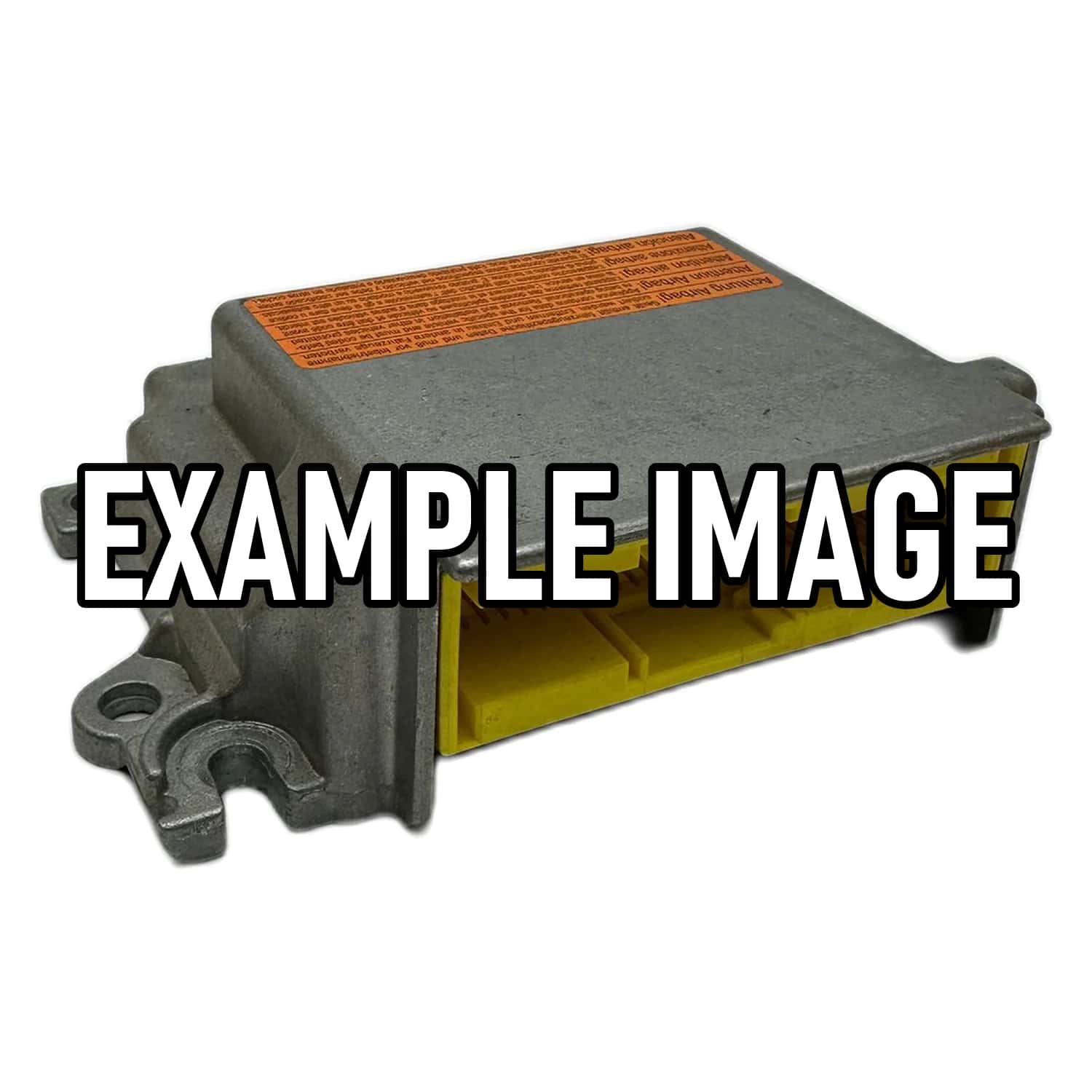
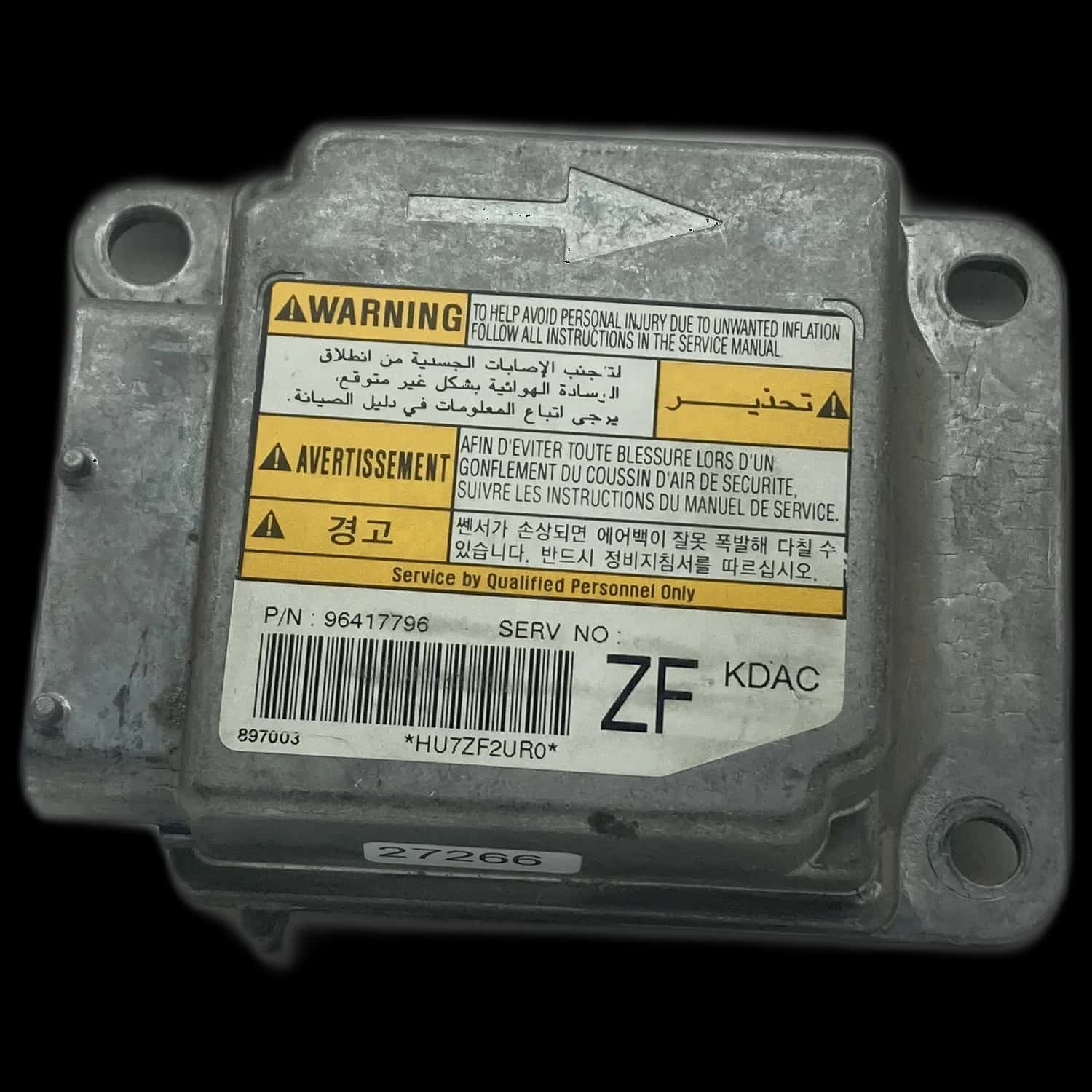
Daewoo airbag control units can be uniquely identified by part number, year of manufacture, and vehicle identification number (VIN). Each vehicle generation and model variant uses specific control unit variants for optimal compatibility with the respective airbag system.
The part number is the most important indicator for correctly identifying your Daewoo airbag control unit, followed by the exact vehicle year and the chassis number. This information is crucial to ensure that a repair restores the correct parameters for the proper functioning of the airbag system.
It is essential that only compatible control units are used that are specifically designed for your Daewoo model and its equipment to ensure full functionality and safety of the system. An incorrectly identified or incompatible control unit can significantly compromise vehicle safety and lead to malfunctions.
What airbag equipment does Daewoo have?
Daewoo's airbag equipment varies considerably depending on the model year, vehicle class, and trim level. While early and compact models typically use basic airbag systems with driver and passenger airbags, newer generations and premium variants feature enhanced safety packages with additional airbag modules.
In many Daewoo subcompacts, such as the Matiz or Lanos, a basic airbag system with driver and passenger airbags was standard. These basic airbags are designed to protect the front passengers in a frontal impact.
Larger and newer models, such as the Daewoo Lacetti, Evanda, or Tosca, could be more comprehensively equipped. These often included additional components such as side airbags, curtain airbags, and seat occupancy detection systems, which optimized occupant protection in various types of impacts. The development of Daewoo's airbag systems reflects the general trend in the automotive industry, away from passive protection measures toward more complex, adaptive safety systems.
Why is it important to repair a Daewoo airbag control unit?
A defective Daewoo airbag control unit can impair the function of the entire safety system and poses a significant safety risk. A professional repair ensures the full functionality of the airbags in an emergency and eliminates annoying warning lights on the dashboard.
The airbag control unit, also known as the SRS control unit, is the central electronic unit that monitors all airbag-related sensors and coordinates airbag deployment in the event of an accident. After an impact, the control unit often stores crash data, which prevents the airbags from being reactivated until this data is erased and the unit is reset.
Electrical defects, short circuits, or internal component failures can also cause the airbag system to malfunction and cause the airbag warning light to illuminate continuously in the dashboard. Ignoring this warning light or improper handling of the control unit not only endangers the occupants in an emergency but can also lead to problems during a vehicle inspection.
Repairing a defective Daewoo airbag control unit is a cost-effective and environmentally friendly alternative to purchasing a new, expensive replacement part and the often time-consuming process of reprogramming it. It restores the full functionality of your Daewoo's safety systems.
What does the repair of a Daewoo airbag control unit involve?
The professional repair of a Daewoo airbag control unit includes erasing stored crash data, correcting electronic defects, and restoring the original vehicle-specific data. All important information is retained, allowing for immediate plug-and-play capability after installation.
Specialized repair shops check the Daewoo airbag control unit for electronic errors, identify defective components, and replace them if necessary. This ensures the unit's proper function and clears any stored error codes that triggered the airbag warning light.
It is absolutely crucial that work on the airbag system be performed only by trained personnel to avoid any safety risks for the technician and subsequent use of the vehicle. Before removing the control unit, the vehicle's battery must be disconnected to prevent accidental airbag deployment.
The average repair time for Daewoo airbag control units is typically 3-5 business days. This ensures a thorough inspection and repair, getting your vehicle back on the road quickly and safely, and ensuring long-term reliability.
Shipping & repair from Germany
Airbag24 repairs your component in Berlin — usually within 3–4 working days.
Standard shipping within Germany is free; we normally return your part by UPS.
You pay for and insure the inbound shipment to us. On explicit request we ship by express — the extra cost is borne by the customer.
If you withdraw from the contract, you bear the cost of returning the item.