
Ford Transit airbag control unit repair(3)
What should I consider with Ford Transit airbag control units?
The airbag technology used in the Ford Transit varies considerably depending on the model year and generation. Airbag control units for the Ford Transit must be precisely tailored to the specific vehicle model to ensure proper function.
The Ford Transit, in production since 1965, has undergone numerous technological developments throughout its history. This is particularly true of its safety systems, with airbag technology evolving from simple solutions to complex, networked systems.
Each Ford Transit generation uses specific airbag control units tailored to the respective vehicle architecture and equipment. A professional repair restores original functionality and is crucial for occupant safety.
Which Ford Transit generations are there?
The Ford Transit has been produced in eight main generations to date, with each generation using different airbag control units and safety technologies. The evolution of the safety system reflects technological advances from 1965 to the present.
The first generation, the Ford Transit MK1, was produced from 1965 to 1978 and established the Transit as a versatile van. This was followed by the facelifted MK2 (1978–1986) and the long-lasting MK3 (1986–2000), which dominated the market.
The MK4 (2000–2006) and MK5 (2006–2013) introduced modern technology and improved comfort. The MK6 (2013–2019) and MK7 (2019–2023) generations brought advanced engines, assistance systems, and connectivity.
The current generation, the Ford Transit MK8 (since 2023), focuses on fully electric drive systems and advanced safety and assistance systems that ensure a high level of occupant protection.
Each of these series – from the early Ford Transit MK1 to the current Ford Transit MK8 – uses specific airbag control units, the repair of which requires expertise.
How do I identify my Ford Transit airbag control unit?
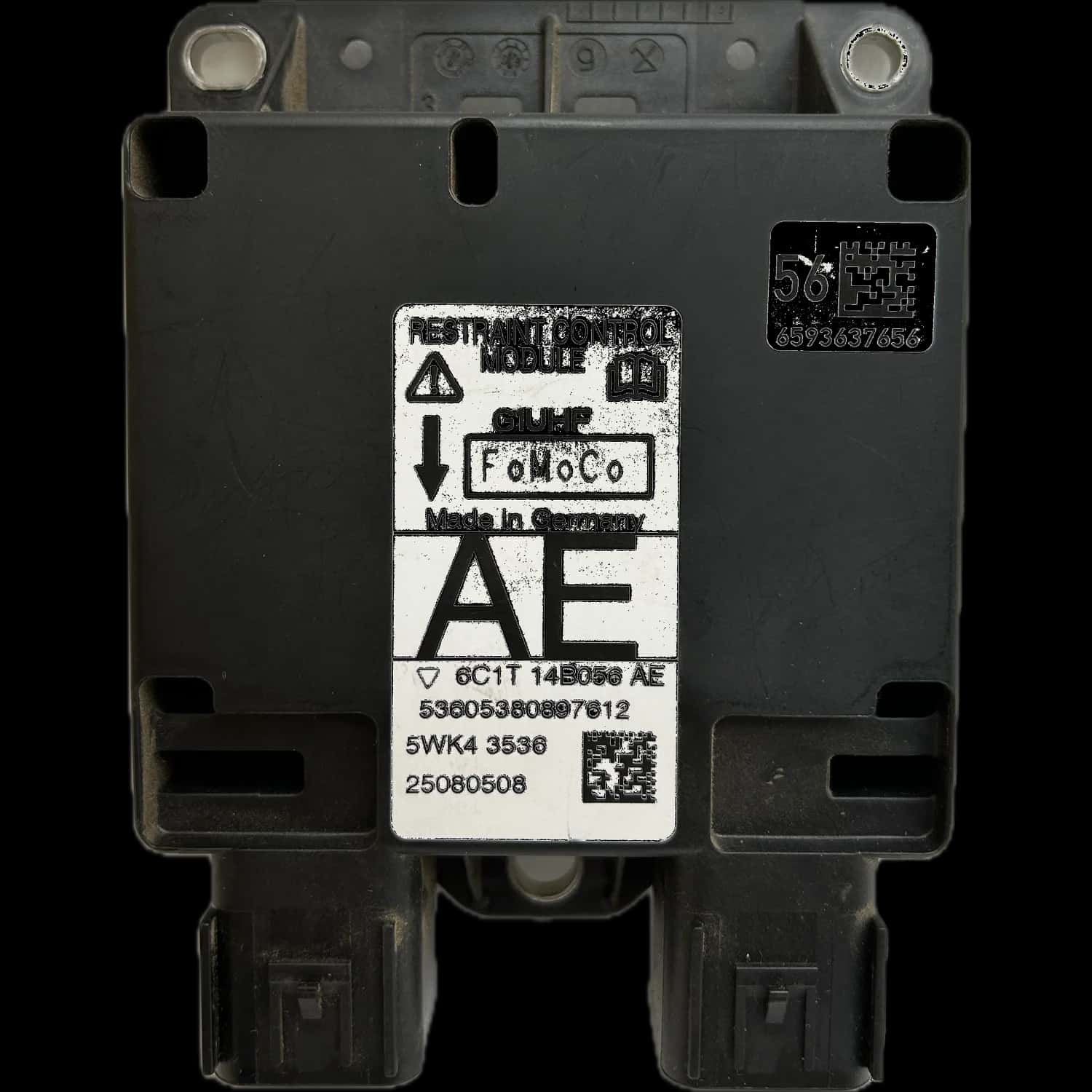
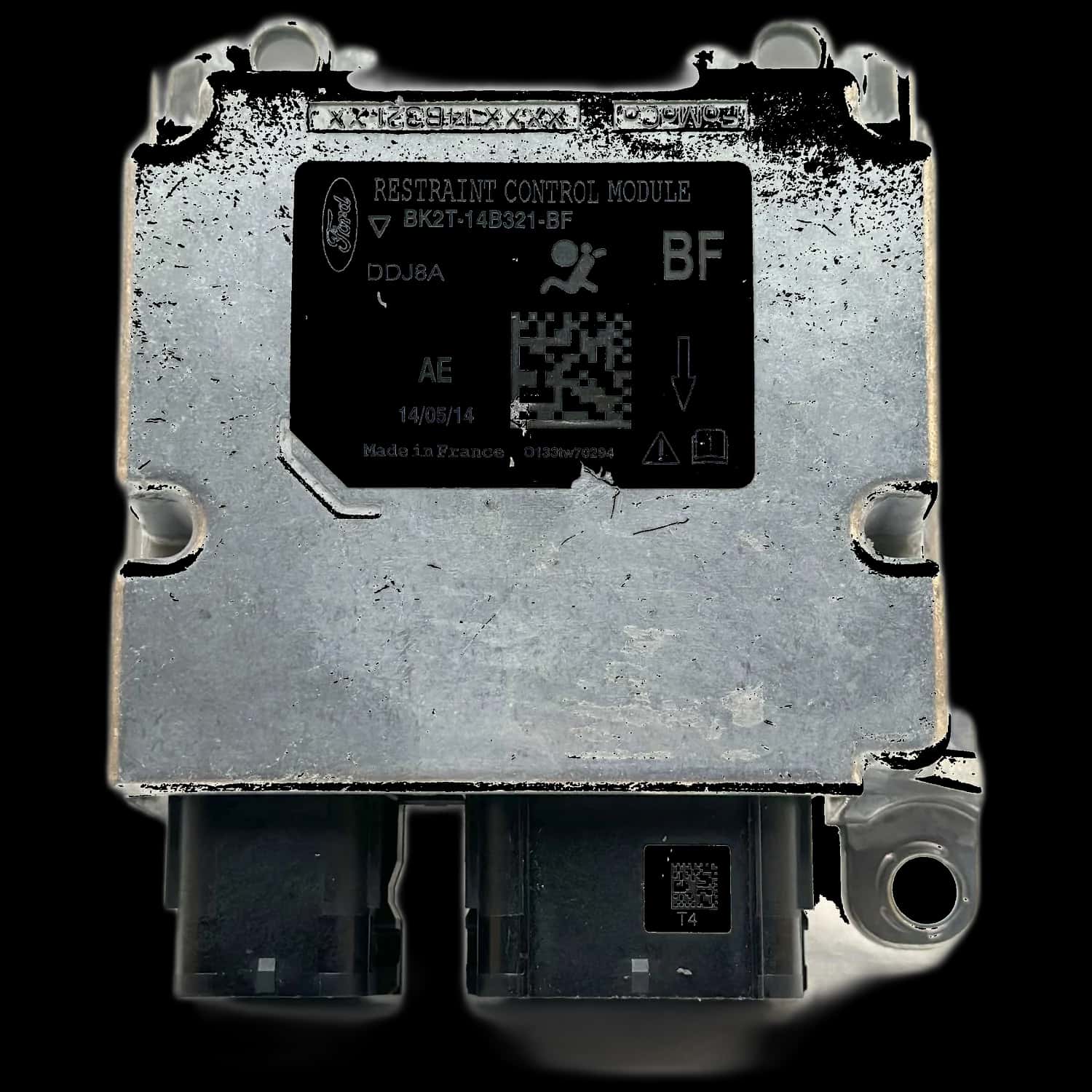
Ford Transit airbag control units can be reliably identified using the part number printed on the unit, the vehicle's year of manufacture, and the vehicle identification number (VIN). Each generation of the Ford Transit uses specific control unit variants for optimal compatibility with the installed airbag modules.
The part number is the primary indicator and is located directly on the control unit's housing. It is crucial for finding the exact replacement or repair unit.
The model year of your Ford Transit and the vehicle identification number (VIN) provide additional information about the exact vehicle equipment and the safety systems installed. These details are important because even within a single generation, different control unit versions can be installed, depending on the trim level and production date.
Correct identification of the airbag control unit is essential for professional repair and ensuring the full functionality of the passive safety system in your Ford Transit.
What airbag equipment does the Ford Transit have?
The airbag configuration of the Ford Transit varies significantly depending on the model year, vehicle generation, and specific trim level. While early models often offered only a basic airbag for the driver, newer generations feature comprehensive safety packages with a variety of airbag modules and additional passive safety systems.
In the early generations of the Ford Transit (such as the MK1 to MK5), the driver's airbag was usually the only standard airbag system. Passenger and side airbags were often only available as extras or not offered at all.
With the advancing generations, especially with the Ford Transit MK6, MK7, and MK8, safety features have improved significantly. Current models feature a wide range of airbags, including driver and passenger airbags, side airbags for upper body protection, and curtain airbags, ensuring comprehensive protection for occupants in the event of a collision.
In addition to airbags, modern Ford Transit models are equipped with additional passive safety systems that work closely with the airbag control unit. These include pyrotechnic seatbelt pretensioners and seatbelt force limiters that reduce the load in a collision. Unfastened seatbelt warning systems and advanced driver assistance systems such as automatic emergency braking, rollover protection, and trailer stabilization complement the safety package and help reduce the risk of accidents.
The complexity of airbag systems has increased with each generation to meet increased safety requirements, making specialized repair of airbag control units essential.
Common fault codes in this category
Shipping & repair from Germany
Airbag24 repairs your component in Berlin — usually within 3–4 working days.
Standard shipping within Germany is free; we normally return your part by UPS.
You pay for and insure the inbound shipment to us. On explicit request we ship by express — the extra cost is borne by the customer.
If you withdraw from the contract, you bear the cost of returning the item.