
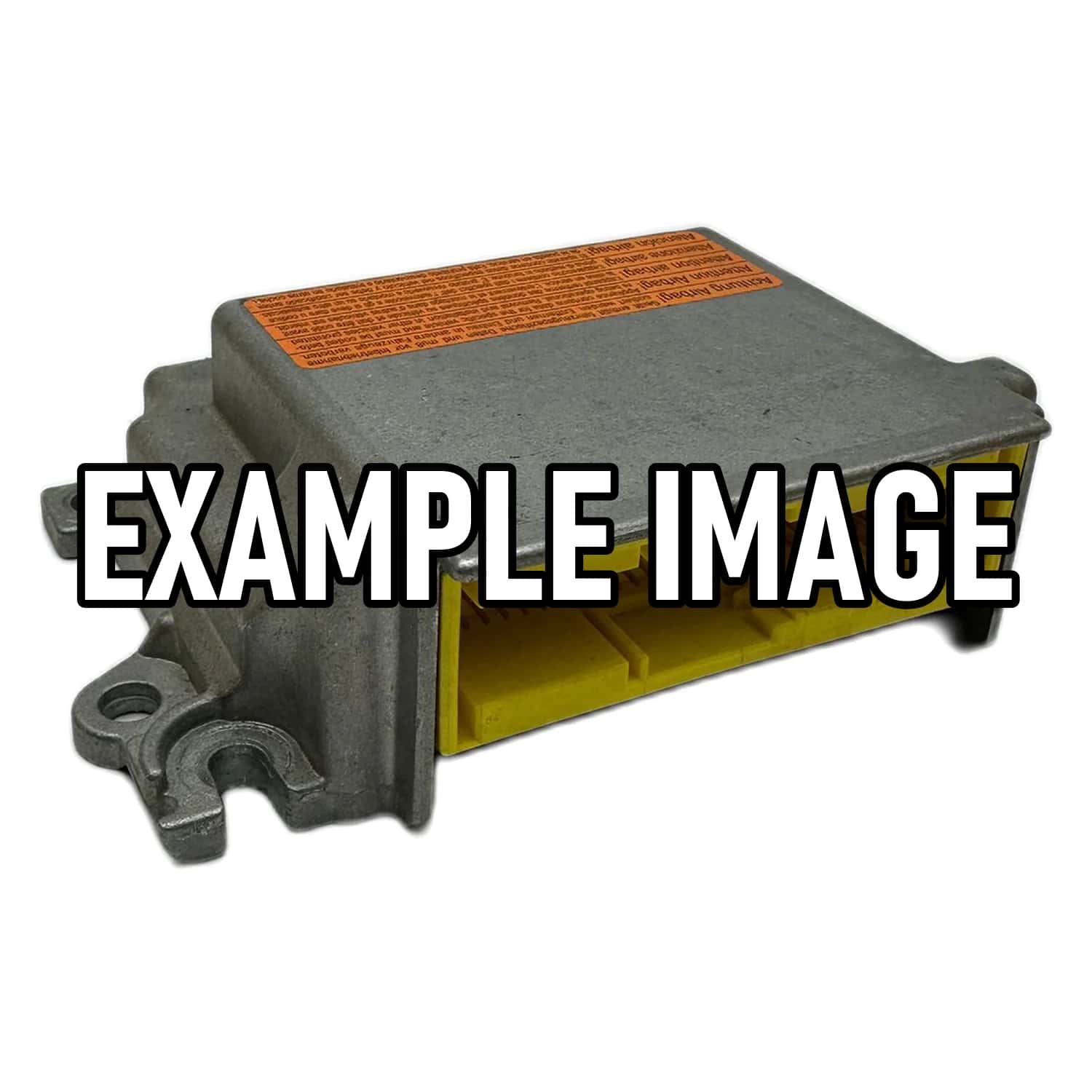

General Motors Firebird Airbag Control Unit Repair(1)
1 product
What should I consider with General Motors Firebird airbag control units?
The airbag technology used in the General Motors Firebird varies considerably depending on the model year. For airbag control unit repairs, the Pontiac Firebird models from 1990 to 2002 are primarily relevant, as earlier series and the experimental GM Firebird prototypes did not have airbags.
The term "General Motors Firebird" historically encompasses both the futuristic GM Firebird concept vehicles of the 1950s and the widely used Pontiac Firebird production vehicles, which were produced from 1967 to 2002. In the context of airbag control unit repair, we focus exclusively on the latter production models, especially those of the third and fourth generation.
An airbag control unit is the heart of the passive safety system and is responsible for the correct deployment of the airbags in the event of a collision. Common defects can be caused by crash data, internal errors, or overvoltage, which impairs the functionality of the entire safety system and is often signaled by an illuminated airbag warning light.
The airbag technology used in the Pontiac Firebird has evolved continuously over the years. From basic driver airbag systems in the early 1990s to more complex configurations with additional airbag modules in the final years of production, each variant requires specific expertise for proper repair.
Which General Motors Firebird generations are there?
The name General Motors Firebird includes four separate GM Firebird concept vehicles developed between 1953 and 1959, and four series generations of the Pontiac Firebird, produced from 1967 to 2002. The models relevant for airbag systems come exclusively from the later generations of the Pontiac Firebird.
The original GM Firebird prototypes (Firebird I, II, III, and IV) were purely technology demonstrators and lacked any airbags. These experimental, aircraft-inspired vehicles were never put into series production and played no role in the commercial vehicle market.
The popular Pontiac Firebird was designed as a sports coupe and "pony car" and went through four distinct generations: the first (1967-1969), the second (1970-1981), the third (1982-1992), and the fourth (1993-2002). Each generation reflected the zeitgeist in design and technology, from classic muscle car shapes to more aerodynamic lines.
The integration of airbag systems began in the third generation of the Pontiac Firebird and became standard in the fourth generation. This development reflects the technological advances in vehicle safety from the late 1980s to the early 21st century.
How do I identify my General Motors Firebird airbag control unit?
General Motors Firebird airbag control units, specific to Pontiac Firebird production models, can be uniquely identified by the original part number, model year, and vehicle identification number (VIN). Each generation, and sometimes even facelifts, use specific control unit variants for optimal compatibility and functionality.
The airbag control unit is a crucial component of the passive safety system and is often located in hard-to-reach places such as under the center console, the floor carpet, or under the driver's seat. The exact location may vary depending on the Pontiac Firebird generation and model year.
The manufacturer's part number affixed to the control unit itself is the primary identifier for the exact model and its compatibility. These alphanumeric codes are crucial for ensuring the correct repair or replacement for your specific vehicle.
In addition to the part number, the exact year of manufacture of your Pontiac Firebird and the complete vehicle identification number (VIN) are crucial. This information helps to account for any revision-related differences or country-specific variants of the airbag control unit and enables precise identification.
What airbag equipment does the General Motors Firebird have?
The airbag configuration of the General Motors Firebird varies greatly depending on the model year and specific version of the Pontiac Firebird production model. While the first two generations did not have airbags, front airbags for the driver and front passenger increasingly became standard starting in the 1990s, supplemented by optional advanced safety packages in later models.
In the early generations of the Pontiac Firebird (1967-1981), airbags were not standard equipment or available as an option because this safety technology was not yet widely available. The focus at that time was on seat belt systems and the passive body structure.
The third generation (1982-1992) of the Pontiac Firebird marked the beginning of the introduction of airbags, which were initially available only for the driver. Starting with the fourth generation (1993-2002), front airbags for the driver and front passenger gradually became standard and were included in most trim levels.
In later fourth-generation models, especially from the mid-1990s onward, additional safety features such as side airbags or seatbelt pretensioners could be added as options, depending on the trim level. The Pontiac Firebird's airbag systems often shared technical fundamentals with the closely related Chevrolet Camaro, as both vehicles were based on the same GM F platform.
Common fault codes in this category
Shipping & repair from Germany
Airbag24 repairs your component in Berlin — usually within 3–4 working days.
Standard shipping within Germany is free; we normally return your part by UPS.
You pay for and insure the inbound shipment to us. On explicit request we ship by express — the extra cost is borne by the customer.
If you withdraw from the contract, you bear the cost of returning the item.