
Honda Beat Airbag Control Unit Repair(1)
1 product
What should I consider with Honda Beat airbag control units?
The airbag technology used in the Honda Beat (model PP1) varies primarily due to the optional availability of the driver's side airbag. Airbag control units are specifically designed for models from 1991 to 1996 and must be properly serviced or repaired to ensure the safety of this unique kei roadster.
The Honda Beat (PP1) was produced exclusively for the Japanese market from May 1991 to February 1996. As an agile two-seater roadster in the kei car segment, it was designed for driving pleasure and maneuverability, which also influenced the design of its safety systems.
The airbag system development in the Honda Beat reflects the early 1990s. A driver's-side airbag was only offered as an option. This means that not all Honda Beat models are equipped with an airbag system, which is of great importance when repairing the control unit and sourcing spare parts.
Which Honda Beat generations are there?
Strictly speaking, the Honda Beat was produced in two main model variants within its short production run: the PP1-100 and PP1-110. Both of these "generations" used specific airbag control units, tailored to the respective equipment features and optional airbag systems. The development of the safety system reflected the technological advances from 1991 to 1996.
The original Honda Beat, known as the PP1-100, formed the base version of this subcompact. Later, the PP1-110 followed, incorporating some mechanical improvements such as a limited-slip differential and ABS. Although not fundamentally different "generations" in today's sense, these model variants feature small but relevant differences that may also affect the electronic components, including the optional airbag control unit.
In addition to these main variants, there were several limited editions of the Honda Beat, which featured primarily cosmetic modifications. When repairing a Honda Beat airbag control unit, it is crucial to consider the exact model variant and year of manufacture, as the optional airbag systems may be modified accordingly.
How do I identify my Honda Beat airbag control unit?
Honda Beat airbag control units can be uniquely identified by the original part number, the exact vehicle year, and the vehicle identification number (VIN). Given the optional nature of the airbag system and the specific model variants (PP1-100, PP1-110), precise identification is essential for repair compatibility.
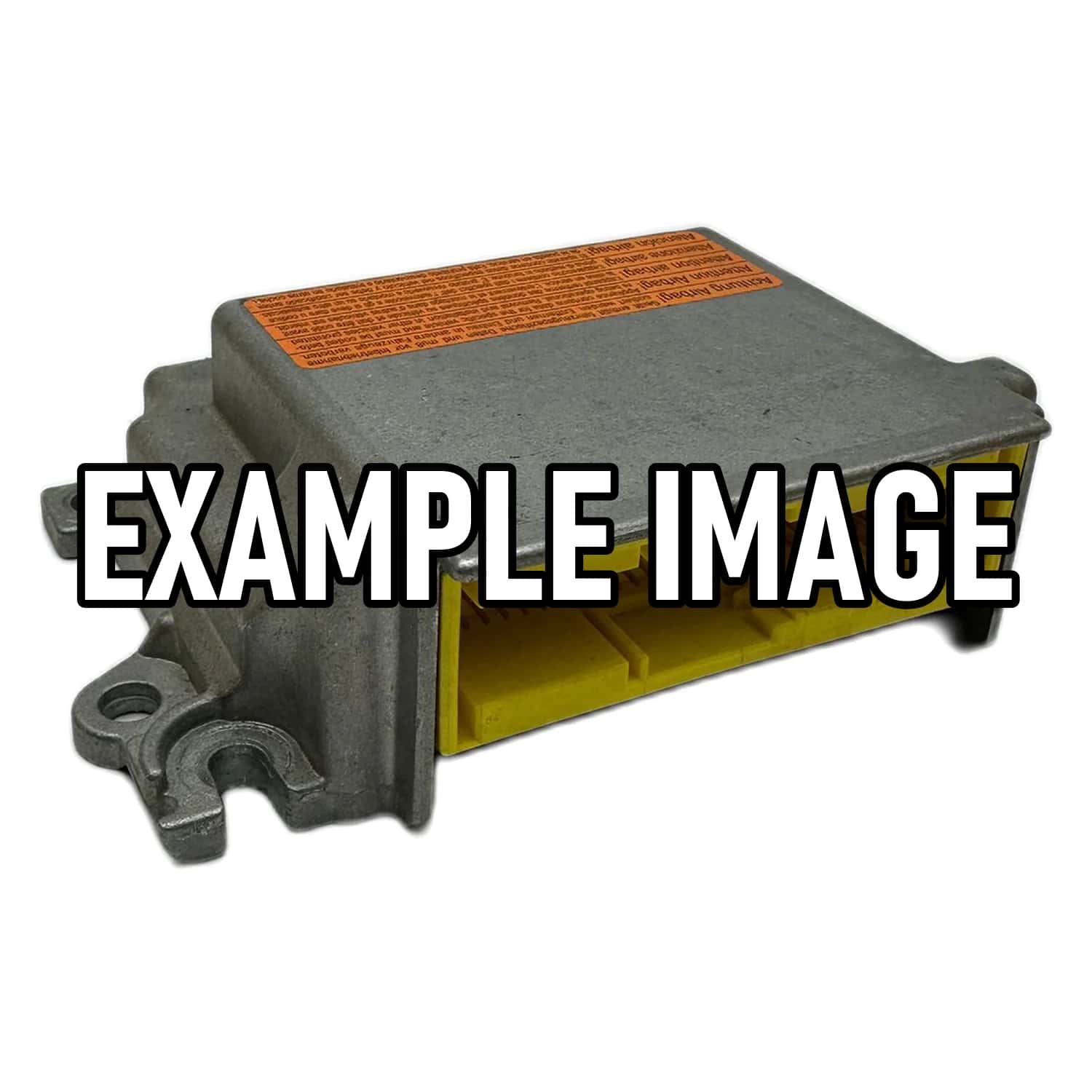
Because the driver's-side airbag was an optional feature in the Honda Beat, not every vehicle is equipped with an airbag control unit. If your Honda Beat has an airbag, you can find the control unit's part number directly on the housing, often under the carpet or behind the center console. This number is key to ensuring the repaired control unit works optimally with your vehicle's existing systems.
The exact part number helps determine the correct firmware version and hardware configuration for your specific Honda Beat airbag control unit. This is crucial, as even small differences between the PP1-100 and PP1-110 variants or different production versions can affect compatibility. We recommend noting the full part number before attempting a repair to ensure a smooth process.
What airbag equipment does the Honda Beat have?
The airbag equipment of the Honda Beat (PP1) is comparatively minimal due to its production period from 1991 to 1996 and the vehicle safety standards of the time. The driver's side airbag was available as an option and not standard equipment, meaning that many Honda Beat models were delivered without this safety feature.
At the time of the Honda Beat's production, airbags weren't yet standard equipment in all vehicle segments, especially not in small kei cars. Therefore, a driver's-side airbag was offered only as an additional option. The original steering wheel of the Honda Beat was a three-spoke design without an airbag, while the airbag version could be added later as a specific option package.
It's important to note that this is a single driver airbag system, a far cry from today's comprehensive multi-airbag systems. Passenger airbags or side airbags were not available in the Honda Beat. If your Honda Beat is equipped with this optional equipment, proper functioning of the airbag control unit is critical to the vehicle's active safety.
Common fault codes in this category
Shipping & repair from Germany
Airbag24 repairs your component in Berlin — usually within 3–4 working days.
Standard shipping within Germany is free; we normally return your part by UPS.
You pay for and insure the inbound shipment to us. On explicit request we ship by express — the extra cost is borne by the customer.
If you withdraw from the contract, you bear the cost of returning the item.