
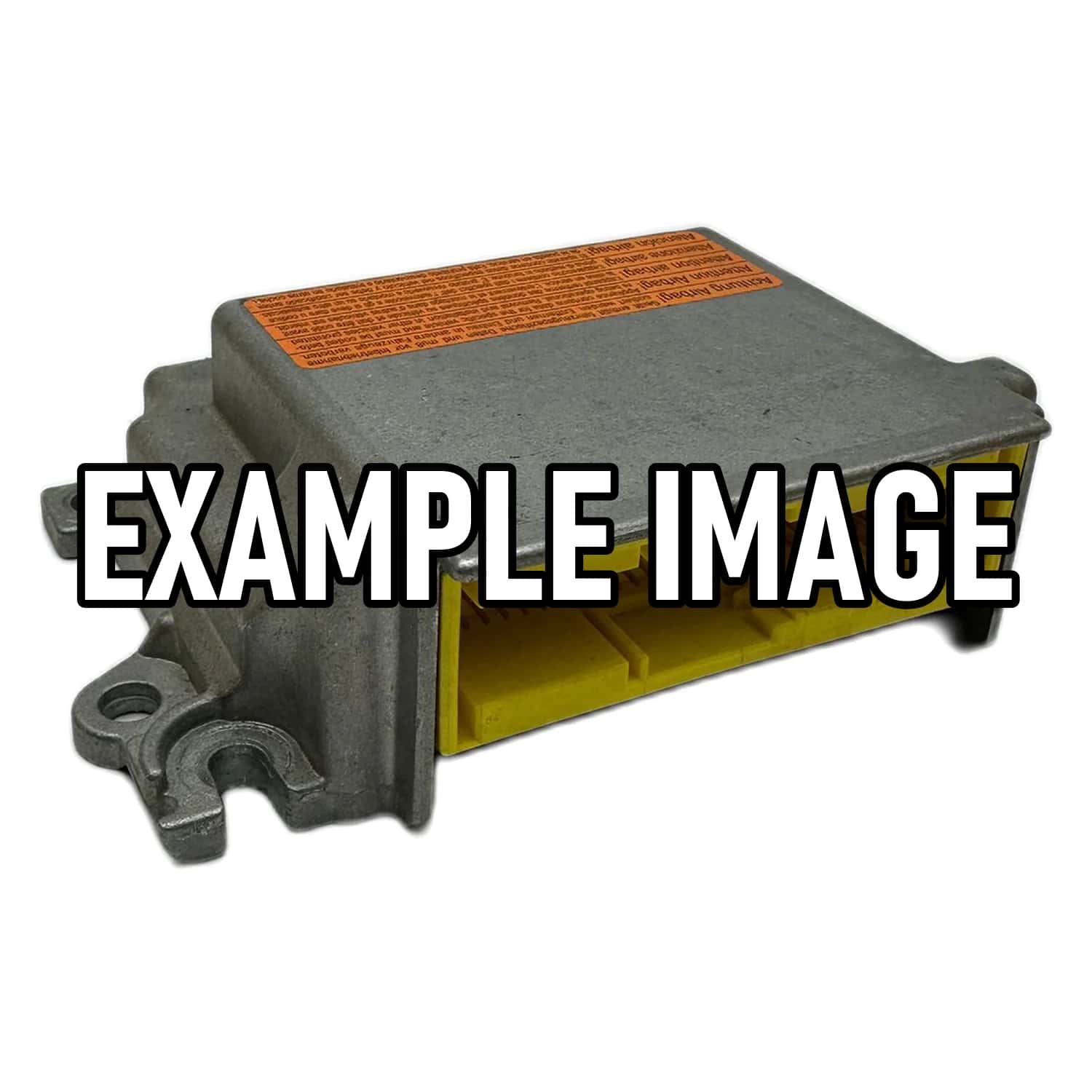
Honda CR-Z airbag control unit repair(1)
1 product
What should I consider with Honda CR-Z airbag control units?
The airbag technology used in the Honda CR-Z varies depending on the model year and model upgrade. A professional Honda CR-Z airbag control unit repair ensures the restoration of original functionality and thus maximum safety.
The Honda CR-Z, known as a sporty hybrid coupe, was produced from 2010 to 2016 and aimed at a young, environmentally conscious target group that valued efficiency and driving pleasure. Although there were no traditional generational changes, significant revisions took place in 2013 and 2016. These model updates brought not only visual updates but also technical adjustments that influenced the installed airbag control units.
The development of the airbag system in the Honda CR-Z reflected the advancing safety standards of the 2010s. From basic systems at the beginning of production to more refined modules in later models, occupant safety was always a priority. If your Honda CR-Z airbag control unit is defective, a quick and professional repair is essential to restore the full functionality of the passive safety system and ensure the safety of all vehicle occupants. A specialized repair will ensure your system operates reliably again.
Which Honda CR-Z generations are there?
The Honda CR-Z was produced as a single generation from 2010 to 2016, but underwent two major facelifts that may affect the airbag control unit. These revisions reflect technological advancements and the evolution of safety systems during this period.
The original Honda CR-Z (internally designated ZF1) was launched in 2010 and was based on the proven Honda Insight platform. It utilized the Integrated Motor Assist (IMA) system and a three-stage dynamic control system ranging from ECON to Normal to Sport. The first significant revision took place in 2013, which included a slight increase in the hybrid powertrain and subtle design changes to the exterior and interior. The airbag control unit's software may also have been updated during this phase.
A further update followed in 2016, shortly before production was discontinued, which also included technical and visual innovations. These continuous improvements are important when it comes to precisely identifying and repairing a defective airbag control unit. Although they are not separate generations in the traditional sense, these model updates are crucial for correctly identifying the installed components and ensuring a successful repair.
How do I identify my Honda CR-Z airbag control unit?
Honda CR-Z airbag control units can be uniquely identified by the printed part number, the exact year of manufacture, and the vehicle identification number (VIN). Each model and trim level may use specific control unit variants to ensure optimal compatibility with the respective safety system.
To identify the correct airbag control unit for repairing your Honda CR-Z, the part number printed on the unit itself is of utmost importance. This number is often an alphanumeric code that provides precise information about the control unit's hardware and software version. The exact year of your Honda CR-Z is also important, as the internal components or programming of the control units may have changed over the years of production (2010-2016).
Additionally, the Vehicle Identification Number (VIN) can provide information about the original equipment and thus the correct airbag module. Precise identification of the defective control unit is essential to ensure that the repair not only goes smoothly but also restores the full and correct functionality of the passive safety system. We recommend having this information on hand to expedite the repair process and avoid compatibility issues.
What airbag equipment does the Honda CR-Z have?
The Honda CR-Z's airbag equipment varies depending on the model year and trim level, but it offered a high level of safety from the start. The sporty hybrid came standard with comprehensive safety features from the start, which have been further developed over the years to meet changing safety requirements.
The Honda CR-Z was designed with a robust airbag suite to ensure occupant safety, which is standard for a vehicle of its class and production period. This typically included front airbags for the driver and front passenger, which are deployed in a frontal impact. Side airbags were also integrated to provide additional upper body protection in a side impact.
In addition, curtain airbags (also called head airbags) for head protection in the event of a side impact were available as standard in most trim levels or as a standard feature. The development of safety technology throughout the production years (2010-2016) ensured continuous optimization of these protection systems and their sensors. A functioning airbag control unit is the heart of this equipment; if it is defective, it must be repaired immediately to ensure the full protective effectiveness of the airbags.
As a sporty hybrid coupe focused on efficiency and dynamics, Honda ensured that the CR-Z is also comprehensively equipped in terms of passive safety to meet the high demands of today. The correct functioning of the airbag control unit is fundamental for the activation of all installed airbag modules.
Shipping & repair from Germany
Airbag24 repairs your component in Berlin — usually within 3–4 working days.
Standard shipping within Germany is free; we normally return your part by UPS.
You pay for and insure the inbound shipment to us. On explicit request we ship by express — the extra cost is borne by the customer.
If you withdraw from the contract, you bear the cost of returning the item.