
Honda Inspire airbag control unit repair(5)
5 products
What should I consider with Honda Inspire airbag control units?
The airbag technology used in the Honda Inspire varies depending on the model year. Professional repair of control units in all Honda Inspire generations restores original functionality and maximum safety.
First introduced in October 1989, the Honda Inspire represents a significant development in the Japanese mid-size sedan segment. Over five main generations, production of which continued until 2012, the model was continuously refined and adapted to ever-increasing demands for comfort and vehicle safety.
The evolution of the airbag systems in the Honda Inspire reflects this technological advancement. While early models were equipped with the basic airbags common at the time, later generations integrated increasingly complex safety systems. These advanced systems included not only additional airbags but also integration with modern driver assistance features.
Which Honda Inspire generations are there?
The Honda Inspire has been produced in five main generations, each with different airbag control units. The development of the safety system reflects technological advances from 1989 to 2012.
The first generation of the Honda Inspire (models CC2, CC3) was produced from 1989 to 1995 and laid the foundation for the model as a comfortable mid-size sedan. It was followed by the second generation (UA1, UA2, UA3) from 1995 to 1998, which brought further refinements and gradually expanded the range of airbags.
After a brief hiatus, the third generation (UA4, UA5) was launched from 2001 to 2003, followed by the fourth generation (UC1) from 2005 to 2007, which represented a significant leap in safety technology. The fifth and final main generation (CP3) was produced from 2007 to 2012 and marked the pinnacle of the series, featuring the most advanced airbag systems.
In our product range, these generations are often found under specific model codes or designations, such as "honda-inspire-1st-gen" for the first models (CC2, CC3) or "honda-inspire-uc" for the fourth generation (UC1). Model codes such as "honda-inspire-ua" (UA1-UA5) and "honda-inspire-cp" (CP3) also help clearly identify the appropriate airbag control unit for your specific vehicle.
In addition to these main series, the shop also contains entries such as "honda-inspire-aa" or "honda-inspire-hc," which could represent specific variants or special models within the aforementioned generations, making the precise identification of the defective airbag control unit all the more important. It's important to note that the Inspire name was revived after 2012 for China-exclusive models based on the Honda Accord, which, however, feature different technical specifications and airbag systems.
How do I identify my Honda Inspire airbag control unit?
Honda Inspire airbag control units can be uniquely identified by part number, model year, and vehicle identification number. Each generation uses specific control unit variants for optimal compatibility.
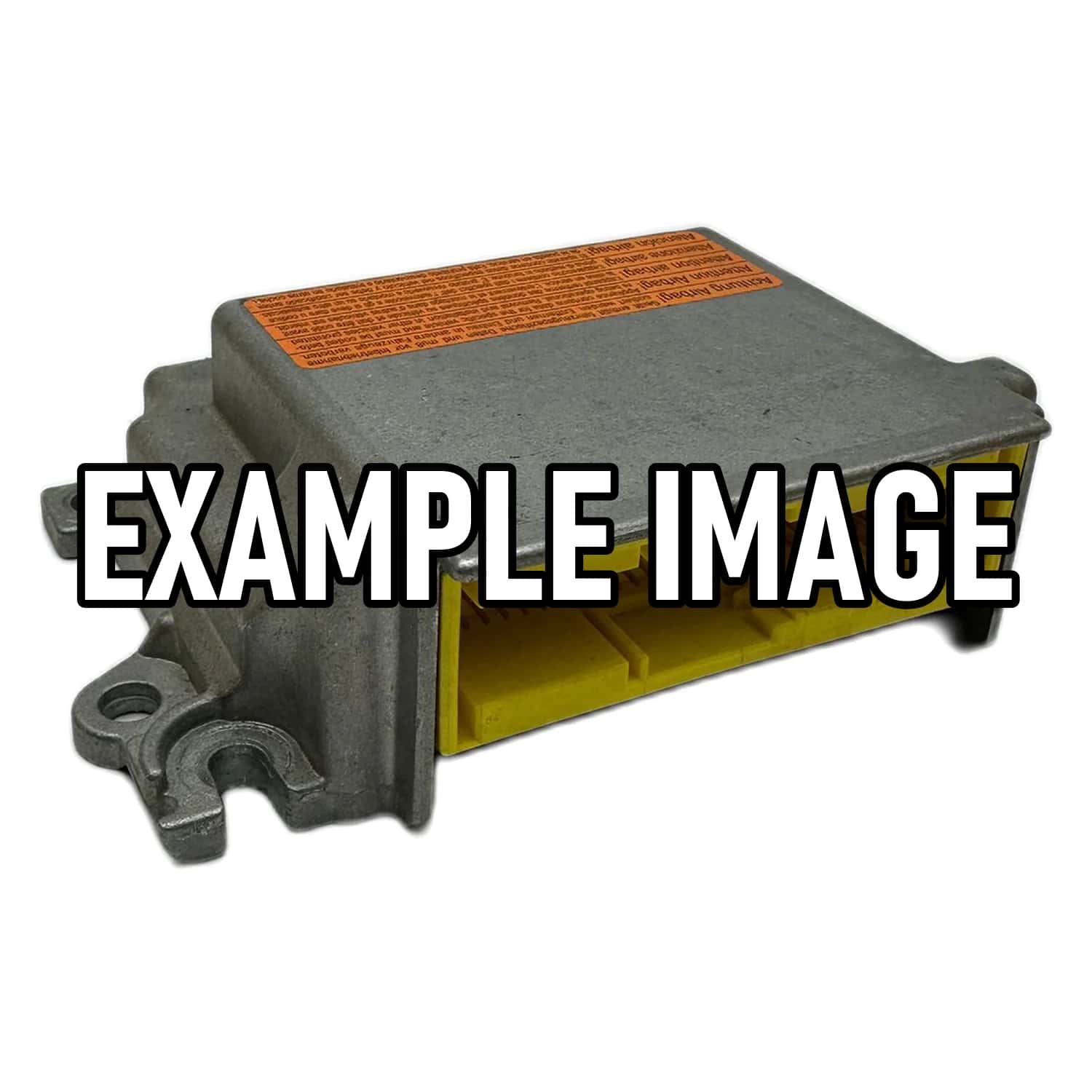
Precise identification of the airbag control unit is crucial for a successful repair and ensuring full functionality. The most important identification is the part number, which is usually located directly on the control unit housing and is specific to each variant. This number is essential for finding the exact replacement or repair part.
In addition to the part number, the exact year of your Honda Inspire and the Vehicle Identification Number (VIN) play an important role in verifying compatibility. This is especially true since airbag configurations and safety system architectures can change between Inspire generations and even within model years.
Since each generation of the Honda Inspire, as well as individual trim levels, uses specific control unit types, precise identification based on these characteristics is essential. A correctly identified airbag control unit ensures that all airbags and seatbelt pretensioners installed in the vehicle can deploy precisely and reliably in the event of a collision.
What airbag features does the Honda Inspire have?
The Honda Inspire's airbag configuration varies depending on the model year and trim level. While early models use basic airbag systems, newer generations feature enhanced safety packages with additional airbag modules.
In the early generations of the Honda Inspire, particularly from 1989 through the late 1990s, airbag equipment typically included standard front airbags for the driver and front passenger. These basic systems were industry standard for mid-size vehicles at the time and were designed to provide protection in frontal collisions.
With advances in the 2000s, especially starting with the third (2001-2003) and fourth generation (2005-2007, UC1 model), the Honda Inspire's airbag equipment was significantly expanded. Models of this era often featured supplemental side airbags and, in some cases, curtain airbags to improve occupant protection in side collisions and rollovers. These more comprehensive systems were typical of the premium mid-size segment in which the Inspire was positioned.
The fourth and fifth generations (CP3, 2007-2012) of the Honda Inspire, in particular, incorporated more advanced safety technologies. This included not only a larger number of airbags, but also the integration of the airbag control unit with modern driver assistance systems such as the Collision Mitigation Brake System (CMS) and electronic pretensioners. These systems worked hand in hand with the airbags to maximize safety in the event of an accident, for example, by braking the vehicle before impact or pretensioning the seatbelts.
Common fault codes in this category
Shipping & repair from Germany
Airbag24 repairs your component in Berlin — usually within 3–4 working days.
Standard shipping within Germany is free; we normally return your part by UPS.
You pay for and insure the inbound shipment to us. On explicit request we ship by express — the extra cost is borne by the customer.
If you withdraw from the contract, you bear the cost of returning the item.