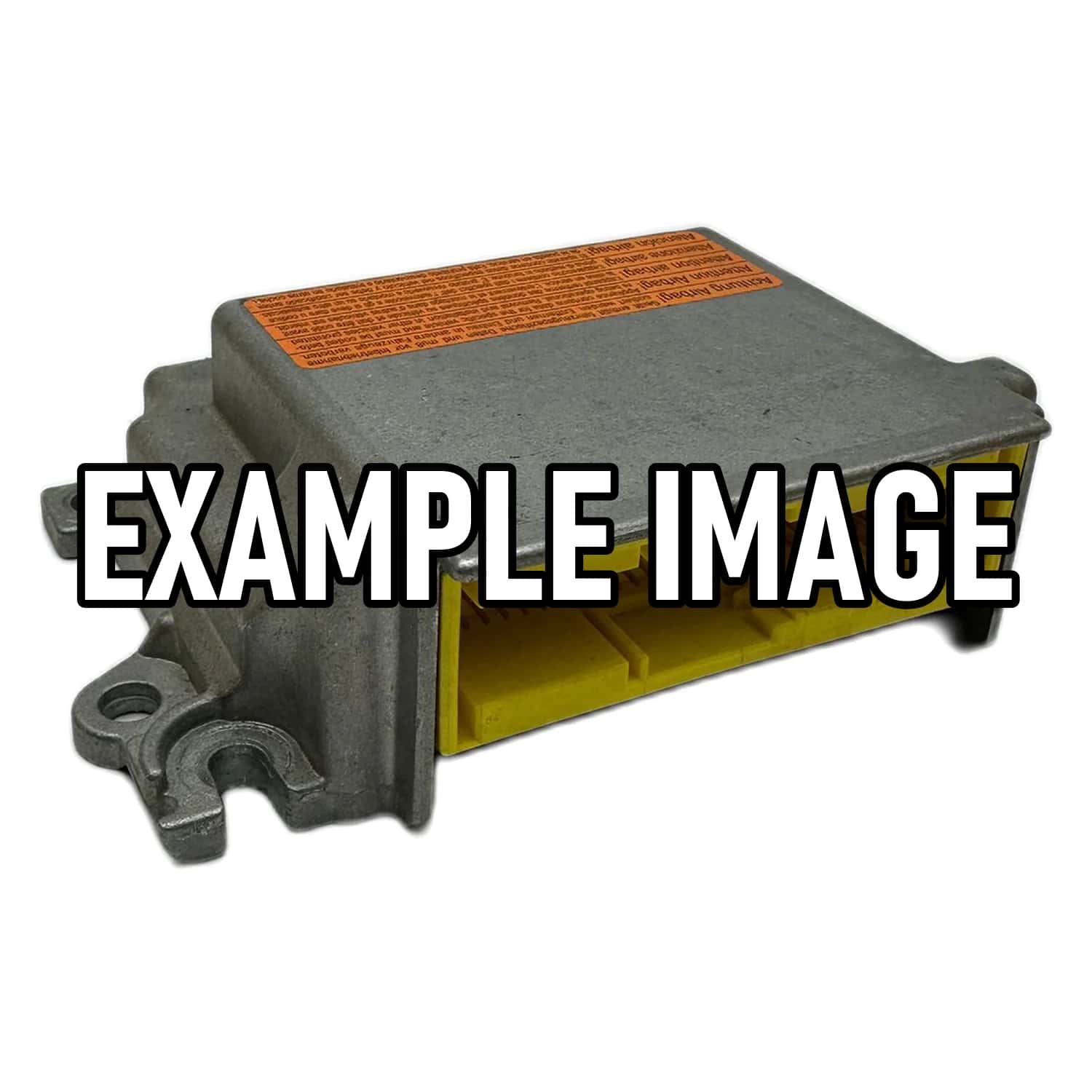
airbag control unit repair Hummer H3 SUV
from€79.00
 Quality since 2002
The airbag technology used in Hummers varies significantly depending on the model and year of manufacture. Therefore, airbag control unit repairs should be performed according to the specific model and year of manufacture to ensure original functionality and maximum safety.
The Hummer's production history ranges from its military roots as the HMMWV and the civilian H1 to the more comfortable SUV models H2 and H3 and the state-of-the-art Hummer EV electric vehicles. Each of these generations brings with it different requirements for safety electronics.
Hummer airbag system development has undergone remarkable change over the years. While the earliest models often featured only rudimentary or optional airbags, newer generations are equipped with comprehensive, complex safety systems that require precise diagnosis and expert repair.
Hummer has produced over 20 different models and variants, with each generation and series using specific airbag control units. The ongoing development of the safety system reflects technological advances and adaptation to changing safety standards.
The most well-known main series include the robust Hummer H1 (e.g. H1 6.5TD, H1 6.6L, H1 KSC, H1 Limited Edition), the spacious Hummer H2 (e.g. H2 6.0L, H2 6.2L, H2 Adventure, H2 Luxury) and the more compact Hummer H3 (e.g. H3 3.5L, H3 3.7L, H3 5.3L, H3 Adventure, H3 Luxury, H3X).
In addition to these iconic models, specialty vehicles such as the military Hummer HMMWV and pioneering studies such as the Hummer HX Concept and H4 Concept were also added. The latest generation, the Hummer EV (as a pickup truck and SUV), relies on a fully electric platform with state-of-the-art safety technology.
Hummer airbag control units can be identified without a doubt by their unique part number, the exact vehicle model year, and the vehicle identification number (VIN). Each model and trim generation uses specific control unit variants to ensure optimal compatibility and functionality.
The control unit part number is the most important indicator of the exact model and compatibility. It is usually located on a sticker directly on the control unit itself, which is often located under the driver's seat, in the center console, or behind the dashboard.
In addition, the year of manufacture of the Hummer and the complete vehicle identification number are crucial, since even within a model series, different revisions or software versions of the airbag control units can be used, which must be taken into account for correct repair.
The airbag configuration of Hummer vehicles varies significantly depending on the year, model series, and specific trim level. While earlier models feature basic airbag systems, newer generations feature state-of-the-art and enhanced safety packages with a variety of airbag modules and sensors.
The original Hummer H1 models and the military HMMWV were, in keeping with their robust design, rather minimalist in their equipment. Airbags were often not standard or only rudimentary for the driver and front passenger, heavily influenced by the respective model year and civilian conversion.
With the Hummer H2 and H3 models, developed from the 2000s onward, airbag equipment was significantly improved and standardized. These vehicles generally feature standard front airbags for the driver and front passenger, often supplemented by side airbags, especially in the Adventure, Luxury, and X trim levels.
The new Hummer EV models, designed as state-of-the-art electric vehicles, are equipped with the most advanced airbag and safety electronics. This typically includes comprehensive multifunction control units, a multitude of impact sensors, and multiple airbag zones to ensure the highest level of occupant protection.
A professional repair of the airbag control unit is crucial for the safety of vehicle occupants and compliance with legal regulations. As a central element of the passive safety system, it must function perfectly.
A defective airbag control unit, often indicated by a permanently illuminated airbag warning light, means that the entire airbag system cannot deploy correctly in the event of an accident. This poses a significant safety risk and can impair life-saving functions.
Furthermore, an active airbag warning light in Germany will result in failure of the vehicle's general inspection (TÜV), which will invalidate the vehicle's roadworthiness. A professional repair of the control unit is, in most cases, a more cost-effective alternative to purchasing a new, expensive replacement part.
The complexity of modern airbag systems, especially in the newer Hummer generations, requires specialized knowledge and diagnostic tools. This is the only way to ensure that the control unit not only functions but also communicates correctly with all other safety components in the vehicle.
Defects in Hummer airbag control units can have a variety of causes, ranging from accidents and environmental influences to electronic wear and tear. However, the most common fault patterns can be clearly identified and professionally repaired.
One of the most common causes of a control unit defect is the storage of so-called crash data after an accident. Even if the vehicle has been repaired and the airbags haven't deployed, this data blocks the system's function and must be erased through a special repair procedure.
Moisture ingress or corrosion can cause damage to the internal electronics of the control unit, especially in older Hummer H1 or HMMWV models. This often manifests itself as sporadic malfunctions or persistent warning lights.
Internal electronic defects can also occur due to voltage spikes, component aging, or manufacturing defects. Such problems require detailed chip-level diagnostics to identify and replace the faulty components.
Airbag24 repairs your component in Berlin — usually within 3–4 working days.
Standard shipping within Germany is free; we normally return your part by UPS.
You pay for and insure the inbound shipment to us. On explicit request we ship by express — the extra cost is borne by the customer.
If you withdraw from the contract, you bear the cost of returning the item.
