
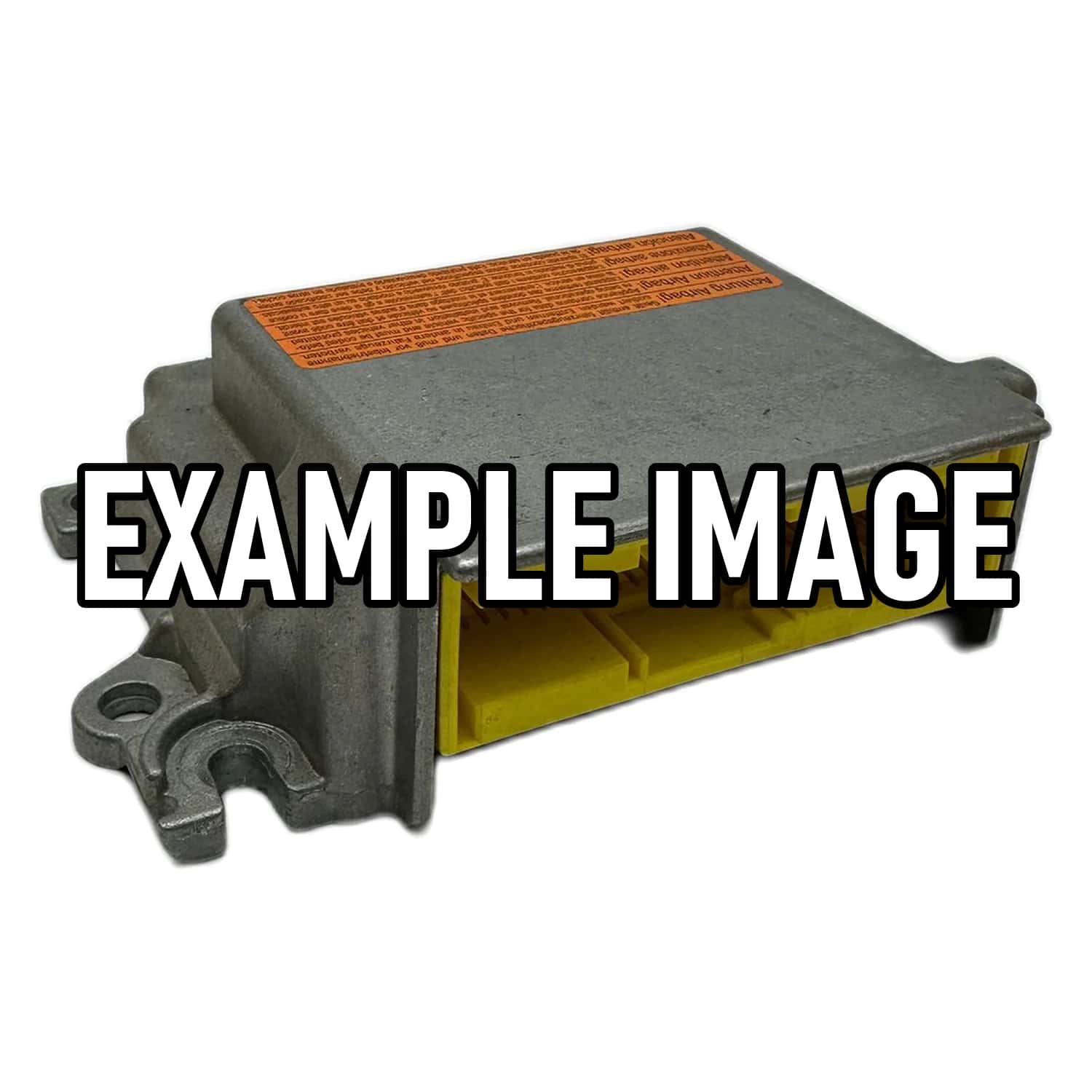
Hyundai Atos Prime airbag control unit repair(1)
1 product
What should be considered with Hyundai Atos Prime airbag control units?
The airbag technology used in the Hyundai Atos Prime varies depending on the model year and is primarily designed for basic occupant protection. Airbag control units are key safety components whose proper function is crucial for airbag deployment in the event of a collision. A professional repair of defective Hyundai Atos Prime airbag control units restores original functionality.
The Hyundai Atos Prime, produced from 1999 to 2008, is a subcompact car primarily designed for city driving. During this period, vehicle safety also evolved, reflected in the systems installed in the Atos Prime. Airbag technology focused on essential protective functions for the driver and front passengers.
Airbag control units can fail for various reasons, such as aging, corrosion, or after an accident that stores crash data in the unit. Repairing the unit is often a cost-effective and sustainable alternative to replacing the entire module. This involves reconditioning the existing unit to restore its full functionality.
Which Hyundai Atos Prime generations are there?
The Hyundai Atos Prime, as a specific model variant, was produced from 1999 to 2008. It belongs to the second development phase of the Hyundai Atos and underwent several facelifts during this period. The development of the safety system reflects the technological advances from 1999 to 2008, although the basic airbag system was largely retained.
The Hyundai Atos Prime (1999–2008) replaced the first generation of the Atos. During this production period, there were various updates, primarily focused on visual features such as headlights, bumpers, and the interior. Technically, the airbag systems in the Atos Prime remained at the level of the early 2000s, focusing on frontal impact protection.
For example, there were minor facelifts in 1999 and 2001. These model updates rarely resulted in fundamental changes to the airbag control unit hardware, but part numbers could change due to minor adjustments or supplier changes. Understanding this model history is crucial for correct repair and identifying the correct control unit.
How do I identify my Hyundai Atos Prime airbag control unit?
Hyundai Atos Prime airbag control units are most reliably identified by the printed part number. The vehicle's year of manufacture and the vehicle identification number (VIN) are also important features to ensure control unit compatibility. Each Atos Prime variant uses specific control units that must be precisely matched to the installed airbag system.
The part number is usually located directly on the housing of the airbag control unit. A typical Hyundai part number, for example, might be 95910-05600. This number is the primary key to identifying the exact model and its specifications, which is essential for a successful repair.
It is important to note that the removal and installation of the airbag control unit, as with all safety-relevant components, should only be performed by qualified personnel. The battery must always be disconnected before beginning work to prevent accidental deployment of the airbag system and ensure safety.
What airbag equipment does Hyundai Atos Prime have?
The airbag equipment in the Hyundai Atos Prime is tailored to the basic safety needs of a subcompact car. The Atos Prime was equipped with driver and front passenger airbags as standard. These are positioned to provide additional protection for the occupants in a frontal collision and absorb impact energy.
The driver's airbag is integrated into the steering wheel, while the passenger airbag is installed in the dashboard or glove compartment. In addition to the airbags, seatbelts with pretensioners and load limiters also contributed to passive safety. These components worked together to maximize occupant safety in the event of a collision.
For the Hyundai Atos Prime, produced from 1999 to 2008, advanced safety systems such as side or curtain airbags were generally not available as standard or optional. The vehicle focused on the established safety standards of its time for the subcompact car class. The goal was to offer an affordable yet safe vehicle for urban use.
Common fault codes in this category
Shipping & repair from Germany
Airbag24 repairs your component in Berlin — usually within 3–4 working days.
Standard shipping within Germany is free; we normally return your part by UPS.
You pay for and insure the inbound shipment to us. On explicit request we ship by express — the extra cost is borne by the customer.
If you withdraw from the contract, you bear the cost of returning the item.