
Hyundai Coupe airbag control unit repair(2)
2 products
What should I pay attention to with Hyundai Coupe airbag control units?
The airbag technology used in Hyundai Coupes varies depending on the model year. Airbag24 professionally repairs control units for all Hyundai Coupe generations with original functionality and a 2-year warranty.
The Hyundai Coupe, produced from 1996 to 2009 and sold until 2011, was a popular sporty coupe. During this period, vehicle safety, especially airbag systems, underwent continuous development. The airbag control unit is the central component responsible for detecting a collision and safely deploying the airbags.
A defective airbag control unit can impair the function of the entire safety system and is therefore a safety-related defect. Whether it's a first-generation model, the RD series, or the later GK series, the specific technology and programming of the control units differs considerably, requiring precise repair or professional replacement.
Which Hyundai Coupe generations are there?
The Hyundai Coupe has been produced in three generations, each using different airbag control units. The development of the safety system reflects technological advances from 1996 to 2009.
The first generation of the Hyundai Coupe was built from 1996 to 1999 and laid the foundation for its sporty image. The airbag systems of these early models were still relatively simple, but already an important component of passive safety.
The second generation, known internally as the Hyundai Coupe RD, ran from 1999 to 2002. A comprehensive facelift in 1999 brought not only visual changes but also technical updates, which also affected the electronic safety systems. The airbag control unit was adapted accordingly.
The third and final generation, the Hyundai Coupe GK, was produced from 2002 to 2009. This series, also known as the Hyundai Tiburon in some markets, underwent further facelifts in 2005 and 2007. These later models benefited from even more advanced airbag systems and integrated sensors, allowing for more precise control and, where appropriate, expanded airbag equipment.
How do I identify my Hyundai Coupe airbag control unit?
Hyundai Coupe airbag control units can be uniquely identified by part number, model year, and vehicle identification number. Each generation uses specific control unit variants for optimal compatibility.
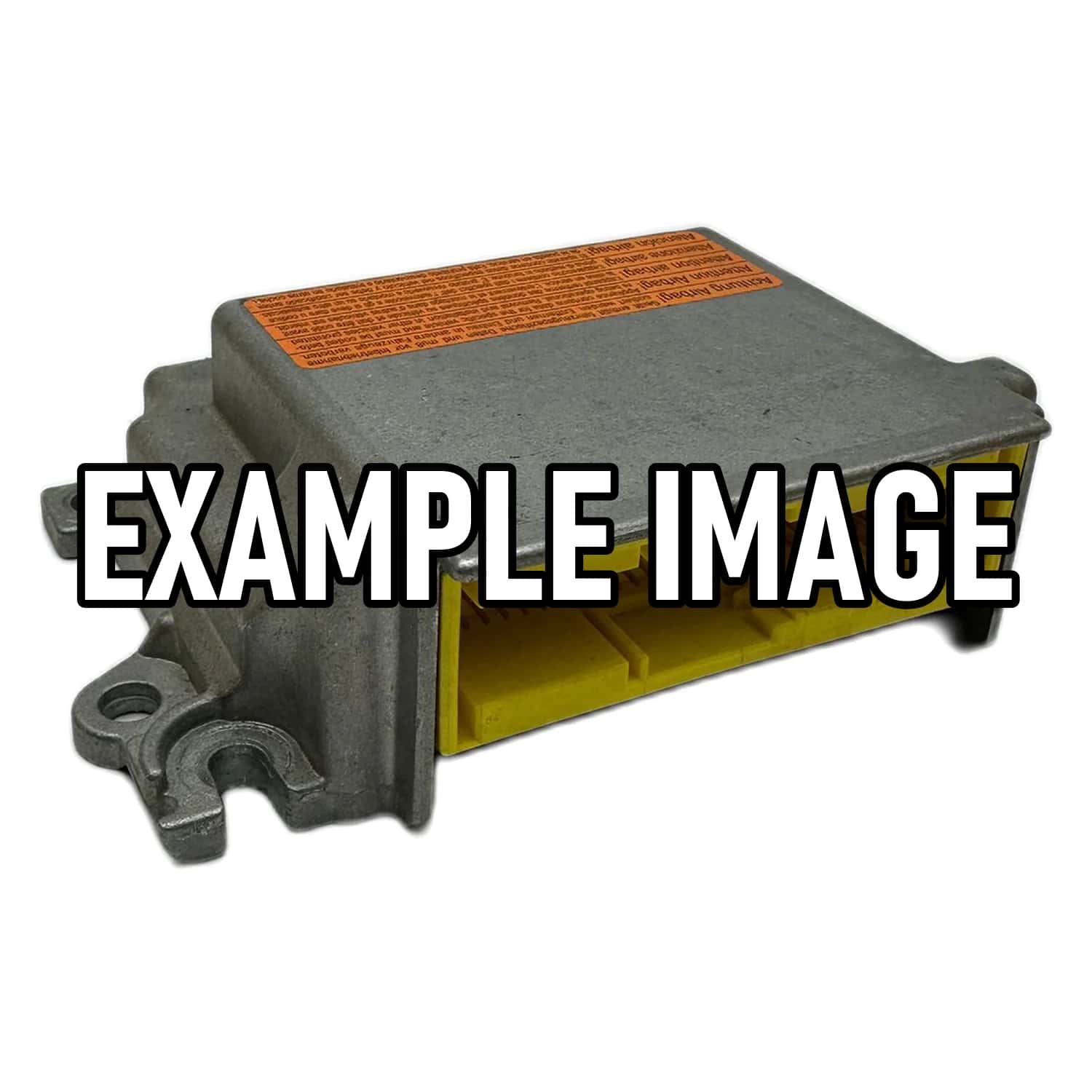
Precisely identifying the installed airbag control unit is crucial for a successful repair or replacement. The most important reference is the part number, which is usually located directly on a sticker on the control unit itself. This number is specific to the model year and trim level of your Hyundai Coupe.
Additionally, the exact year of manufacture and the vehicle identification number (VIN) can provide valuable information regarding compatibility. Since airbag systems have been continuously developed over the course of production, even minor changes to the vehicle must be taken into account. Correct identification ensures that the repaired or replaced control unit communicates seamlessly with the sensors and airbags in your Hyundai Coupe (RD or GK) and fulfills its full safety function.
What airbag equipment does the Hyundai Coupe have?
The airbag configuration of the Hyundai Coupe varies depending on the model year and trim level. While early models use basic airbag systems, newer generations feature enhanced safety packages with additional airbag modules.
As a sporty front-wheel-drive coupe, the Hyundai Coupe was equipped with important safety features throughout its production run. In the early generations, driver and passenger airbags were typically standard or widely available to provide basic occupant protection.
With the introduction of the GK generation starting in 2002 and the subsequent facelifts in 2005 and 2007, safety standards were further raised. This could include the integration of side airbags, head airbags, or improved seatbelt pretensioner systems. Each of these enhancements required a correspondingly adapted airbag control unit capable of processing the more complex information from the additional sensors and precisely deploying the various airbag modules.
Regardless of the exact configuration, the airbag control unit remains a core component of passive safety. Therefore, repairing a defective control unit is essential to ensure the full functionality of the entire airbag system and thus the safety of the occupants in the Hyundai Coupe.
Common fault codes in this category
Shipping & repair from Germany
Airbag24 repairs your component in Berlin — usually within 3–4 working days.
Standard shipping within Germany is free; we normally return your part by UPS.
You pay for and insure the inbound shipment to us. On explicit request we ship by express — the extra cost is borne by the customer.
If you withdraw from the contract, you bear the cost of returning the item.