
Hyundai Elantra airbag control unit repair(5)
5 products
What should I pay attention to with Hyundai Elantra airbag control units?
The airbag technology used in the Hyundai Elantra varies depending on the model year and generation. Professional repair of airbag control units in all Hyundai Elantra generations requires specialized expertise to ensure true-to-original functionality.
The Hyundai Elantra has evolved steadily since its launch in 1990, from a compact entry-level car to a technologically advanced sedan. This evolution is also reflected in the airbag systems installed, which have become more complex over the generations.
Airbag system development has ranged from simple front airbags in early models to comprehensive safety systems with numerous airbag modules and intelligent assistance functions. Each generation of the Elantra uses specific airbag control units tailored to the respective equipment and technology, requiring professional repair in the event of a defect.
Which Hyundai Elantra generations are there?
The Hyundai Elantra has been produced in seven main generations, each with a different airbag control unit. The evolution of the safety system reflects technological advances from 1990 to the present, from the first Elantra J1 series to the current CN7.
The first generation, the Hyundai Elantra J1, was produced from approximately 1990 to 1995. This was followed by the J2 (approximately 1996–2000) and the J3 (approximately 2001–2006), each of which brought improvements in design and technology.
The fourth generation began with the Elantra HD (2006–2010/2011), followed by the MD (2011–2015) as the fifth generation, both offering significant advances in comfort and safety. The sixth generation, the Elantra AD (2016–2020), continued this trend before the current seventh generation, the Elantra CN7, was launched in 2021.
Each generational change brought with it not only a new design but also adapted electronic systems. This includes the airbag control units, which are always tailored to the specific airbag configurations and additional safety systems of the respective generation and require specific repairs in the event of a defect.
How do I identify my Hyundai Elantra airbag control unit?
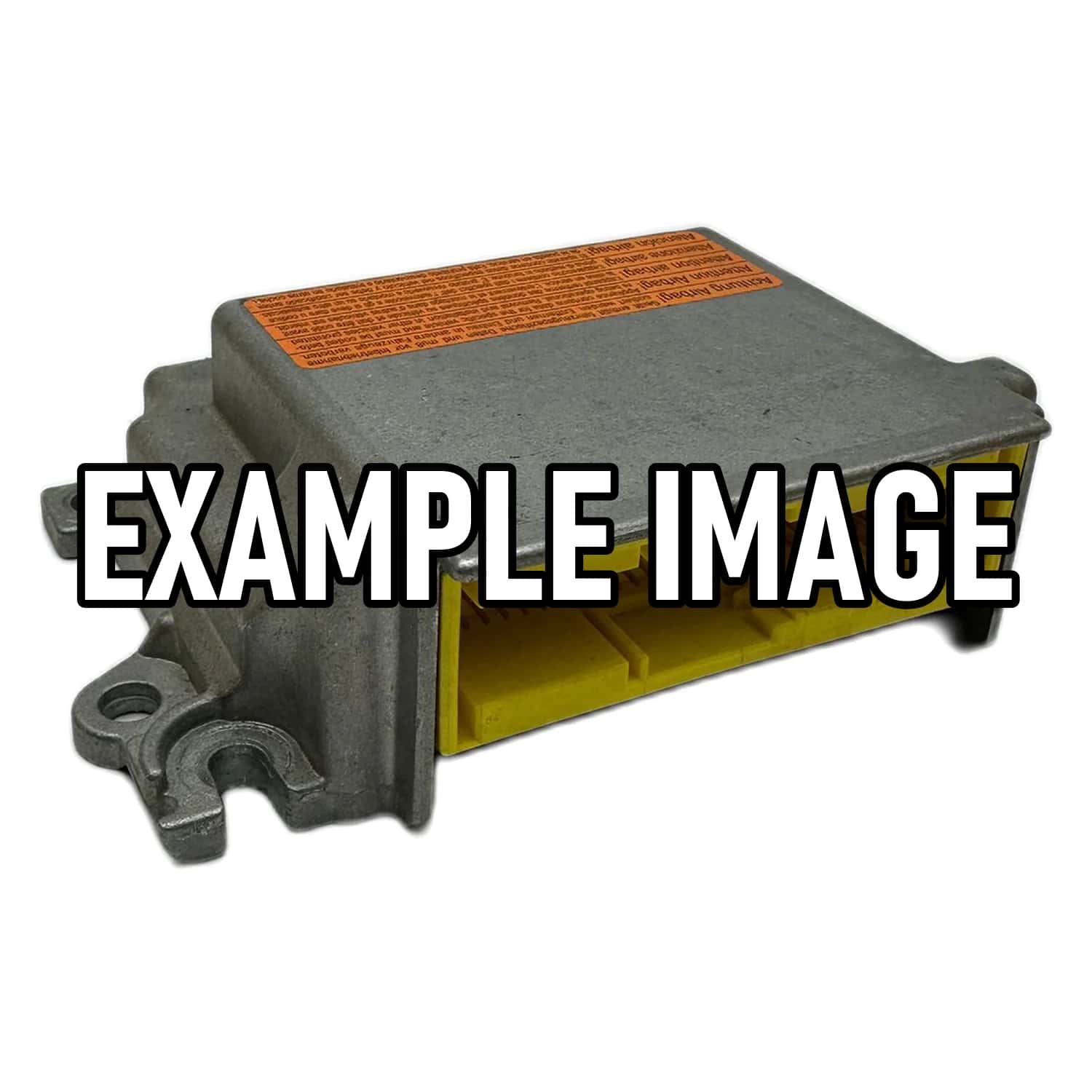
Hyundai Elantra airbag control units can be uniquely identified by their specific part number, model year, and, if applicable, the vehicle identification number (VIN). Each vehicle generation, and sometimes even trim level, uses specific control unit types, which are crucial for optimal compatibility.
The part number of the airbag control unit is the most important identifier and is located directly on the component's housing. This number provides information about the model series, year of manufacture, and the exact specification of the control unit, which is essential for a correct repair.
Additionally, the exact model year of the Hyundai Elantra and the vehicle identification number (VIN) can help with precise identification. This data ensures that the repaired or replaced control unit is a perfect fit for the vehicle and its individual airbag equipment.
What airbag equipment does the Hyundai Elantra have?
The airbag configuration of the Hyundai Elantra varies considerably depending on the model year, trim level, and vehicle generation. While earlier models featured basic systems, newer generations of the Elantra offer comprehensive safety packages with a variety of airbag modules and advanced assistance systems.
In the early generations of the Elantra (J1, J2, J3), front airbags for the driver and front passenger were usually standard or available as an option. This basic feature laid the foundation for the vehicle's passive safety.
With the mid-generation models (HD and MD), the airbag range was significantly expanded. Side airbags for front passengers and side curtain airbags were added, significantly improving protection in side collisions and rollovers. Some trim levels also included a driver's knee airbag.
Modern Hyundai Elantra models, especially from the sixth generation (AD) and the current CN7, feature a very comprehensive airbag system that can include up to seven airbags. This includes front, side, curtain, and knee airbags, which together provide excellent occupant protection.
Furthermore, the airbag systems in the latest Elantra models are closely integrated with advanced driver assistance systems (ADAS) such as automatic emergency braking, lane departure warning, and blind spot monitoring. The airbag control unit not only monitors airbag deployment but also plays a central role in the overall vehicle safety electronics.
Shipping & repair from Germany
Airbag24 repairs your component in Berlin — usually within 3–4 working days.
Standard shipping within Germany is free; we normally return your part by UPS.
You pay for and insure the inbound shipment to us. On explicit request we ship by express — the extra cost is borne by the customer.
If you withdraw from the contract, you bear the cost of returning the item.