
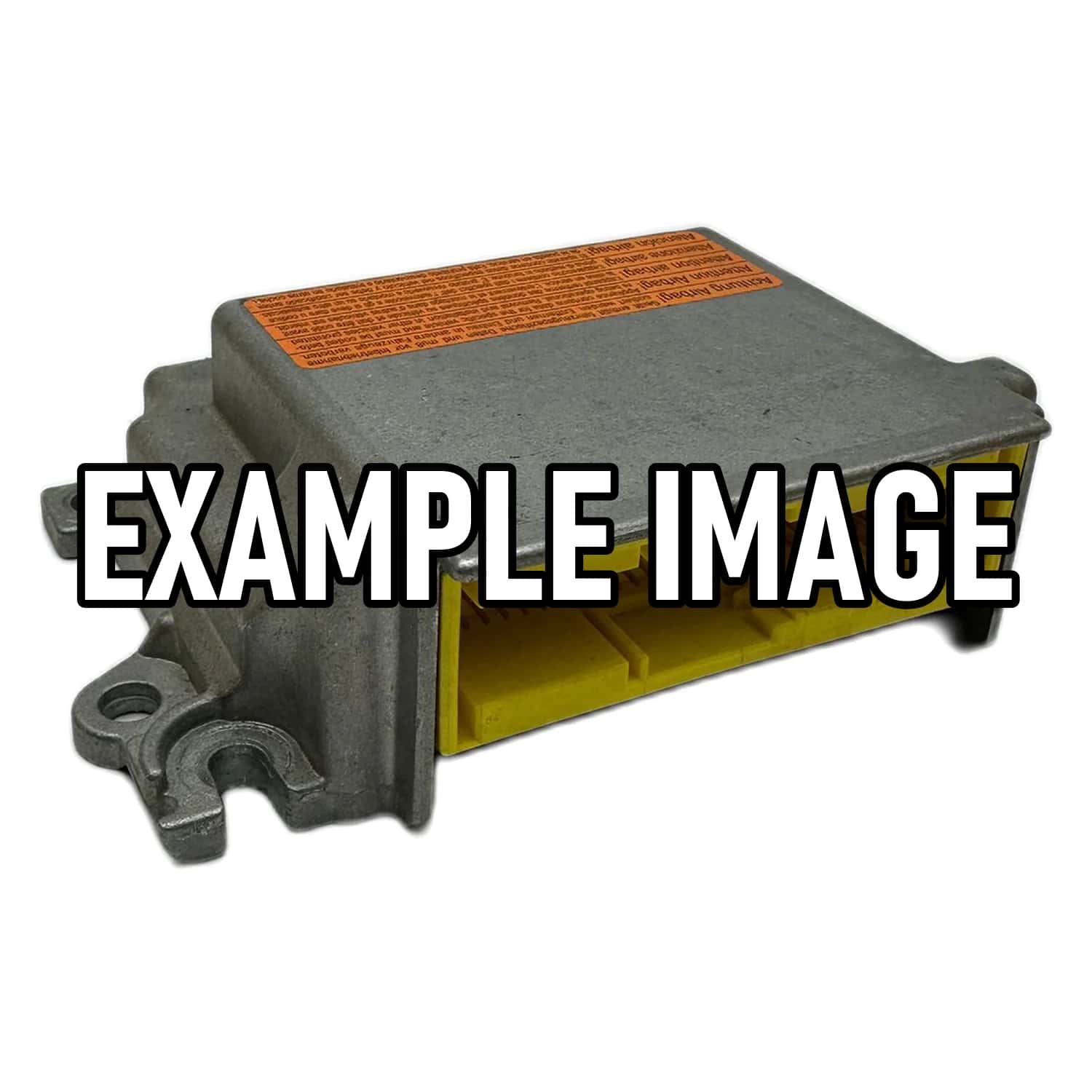
Hyundai Equus airbag control unit repair(2)
2 products
What should I pay attention to with Hyundai Equus airbag control units?
The airbag technology used in the Hyundai Equus varies depending on the model year. Airbag24 professionally repairs control units of all Hyundai Equus generations with original functionality and a 2-year warranty.
The Hyundai Equus was produced in two main generations: the first (code LZ/YJ) from 1999 to November 2009 and the second (code VI) from 2009 to 2016. From 2016 onwards, the Equus was replaced by the Genesis G90, which shaped the development of its safety and airbag systems for almost two decades.
As a luxury sedan, the Equus has always been equipped with extensive safety features. The development of airbag systems reflects technological advances, from robust original equipment modules to more complex systems. A professional airbag control unit repair is often necessary to correct malfunctions or erase the airbag crash data after an accident and restore the system to full functionality.
Which Hyundai Equus generations are there?
The Hyundai Equus was produced in two generations, each using different airbag control units. The development of the safety system reflects technological advances from 1999 to 2016.
The first generation of the Hyundai Equus, internally known as the LZ or YJ, was produced from 1999 to 2009. This sedan was still partially based on a Mitsubishi platform. In 2003, it received a comprehensive facelift, marketed as the "New Equus," which featured not only visual but also technical innovations such as xenon headlights and seat ventilation.
The second generation of the Equus, code VI, was produced from 2009 to 2016 and marked a completely new development. It was based on a modern Hyundai rear-wheel drive platform, which was also used in the Hyundai Genesis and Kia K9. This generation was also available as an extended version (VL500) and even as an armored special-protection limousine.
Both generations, which are listed in our shop under the series "hyundai-equus-vg" (first generation) and "hyundai-equus-vi" (second generation), required customized airbag control units due to their specific electronics and safety architecture.
How do I identify my Hyundai Equus airbag control unit?
Hyundai Equus airbag control units can be uniquely identified by part number, model year, and vehicle identification number. Each generation uses specific control unit variants for optimal compatibility.
Precisely identifying the defective airbag control unit is crucial for a successful repair. The unit's part number, often found on a sticker directly on the control unit, is the most important clue. The exact year of your Hyundai Equus and the vehicle identification number (VIN) are also helpful to ensure the correct version and compatibility.
A particularly advantageous feature is that the repair or reset of Hyundai Equus airbag control units is a plug-and-play solution. This means that no additional vehicle-specific VIN programming is required after the repair, significantly simplifying and speeding up the process for you.
What airbag equipment does the Hyundai Equus have?
The airbag configuration of the Hyundai Equus varies depending on the model year and trim level. While early models use basic airbag systems, newer generations feature enhanced safety packages with additional airbag modules.
As a full-size luxury sedan competing against renowned rivals like the Mercedes S-Class, the Hyundai Equus was always equipped with comprehensive passive safety features. It came standard with a variety of airbags, including front airbags for the driver and front passenger, as well as side airbags and curtain airbags to protect occupants in a side impact.
Over the years of production, this equipment was continuously refined and expanded. Newer generations and higher trim levels incorporated additional safety features such as seat belt pretensioners and more modern sensor technology. This comprehensive equipment underscores the necessity of a properly functioning airbag control unit, as it represents the central nervous system for all these vital safety components.
The specific variants of the airbag control units in the "hyundai-equus-vg" and "hyundai-equus-vi" series are tailored specifically to the respective production periods and the associated safety features. A professional repair ensures that the entire system, from the sensors to the airbag modules, communicates correctly again and functions reliably in an emergency.
Shipping & repair from Germany
Airbag24 repairs your component in Berlin — usually within 3–4 working days.
Standard shipping within Germany is free; we normally return your part by UPS.
You pay for and insure the inbound shipment to us. On explicit request we ship by express — the extra cost is borne by the customer.
If you withdraw from the contract, you bear the cost of returning the item.