
Hyundai i30 airbag control unit repair(3)

What should I pay attention to with Hyundai i30 airbag control units?
The airbag technology used in the Hyundai i30 varies depending on the model year. Airbag24 professionally repairs control units for all Hyundai i30 generations with original functionality and a 2-year warranty.
The Hyundai i30, on the market since 2007, has established itself as a firm fixture in the compact class. With each model generation, the airbag control units and associated safety technology have been continuously developed to meet the ever-increasing demands for passive vehicle safety.
This means that an airbag control unit in an early i30 FD model can be fundamentally different from that in a current i30 PD or CN. Systems have become increasingly complex, from the number of airbags monitored to integration into more complex vehicle networks.
After an accident, these control units store important crash data and may display error messages that make repair or replacement unavoidable. Proper repair is crucial to restore the safety system's full functionality and ensure that the airbags deploy correctly when needed.
Which Hyundai i30 generations are there?
The Hyundai i30 has been produced in three main generations to date, with each generation using different airbag control units. The development of the safety system reflects technological advances from 2007 to the present.
The first generation of the Hyundai i30, known as the i30 FD, was produced from 2007 to 2012 and received a facelift in 2009. These models laid the foundation for Hyundai's success in the compact class, especially in the European market.
The second generation, the i30 GD, followed from 2011 to 2017. It featured not only a more modern design but also improved safety systems and revised airbag control units, which underwent further facelifts over the course of its production run.
The current third generation, the i30 PD, has been available since 2017 and underwent a facelift around 2018/2019. The i30 CN model is considered a newer variant or further facelift of the PD model from 2019/2020, with potential further developments in electronics and safety systems.
Each of these generations, from its inception to the latest versions, uses specific components and software versions for its airbag control units. This is a crucial factor when it comes to repairing or replacing a defective module, as compatibility must be ensured.
How do I identify my Hyundai i30 airbag control unit?
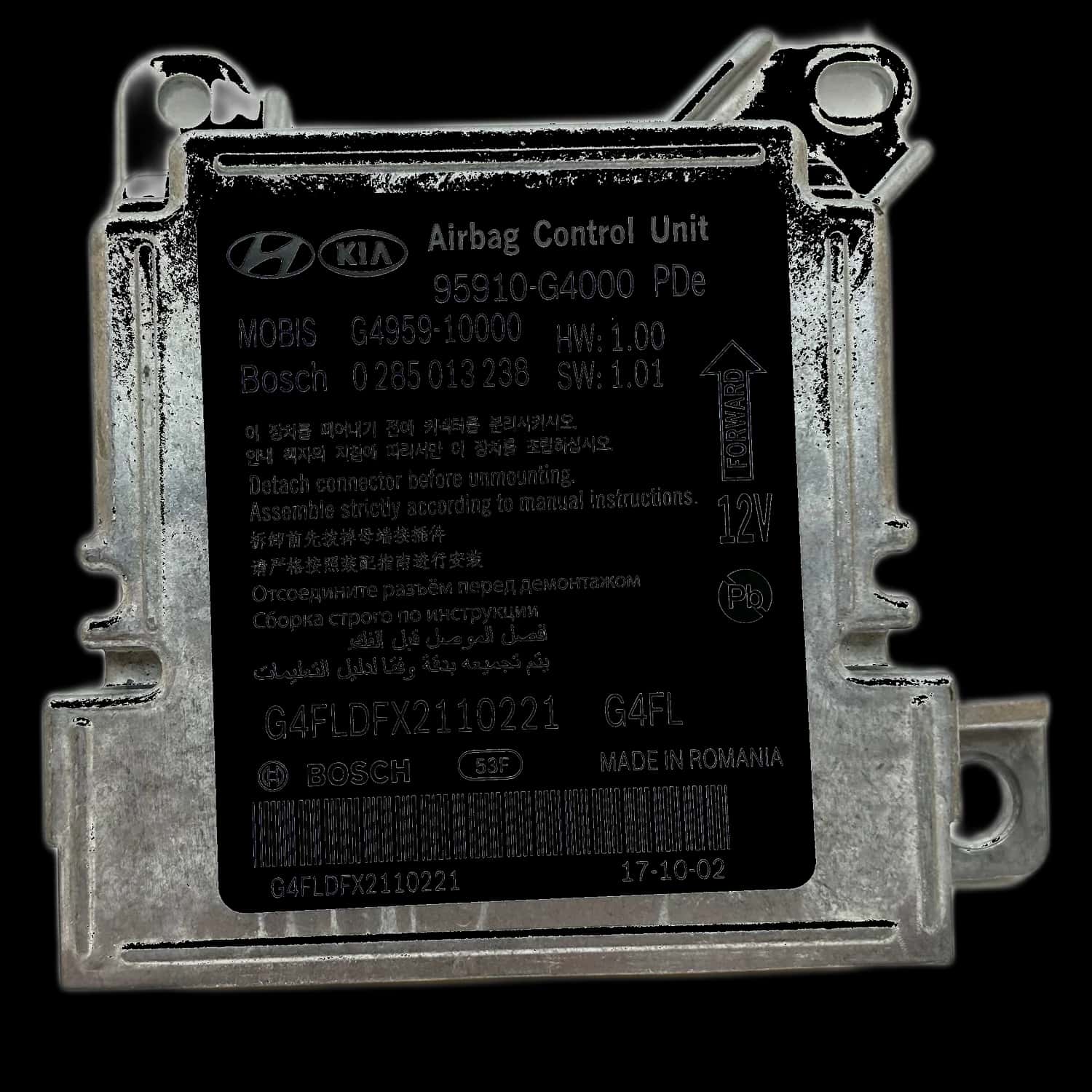
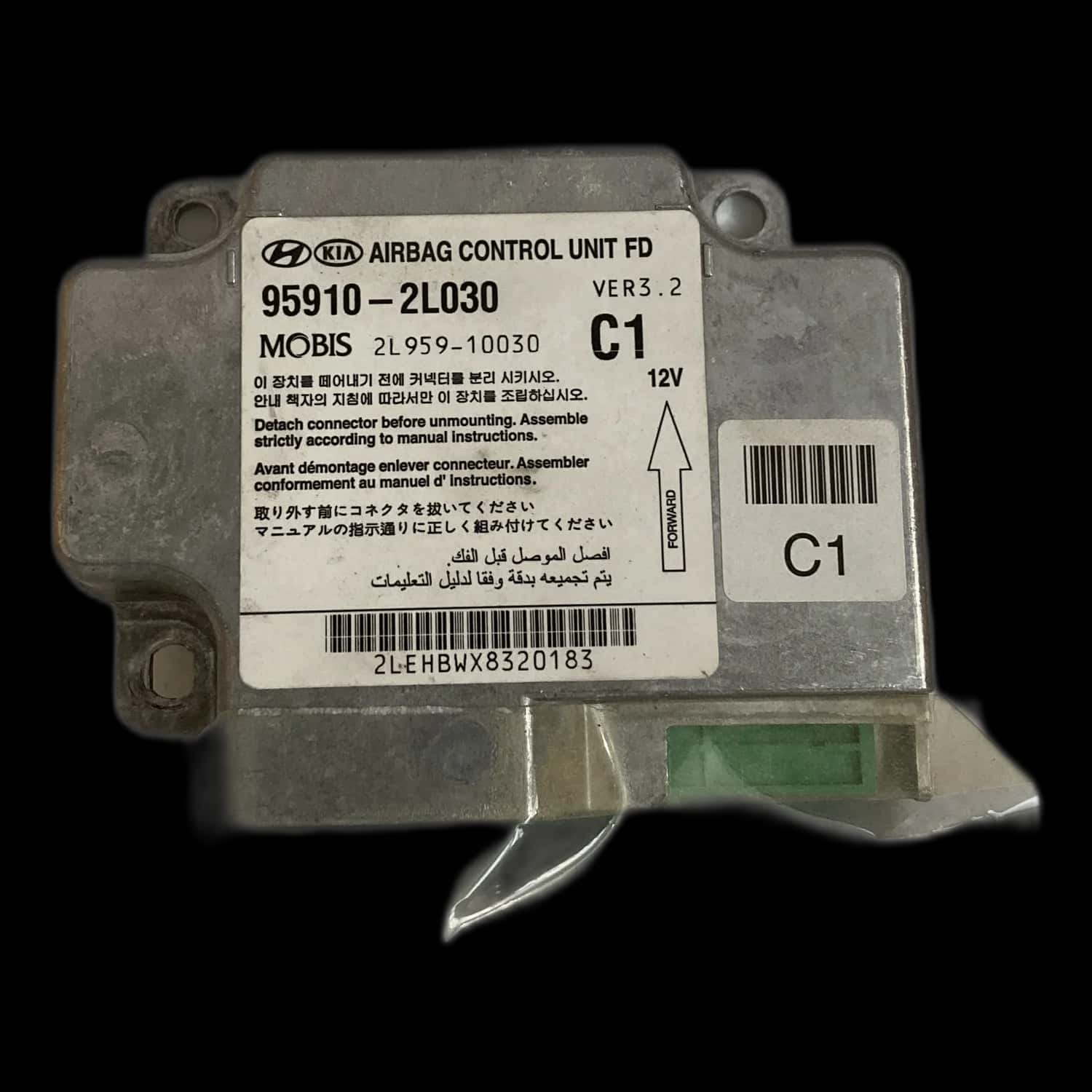
Hyundai i30 airbag control units can be uniquely identified by part number, model year, and vehicle identification number (VIN). Each generation uses specific control unit variants for optimal compatibility with the installed airbag modules and sensors.
To identify the correct airbag control unit for your Hyundai i30, the part number printed on the unit itself is crucial. This alphanumeric combination is unique to each model and revision of the control unit and provides information about its exact specifications and the generation to which it belongs.
Additionally, the vehicle's year of manufacture and the vehicle identification number (VIN) are important features that help with accurate identification. The VIN contains coded information about the vehicle, including the production year and the specific trim level, which is essential for selecting the appropriate airbag control unit, especially since the systems can change even within a single generation due to facelifts.
The number of airbags and sensors installed in the vehicle also provides information about the required control unit variant. An early FD model with basic equipment requires a different control unit than a fully equipped PD with extended safety packages. Precise identification is the first step toward a successful repair.
What airbag equipment does the Hyundai i30 have?
The airbag configuration of the Hyundai i30 varies depending on the model year and trim level. While early models use basic airbag systems, newer generations feature enhanced safety packages with additional airbag modules and offer a high level of passive safety.
The first generation of the Hyundai i30 (FD) already set standards in its class with comprehensive passive safety features. Front airbags for the driver and front passenger (the passenger airbag can be deactivated), side airbags in the front seat backrests, and full-length curtain airbags for the driver, front passenger, and the rear outer seats were standard.
This high level of safety was maintained and partially enhanced with subsequent generations (GD, PD, and CN). For example, a driver's knee airbag was included as standard, further improving occupant protection. This comprehensive standard equipment underscores Hyundai's focus on vehicle safety.
It's important to note that advanced airbag systems or additional airbag modules may vary depending on the specific trim level or optional packages. However, a front center airbag, which is used in some newer vehicle models to prevent head-on collisions between the driver and front passenger, is not standard equipment on the Hyundai i30, even on variants based on a new platform.
The airbag control units are the heart of these systems. They manage airbag deployment in the event of an impact based on sensor data and store relevant crash data after an accident. Proper functioning of this control unit is essential for occupant safety and vehicle operational readiness.
Shipping & repair from Germany
Airbag24 repairs your component in Berlin — usually within 3–4 working days.
Standard shipping within Germany is free; we normally return your part by UPS.
You pay for and insure the inbound shipment to us. On explicit request we ship by express — the extra cost is borne by the customer.
If you withdraw from the contract, you bear the cost of returning the item.