
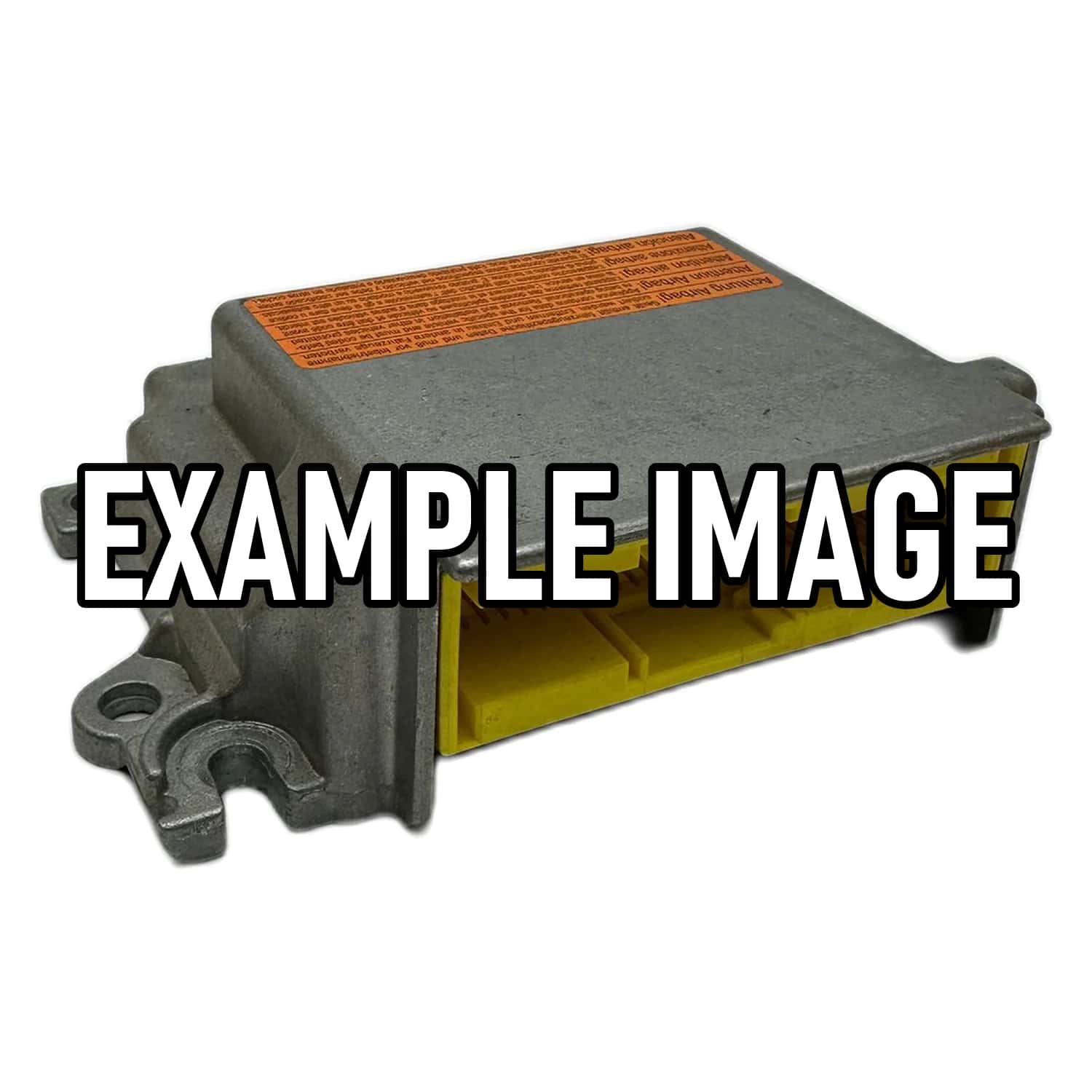
Hyundai i40 airbag control unit repair(1)
1 product
What should I pay attention to with Hyundai i40 airbag control units?
The airbag technology used in the Hyundai i40 varies depending on the model year and equipment. Hyundai i40 airbag control units represent a complex safety system that requires professional repair to ensure the vehicle's original functionality and safety.
The Hyundai i40, produced from 2011 to 2019, was developed specifically for the European market and was distinguished by its comprehensive safety features. The airbag control unit is the heart of this passive safety system.
Over the course of its production run, the Hyundai i40 underwent several facelifts, which also included updates and adjustments to the electronic systems, including the airbag control units. The evolution of the airbag systems reflects advances in vehicle safety.
Which Hyundai i40 generations are there?
The Hyundai i40 was produced as a single generation, but underwent several significant facelifts. This evolution from 2011 to 2019 impacted the airbag control units used and their compatibility.
The first production phase of the Hyundai i40 ran from 2011 to 2015, followed by the first facelift, which was on the market from 2015 to 2018. The second and final facelift was offered from 2018 until the end of production in 2019.
Each of these phases could involve specific adjustments to the vehicle electronics and airbag control units to support improved safety standards or new features. Continuous development aimed to position the Hyundai i40 as a safe and modern mid-size vehicle.
Although the base generation was the same, the facelifts mean that an early-model Hyundai i40 airbag control unit may differ from one of a later model. A professional Hyundai i40 airbag control unit repair takes these differences into account.
How do I identify my Hyundai i40 airbag control unit?
Hyundai i40 airbag control units can be clearly identified by their unique part number, the vehicle's year of manufacture, and often also by the vehicle identification number (VIN). This information is crucial for determining the correct variant for repair.
The part number can usually be found directly on the control unit itself. The exact year of manufacture of your Hyundai i40 is noted in the vehicle registration document and helps to assign it to the respective production phase.
Precise identification is particularly important because even minor changes in the software or hardware of an airbag control unit can affect compatibility. An incorrect component could compromise the functionality of the entire airbag system.
For a Hyundai i40 airbag control unit repair, it is essential that all relevant data such as the part number and year of manufacture of the defective control unit is available to enable precise repair.
What airbag equipment does the Hyundai i40 have?
The Hyundai i40's airbag equipment was already extensive in the base version and could be expanded depending on the trim level and model year. This underscores the i40's focus on passive safety for its occupants.
The Hyundai i40 came standard with front airbags for the driver and front passenger, as well as side airbags that protect the thorax and pelvic areas. A special feature was the standard knee airbag for the driver, which was not yet standard in all mid-size vehicles at the time.
In addition, the Hyundai i40 offered the option of upgrading its safety features to up to nine airbags. These included additional side curtain airbags that spanned the entire length of the vehicle's sides and were designed to protect occupants in all rows of seats.
The airbag system is complemented by other passive and active safety features such as electronic stability control (ESP), emergency braking assistance, and modern seatbelt pretensioners and load limiters for the front and side belt systems. This comprehensive equipment makes the Hyundai i40 a safe family vehicle, in which the airbag control unit plays a central role.
Common fault codes in this category
Shipping & repair from Germany
Airbag24 repairs your component in Berlin — usually within 3–4 working days.
Standard shipping within Germany is free; we normally return your part by UPS.
You pay for and insure the inbound shipment to us. On explicit request we ship by express — the extra cost is borne by the customer.
If you withdraw from the contract, you bear the cost of returning the item.