
Hyundai Ioniq airbag control unit repair(1)
1 product
What should I pay attention to with Hyundai Ioniq airbag control units?
The airbag technology used in the Hyundai Ioniq is comprehensive, and if a defect occurs, the control unit requires professional repair. Airbag24 professionally repairs control units of all Hyundai Ioniq generations with true-to-original functionality and a 2-year warranty.
The Hyundai Ioniq, produced from 2016 to July 2022, established itself as a pioneer in the field of electrified compact vehicles. With its launch in 2016, Hyundai focused on a wide range of powertrains: full hybrid, plug-in hybrid, and fully electric, to appeal to environmentally conscious drivers.
The development of the airbag system in the Hyundai Ioniq has been continuously adapted to meet increasing safety standards. The airbag control unit is the central element that coordinates all airbags and numerous other passive safety systems. Therefore, repairing this module must be carried out precisely and professionally to ensure full functionality in an emergency.
Which Hyundai Ioniq generations are there?
The Hyundai Ioniq was produced in two main phases, each of which may feature specific airbag control unit variants. The development of the safety system reflects technological progress from 2016 to 2022.
The first generation of the Hyundai Ioniq was offered from 2016 to 2019. These vehicles laid the foundation for Hyundai's hybrid and electric strategy and already featured extensive standard airbag equipment.
In the summer of 2019, Hyundai introduced a revised version, a facelift, of the Ioniq, which remained on the market until production ended in July 2022. This updated version brought technical innovations such as a larger information display and improved equipment, which could also involve adjustments to the electronics and thus potentially to the airbag control units.
Although not completely new "generations" in the classic sense, the facelift marked important technological leaps that must be taken into account when identifying and repairing the airbag control unit.
How do I identify my Hyundai Ioniq airbag control unit?
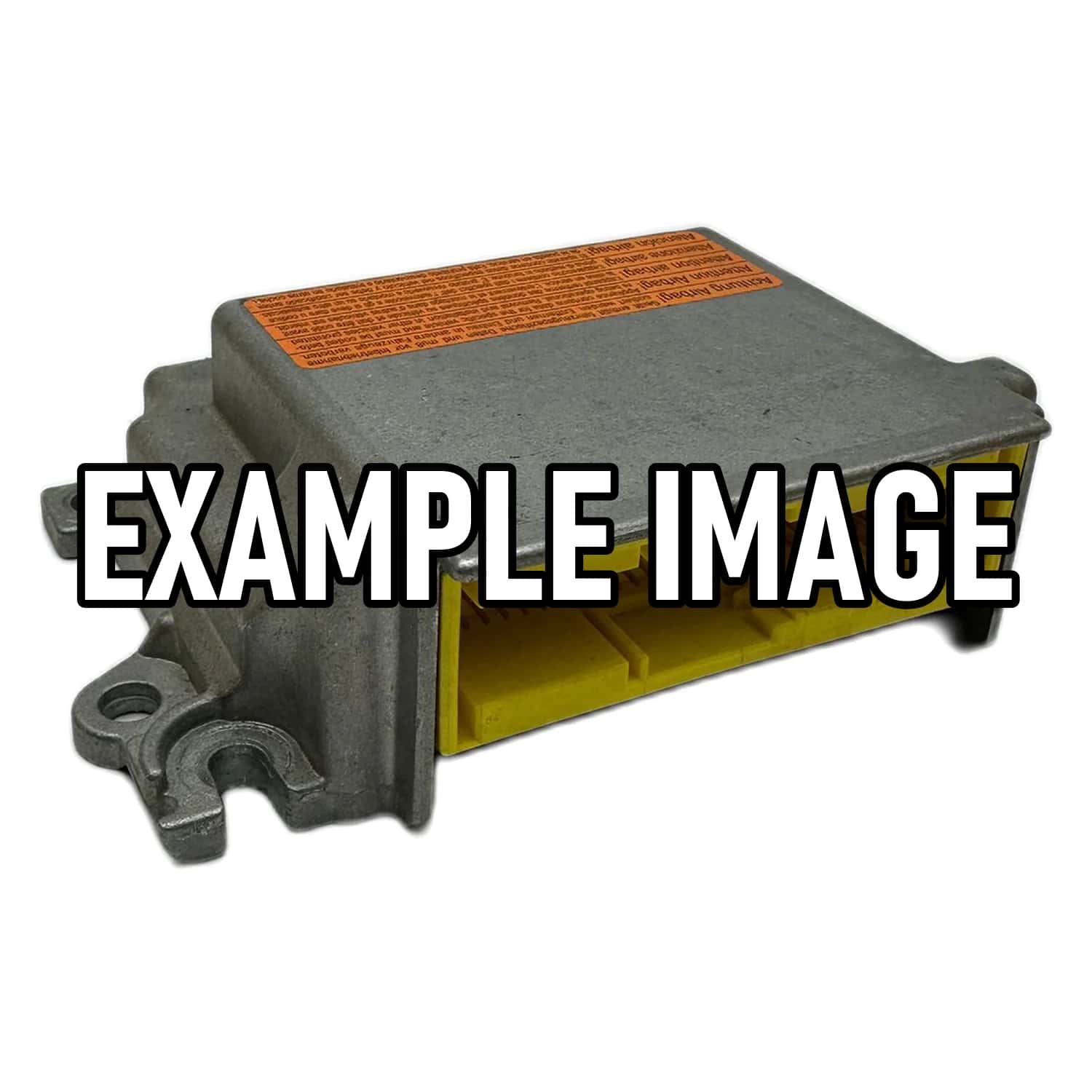
Hyundai Ioniq airbag control units can be uniquely identified by their specific part number, model year, and vehicle identification number (VIN). Each Ioniq variant uses specific control units, which are crucial for optimal compatibility and system integration.
The airbag control unit part number is the most important identifier. It is located directly on the control unit itself, which is usually located under the center console or driver's seat. It is crucial that the correct part number for your specific vehicle model and year is used during repair or replacement.
The year of manufacture of your Hyundai Ioniq and the vehicle identification number (VIN) also play an important role in determining the correct airbag control unit. The control unit is linked to the VIN, meaning a replacement module must match your vehicle's exact specifications. This prevents malfunctions and ensures proper integration with all other safety systems in your Ioniq.
What airbag equipment does the Hyundai Ioniq have?
The Hyundai Ioniq comes standard with a very comprehensive airbag suite, which is above average for a compact vehicle. The safety of its occupants was a top priority from the start.
Since the first generation, the Hyundai Ioniq has been equipped with a wide range of airbags as standard. These include front airbags for the driver and front passenger, which provide protection in the event of a frontal collision.
Additionally, front side airbags are integrated to protect the occupants in a side impact. Side curtain airbags, which deploy along the windows on both sides, protect the head area in side collisions or rollovers.
A special feature of the Hyundai Ioniq is its standard rear side airbags, which further enhance the protection of rear passengers. In addition to these passive safety systems, the Ioniq features other important features such as Electronic Stability Control (ESC), ABS, forward collision warning systems, and lane departure warning systems, which round out the vehicle's comprehensive safety concept.
Common fault codes in this category
Shipping & repair from Germany
Airbag24 repairs your component in Berlin — usually within 3–4 working days.
Standard shipping within Germany is free; we normally return your part by UPS.
You pay for and insure the inbound shipment to us. On explicit request we ship by express — the extra cost is borne by the customer.
If you withdraw from the contract, you bear the cost of returning the item.