
Hyundai Santa Fe airbag control unit repair(4)
4 products
What should I pay attention to with Hyundai Santa Fe airbag control units?
The airbag technology used in the Hyundai Santa Fe varies considerably depending on the model year and model series. Professional repair of airbag control units in all Hyundai Santa Fe generations ensures the restoration of original functionality and safety with an appropriate warranty.
Since its launch, the Hyundai Santa Fe has established itself as a reliable midsize SUV and has continuously evolved over the years. This evolution also extends to the complex airbag systems and their associated control units, whose design and technology differ from the first generation (SM) to the current fifth generation.
A defective airbag control unit, for example, after an accident or due to an internal error, usually causes the airbag warning light to illuminate. Often, the error log cannot be erased as long as crash data or specific error codes such as "B1620" are stored.
Repairing such a control unit involves erasing crash data, correcting error codes, and, if necessary, software updates, while preserving the vehicle-specific data. It is essential that work on the airbag control unit is only carried out by qualified personnel and in compliance with all safety regulations, especially the battery disconnection.
Which Hyundai Santa Fe generations are there?
The Hyundai Santa Fe has been produced in several distinct generations, with each model using specific airbag control units. The development of the safety system reflects technological advances from around 2000 to the present day.
The first generation, the Hyundai Santa Fe SM, dominated the market from approximately 2000 to 2006. This model laid the foundation for the SUV's success and included basic airbag systems.
From approximately 2006 to 2012, the Hyundai Santa Fe CM followed, the second generation, which came onto the market with a facelift and introduced advanced safety features.
The third generation, the Hyundai Santa Fe DM, was built from approximately 2012 to 2018 and underwent a facelift in 2015. The airbag systems were further refined and the number of airbags increased.
The fourth generation of the Hyundai Santa Fe TM was introduced around 2018. A completely new fifth generation, also based on the TM platform, was introduced in 2023 and sets new standards in terms of features and safety technology with an extended wheelbase and modernized design.
How do I identify my Hyundai Santa Fe airbag control unit?
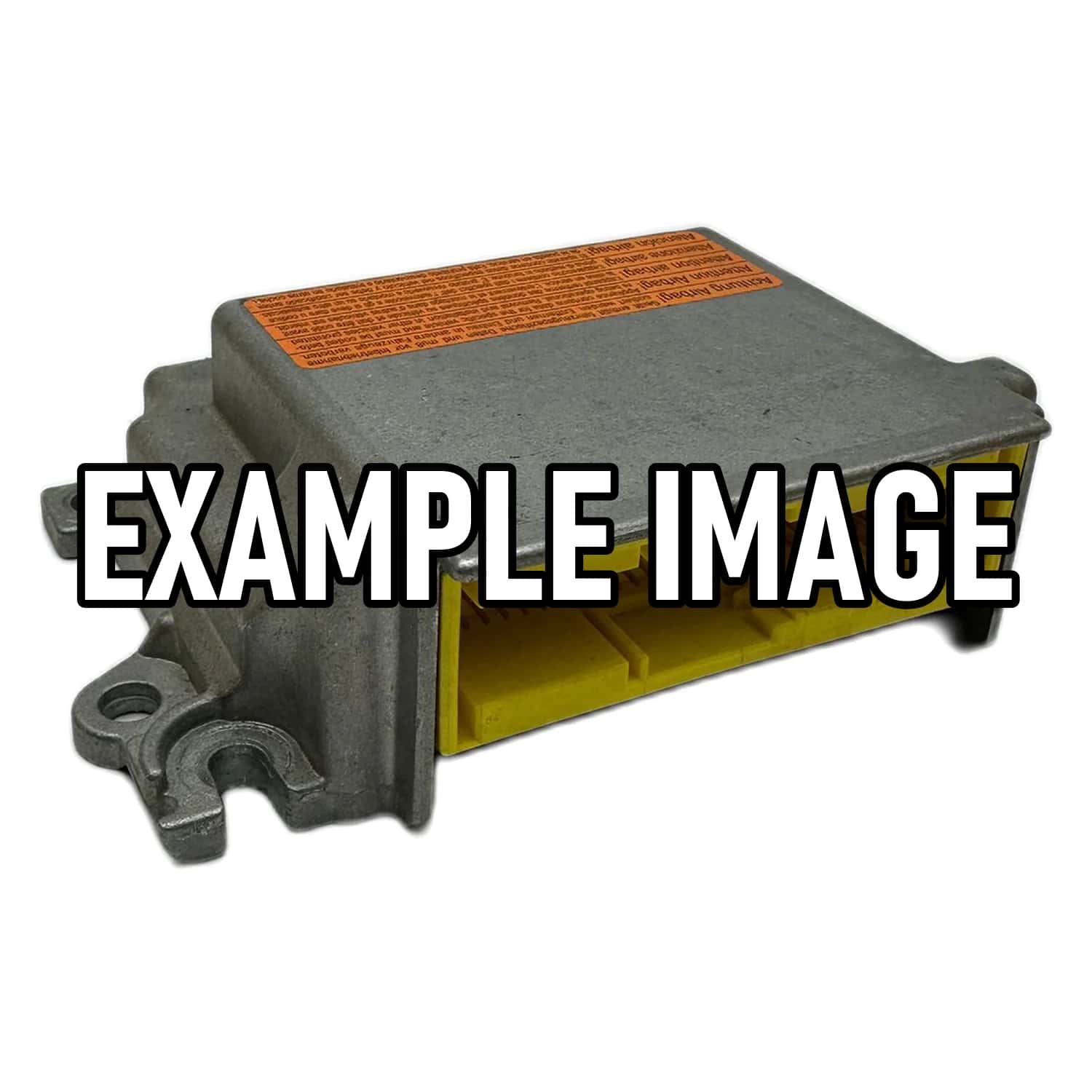
Hyundai Santa Fe airbag control units can be uniquely identified by the part number printed on the housing, the year of manufacture, and often also by the vehicle identification number (VIN). Each generation uses specific control unit variants for optimal compatibility and functionality.
The part number is the primary indicator of the exact model and specification of your airbag control module. This number, such as 95910-2B970, is typically found on a sticker or embossed directly into the control module's housing.
Additionally, the vehicle's year of manufacture and the exact series (SM, CM, DM, TM) are crucial, as the electrical interfaces and software configurations of the control units can vary depending on the model year and generation. The vehicle identification number (VIN) can also be helpful in precisely identifying the correct control unit.
Since removing the airbag control unit requires specialized knowledge and carries potential risks, this procedure should always be performed by a qualified workshop. It is essential to disconnect the vehicle's battery before beginning work to prevent accidental airbag deployment or electrical damage.
What airbag equipment does the Hyundai Santa Fe have?
The airbag configuration of the Hyundai Santa Fe varies considerably depending on the model year and trim level. While early models used basic airbag systems, newer generations feature enhanced safety packages with additional airbag modules that ensure comprehensive occupant protection.
In previous generations of the Hyundai Santa Fe, such as the SM through the DM, front airbags for the driver and front passenger were standard safety features. Side airbags for the front passengers were often also available, and higher trim levels sometimes offered optional curtain airbags for head protection.
With the introduction of newer generations, especially the Hyundai Santa Fe TM and the latest 5th generation, airbag equipment has become significantly more comprehensive and is standard in most trim levels. These models offer a comprehensive safety package with up to six or seven airbags.
In addition to front and side airbags for the driver and front passenger, these often include side airbags for rear passengers and full-length curtain airbags that extend the entire length of the interior. Some models, such as the Santa Fe Sport from the 2017 model year onwards, also feature a driver's knee airbag, providing additional protection in a frontal impact. This continuous development underscores Hyundai's commitment to positioning the Santa Fe as a safe and reliable family SUV.
Shipping & repair from Germany
Airbag24 repairs your component in Berlin — usually within 3–4 working days.
Standard shipping within Germany is free; we normally return your part by UPS.
You pay for and insure the inbound shipment to us. On explicit request we ship by express — the extra cost is borne by the customer.
If you withdraw from the contract, you bear the cost of returning the item.