
Hyundai Terracan airbag control unit repair(1)
1 product
What should I pay attention to with Hyundai Terracan airbag control units?
The airbag technology used in the Hyundai Terracan varies depending on the model year. Airbag24 professionally repairs control units of all Hyundai Terracan generations with original functionality and a 2-year warranty.
The Hyundai Terracan, a rugged mid-size SUV, was produced for the global market from 2001 to 2007, with production continuing in China until 2011. During this period, various components were used, which evolved with the model updates.
The Terracan's airbag systems were based on safety technology from the early 2000s. The SUV came standard with basic safety features such as twin airbags for the driver and front passenger, as well as ABS with electronic brake-force distribution (EBD). A reset service for these airbag control units is often available, indicating their modular and repair-friendly design, even though modern assistance systems like Hyundai SmartSense weren't yet available at the time.
Which Hyundai Terracan generations are there?
The Hyundai Terracan was produced in two generations, each using different airbag control units. The development of the safety system reflects technological advances from 2001 to 2007.
Although there were officially two generations, this was primarily a first generation, which received a comprehensive facelift in 2004. This facelift represented a significant overhaul, including new engine variants and visual adjustments such as switching from round to rectangular fog lights and new taillights.
The first phase from 2001 to 2004 and the revised version from 2004 to 2007 (or 2011 in China) use specific control units. These distinctions are crucial for precise repair of the airbag control unit to ensure full compatibility and functionality.
How do I identify my Hyundai Terracan airbag control unit?
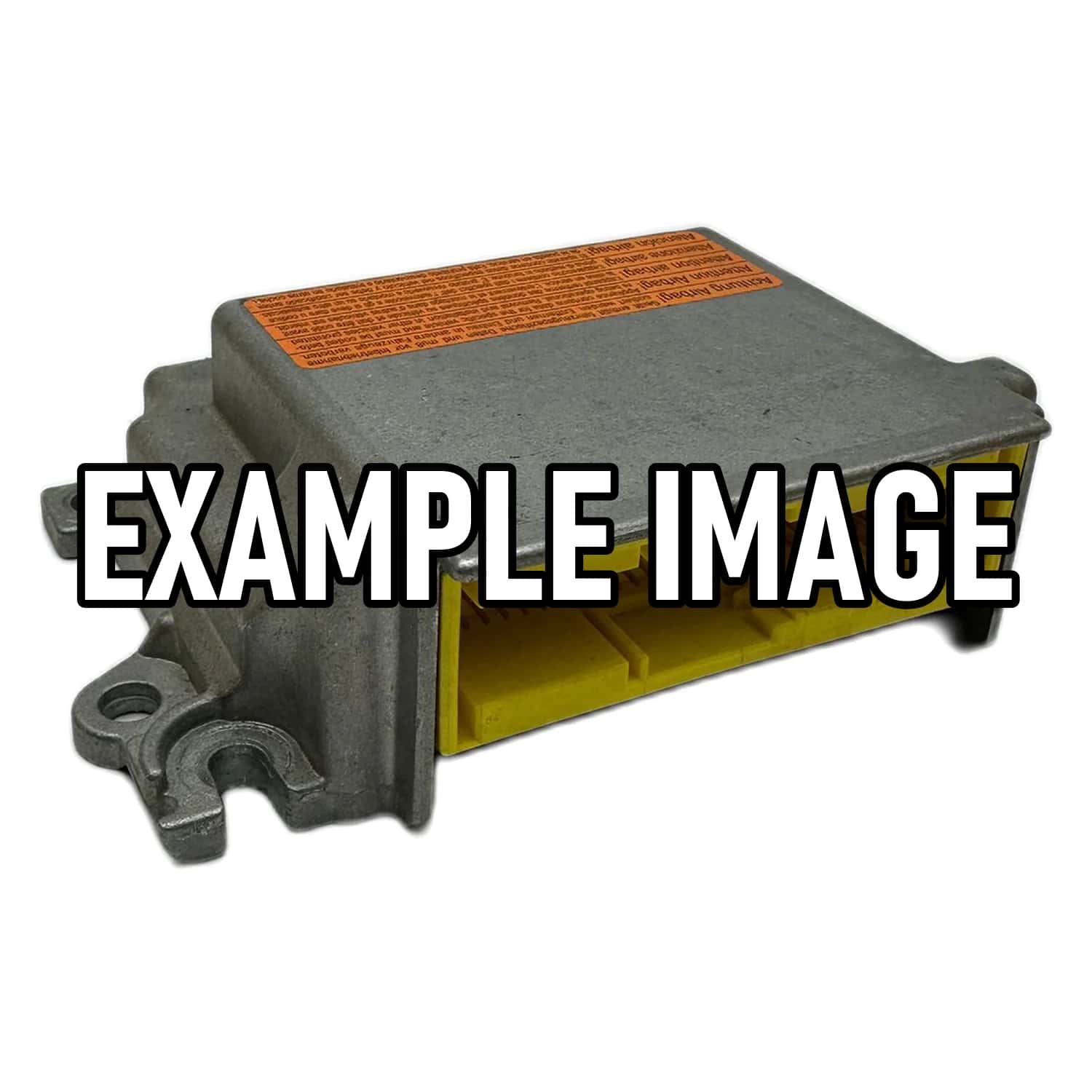
Hyundai Terracan airbag control units can be uniquely identified by part number, model year, and vehicle identification number. Each generation uses specific control unit variants for optimal compatibility.
Precisely identifying your airbag control unit is essential for a successful repair. The part number, often located on a label directly attached to the control unit, provides the most precise information about the model, version, and software version. This number may vary depending on the year of manufacture and the model update in 2004.
Additionally, the exact year of manufacture of your Terracan and the vehicle identification number (VIN) in the vehicle registration document can provide further clues. Comparing this data with the control unit's specifications ensures that the repair of the defective component is precisely tailored to your vehicle and that the airbag systems function properly after the repair.
What airbag equipment does the Hyundai Terracan have?
The airbag configuration of the Hyundai Terracan varies depending on the model year and trim level. While early models use basic airbag systems, later facelift models also featured a solid basic configuration without the advanced safety packages common today.
The Hyundai Terracan was designed as a robust off-roader for families and off-road enthusiasts and offered adequate safety features for its time. Every model came standard with twin airbags, crucial for driver and passenger safety. This meant that both the driver and passenger had a front airbag installed to provide protection in the event of a collision.
In addition to these basic airbag systems, anti-lock braking systems (ABS) and electronic brake-force distribution (EBD) were also standard to enhance active driving safety. However, it's important to note that the Terracan, produced in the early 2000s, didn't feature today's common, sophisticated assistance systems, such as knee airbags, second-row side airbags, or even modern Hyundai SmartSense features. Therefore, the repair of the airbag control unit focuses on restoring the functionality of these proven, yet basic safety systems.
Shipping & repair from Germany
Airbag24 repairs your component in Berlin — usually within 3–4 working days.
Standard shipping within Germany is free; we normally return your part by UPS.
You pay for and insure the inbound shipment to us. On explicit request we ship by express — the extra cost is borne by the customer.
If you withdraw from the contract, you bear the cost of returning the item.