
Hyundai Veracruz airbag control unit repair(1)
1 product
What should I pay attention to with Hyundai Veracruz airbag control units?
The airbag technology used in the Hyundai Veracruz varies depending on the model year and production period. Modern safety standards have been continuously integrated, which is also reflected in the airbag control units, and their repair requires specialized knowledge.
The Hyundai Veracruz, a comfortable mid-size crossover SUV, was produced from 2006 to 2015 and was popular in various global markets, including the US, Canada, and South Korea. In Europe, this model was marketed as the Hyundai ix55 between 2007 and 2011, always with a focus on spaciousness and safety for families.
Throughout its production run, the Hyundai Veracruz benefited from continuous improvements in vehicle safety technology. The central airbag control unit plays a crucial role, controlling the precise deployment of the airbags in the event of a collision. Professional repair of this critical component is essential to ensure the full functionality of the safety system.
Which Hyundai Veracruz generations are there?
The Hyundai Veracruz was produced in one main generation, with technological updates during this period. The development of the safety system reflects technological advances from 2006 to 2015 and influences the requirements for airbag control unit repair.
From 2006 to 2015, Hyundai offered the Veracruz as a single, continuous generation. Around 2011, however, a facelift took place, which not only brought exterior adjustments but also technical innovations, such as adopting the Kia Sorento platform. These further developments could also result in modifications to the installed electronic components, including the airbag control unit.
In Europe, the equivalent, the Hyundai ix55, was available from 2007 to 2011. Although it shared the same basic platform, regional specifications and model years can lead to slight differences in the electronics installed. Therefore, when repairing a defective airbag control unit, it is important to consider the exact year and specific model of the Hyundai Veracruz or ix55.
How do I identify my Hyundai Veracruz airbag control unit?
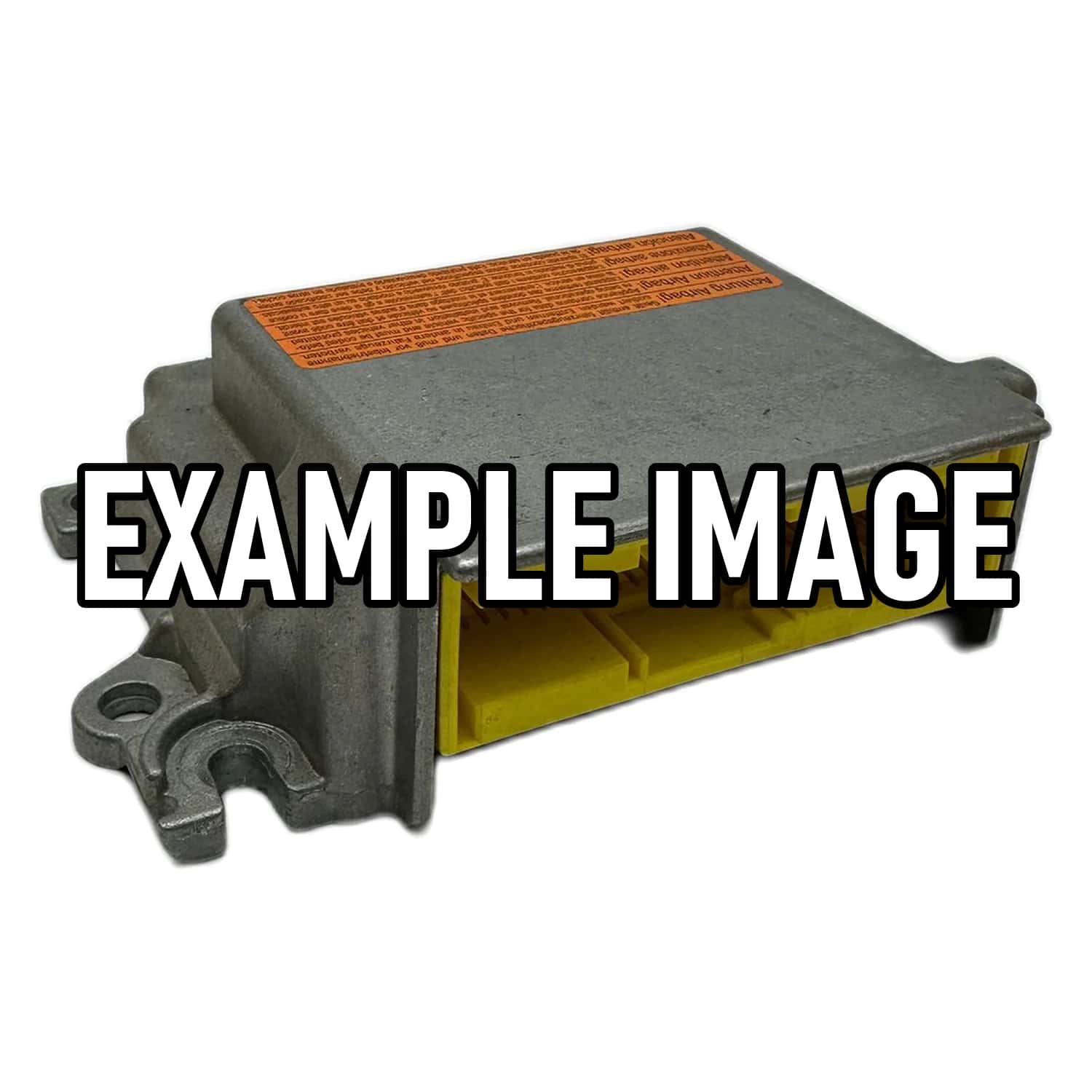
Hyundai Veracruz airbag control units can be uniquely identified by part number, year of manufacture, and vehicle identification number (VIN). Each variant uses specific control unit types for optimal compatibility with the respective vehicle system and its safety features.
Precisely identifying the airbag control unit in your Hyundai Veracruz is key to a successful repair. The most important identifier is the part number, usually located on a label directly on the control unit. This number identifies the specific model and series of the control unit.
Additionally, the year of manufacture of your Hyundai Veracruz and the full vehicle identification number (VIN) are important references. This information helps to consider potential revisions or special features that could affect the control unit's compatibility. A thorough review of all identification features ensures that the repair of the defective airbag control unit is precisely tailored to your vehicle and that complete safety is guaranteed after the repair.
What airbag equipment does the Hyundai Veracruz have?
The Hyundai Veracruz's airbag equipment is comprehensive and varies slightly depending on the model year and market. However, even the early models came standard with advanced safety systems that ensure a high level of occupant protection.
The Hyundai Veracruz came standard with a comprehensive airbag system that maximized occupant protection. This typically included six airbags: dual front airbags for the driver and front passenger, with the passenger airbag controlled by an Occupant Classification System (OCS) that adjusted deployment based on the passenger's weight and position.
Additionally, side airbags integrated into the front seats and roof-mounted curtain airbags were included. The latter extended across all three rows of seats, thus also offering comprehensive head protection for rear passengers in the event of a side impact. The passive safety package was complemented by seatbelt pretensioners with force limiters on the front seats, an energy-absorbing steering column design, and an Electronic Stability Program (ESC), which was standard from the early models onwards. A tire pressure monitoring system (TPMS) was also installed as standard, underscoring the high-quality safety features of the Hyundai Veracruz.
Common fault codes in this category
Shipping & repair from Germany
Airbag24 repairs your component in Berlin — usually within 3–4 working days.
Standard shipping within Germany is free; we normally return your part by UPS.
You pay for and insure the inbound shipment to us. On explicit request we ship by express — the extra cost is borne by the customer.
If you withdraw from the contract, you bear the cost of returning the item.