
Iveco Daily airbag control unit repair(5)
5 products


What should I consider with Iveco Daily airbag control units?
The airbag technology used in the Iveco Daily varies considerably depending on the model year. Professional repair of airbag control units in all Iveco Daily generations ensures true-to-original functionality and the restoration of the original safety systems.
The Iveco Daily has been in production since 1978 and has evolved into a staple of the commercial vehicle class over seven major generations. Each of these generations brought technological advances that directly impacted the installed airbag systems. This requires specific expertise for each model series when repairing them.
The evolution of airbag systems in the Iveco Daily ranges from basic front airbags in early models to complex networks with optional side and window airbags in newer vehicles. The airbag control unit is the central element of these systems and must be precisely repaired after an accident or in the event of a malfunction to restore the full functionality of the passive safety system. Repairs to this safety-critical component should only be performed by trained specialists.
Which Iveco Daily generations are there?
The Iveco Daily has been produced in seven main generations, each with different airbag control units. The evolution of the safety system reflects technological advances from 1978 to the present day.
The first generation (Iveco Daily I) was produced from 1978 to 1990 and laid the foundation for the model's success. This was followed by the Daily II (1990-1999), which received a facelift in 1996, and the Daily III (1999-2006), which introduced common-rail diesel technology and was named Van of the Year 2000.
The fourth generation (Iveco Daily IV, 2006-2011) brought improved safety features. The Daily V (from around 2011) and the Daily VI (from around 2014) continued this development, with an increased focus on electronic assistance systems and expanded airbag options. The latest generation, the Daily VII (since around 2020), integrates the most modern environmental and safety standards for commercial use.
Each of these series, from the Iveco Daily I to the Iveco Daily VII, uses specific airbag control units tailored to the respective vehicle architectures and safety features. This is crucial for proper repair and maintaining system safety, especially if the unit is defective or crash data has been stored.
How do I identify my Iveco Daily airbag control unit?
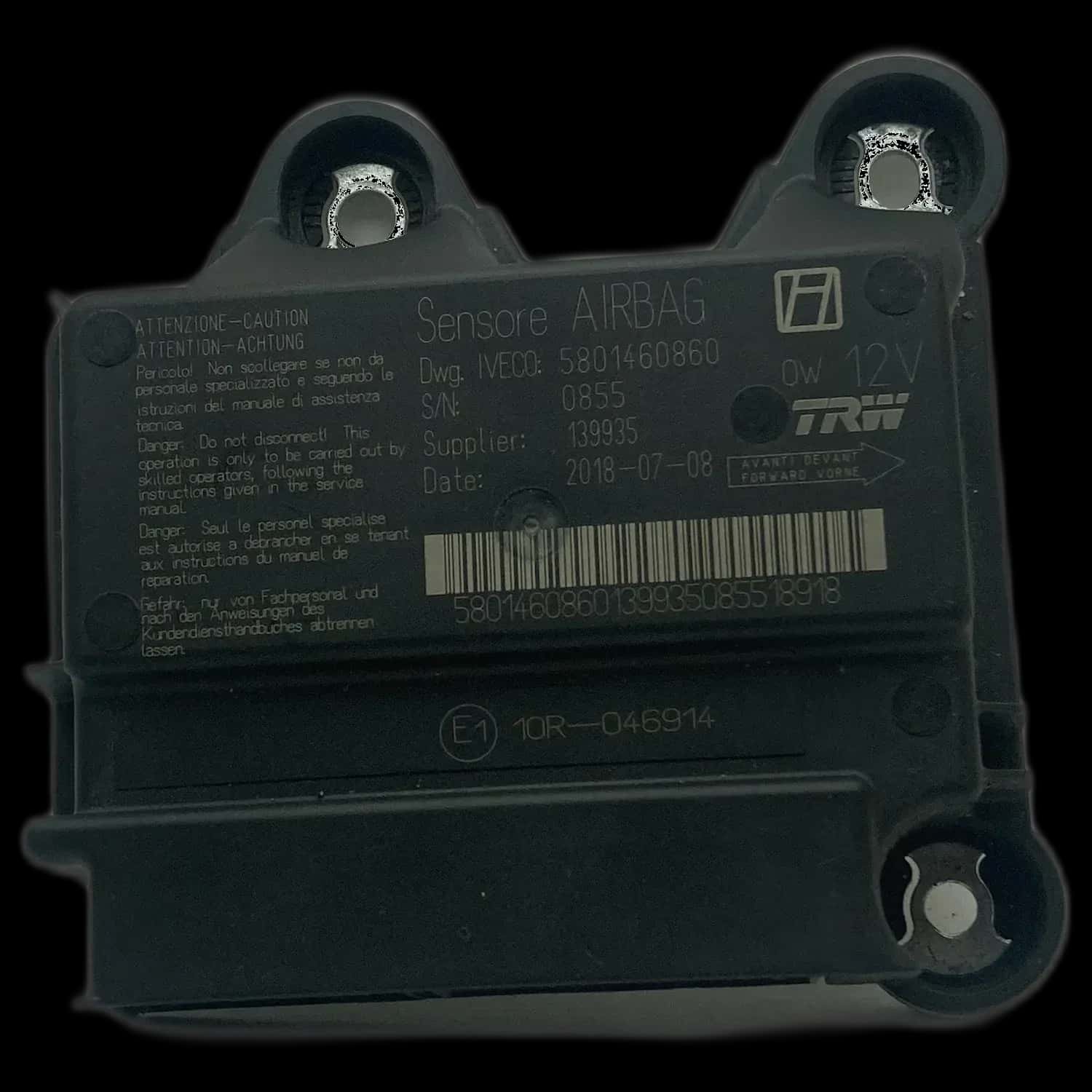
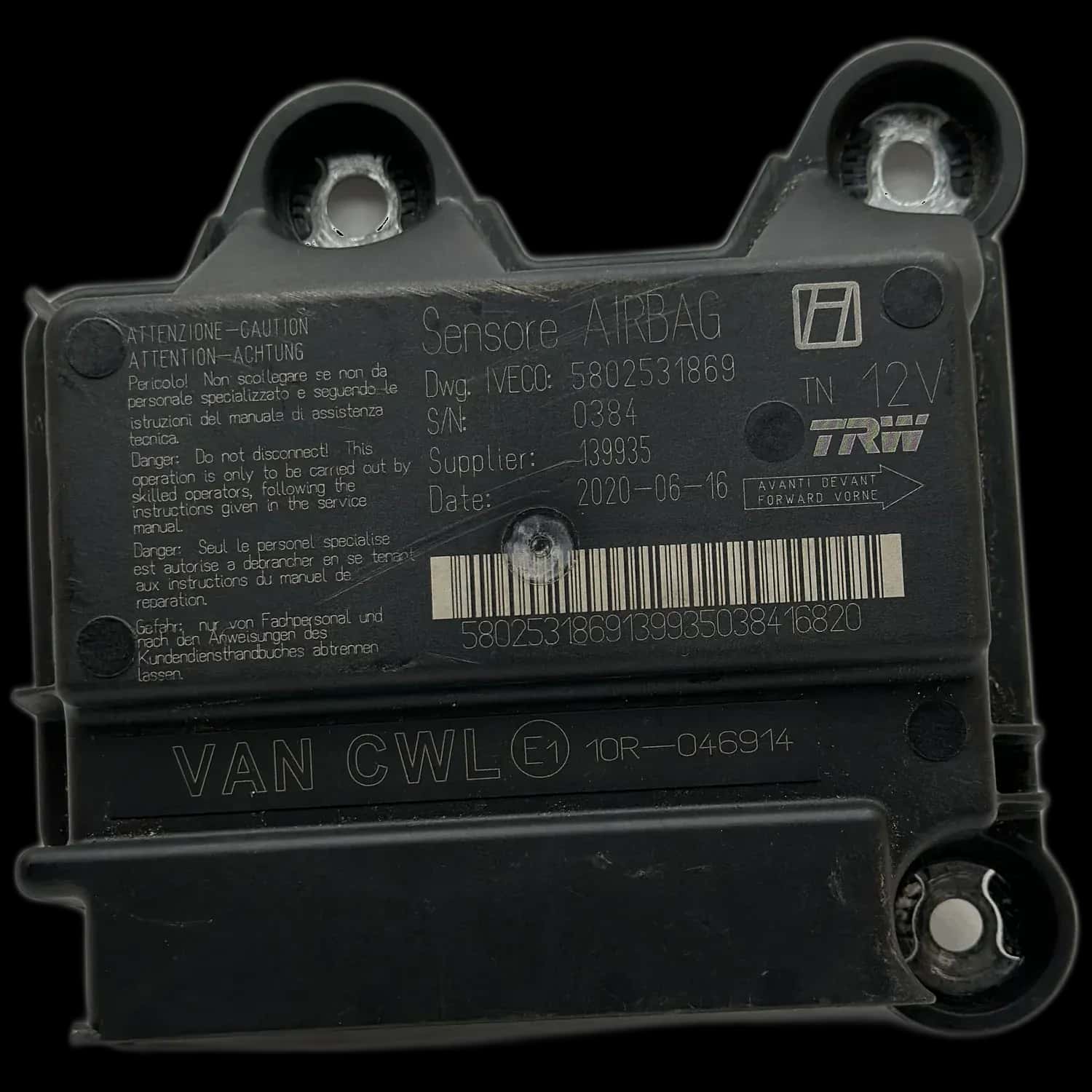
Iveco Daily airbag control units can be uniquely identified by part number, year of manufacture, and vehicle identification number (VIN). Each generation uses specific control unit variants for optimal compatibility and functionality.
The part number of the airbag control unit is usually located directly on the component's housing, often on the bottom or side. This number is essential because it provides precise information about the model, software version, and compatibility of the control unit. An example of a part number is 5802531869.
The vehicle's year of manufacture is also an important factor, as control units have often been internally revised over the years of production, even within a single generation. A defective airbag control unit also often stores crash data or specific error codes that require reading and erasing. Identification using the vehicle identification number allows the control unit to be precisely assigned to the individual vehicle and its specific features.
When removing the control unit, it is essential to disconnect the vehicle's battery to avoid malfunctions or damage. Accurate identification is the first step for a successful repair and ensuring safety after installation.
What airbag equipment does the Iveco Daily have?
The airbag equipment of the Iveco Daily varies considerably depending on the model year and trim level. While early models use basic airbag systems, newer generations feature enhanced safety packages with additional airbag modules and electronic driving aids.
In most newer Iveco Daily models, especially from the third generation onwards, front airbags for the driver and front passenger are standard, meeting modern safety standards. This standard equipment provides significant protection in frontal collisions. On older models, airbag availability could vary or they were only available as an option.
In addition to the front airbags, side and window airbags are available as options, depending on the model and the equipment selected. Driver and passenger side window airbags, in particular, are designed as an important supplement to occupant protection in side collisions and are often found in higher trim levels.
The Iveco Daily is designed as a robust commercial vehicle and, depending on the weight class (3.5 to 7 tons) and model year, also offers additional safety-related features. These include systems such as ABS (anti-lock braking system), ESP (electronic stability program), ASR (traction control), and Load Adaptive Control. The development of these systems demonstrates the continuous progress in passive and active safety of the Iveco Daily, which is directly reflected in the complexity and demands placed on the airbag control unit when it comes to repair.
Shipping & repair from Germany
Airbag24 repairs your component in Berlin — usually within 3–4 working days.
Standard shipping within Germany is free; we normally return your part by UPS.
You pay for and insure the inbound shipment to us. On explicit request we ship by express — the extra cost is borne by the customer.
If you withdraw from the contract, you bear the cost of returning the item.