
Iveco Eurocargo airbag control unit repair(3)
What should I consider with Iveco Eurocargo airbag control units?
The airbag technology used in the Iveco Eurocargo varies depending on the model year and specific model series. Airbag control units for the Iveco Eurocargo must always have the exact functionality of the original part to ensure driver safety.
The Iveco Eurocargo has been in production since 1991 and has undergone several technical evolutions during this time. This development is directly reflected in the installed airbag systems and their control units, which can vary considerably depending on the generation.
Initially, airbags weren't standard equipment in commercial vehicles, but with each new generation of the Eurocargo, the safety systems were continually expanded. Modern Iveco Eurocargo models integrate the airbag control unit as a central component of a complex safety system.
Which Iveco Eurocargo generations are there?
The Iveco Eurocargo has been produced in four main generations, each with different airbag control units and safety systems. The evolution of the safety system reflects technological advances from 1991 to the present.
The first generation (1991/1992 – 2002), often referred to as the Iveco Eurocargo I, laid the foundation and received a major facelift in 1997, which also included initial adjustments to the braking systems. Airbag equipment was still rudimentary in these early models.
The second generation (2002–2008/2015), known as the Iveco Eurocargo II, featured further developments in diesel engines and improved technology. With this generation, airbag systems became more robust and more frequently available as an option or in higher trim levels.
The third generation (2015–present), known as the Iveco Eurocargo III, modernized the cab concepts and significantly expanded the safety and comfort features. It now features significantly more complex airbag control units that manage more sensors and modules.
The fourth generation (since 2016), the Iveco Eurocargo IV, represents the current version, featuring new engines and further improved ergonomics and safety features. The airbag control units of these models are part of integrated assistance systems and are often networked with emergency braking assistants or electronic stability control.
How do I identify my Iveco Eurocargo airbag control unit?
Iveco Eurocargo airbag control units can be uniquely identified by their specific part number, the vehicle's year of manufacture, and ideally the vehicle identification number (VIN). Each generation and model variant uses specific control unit types for optimal compatibility and functionality.
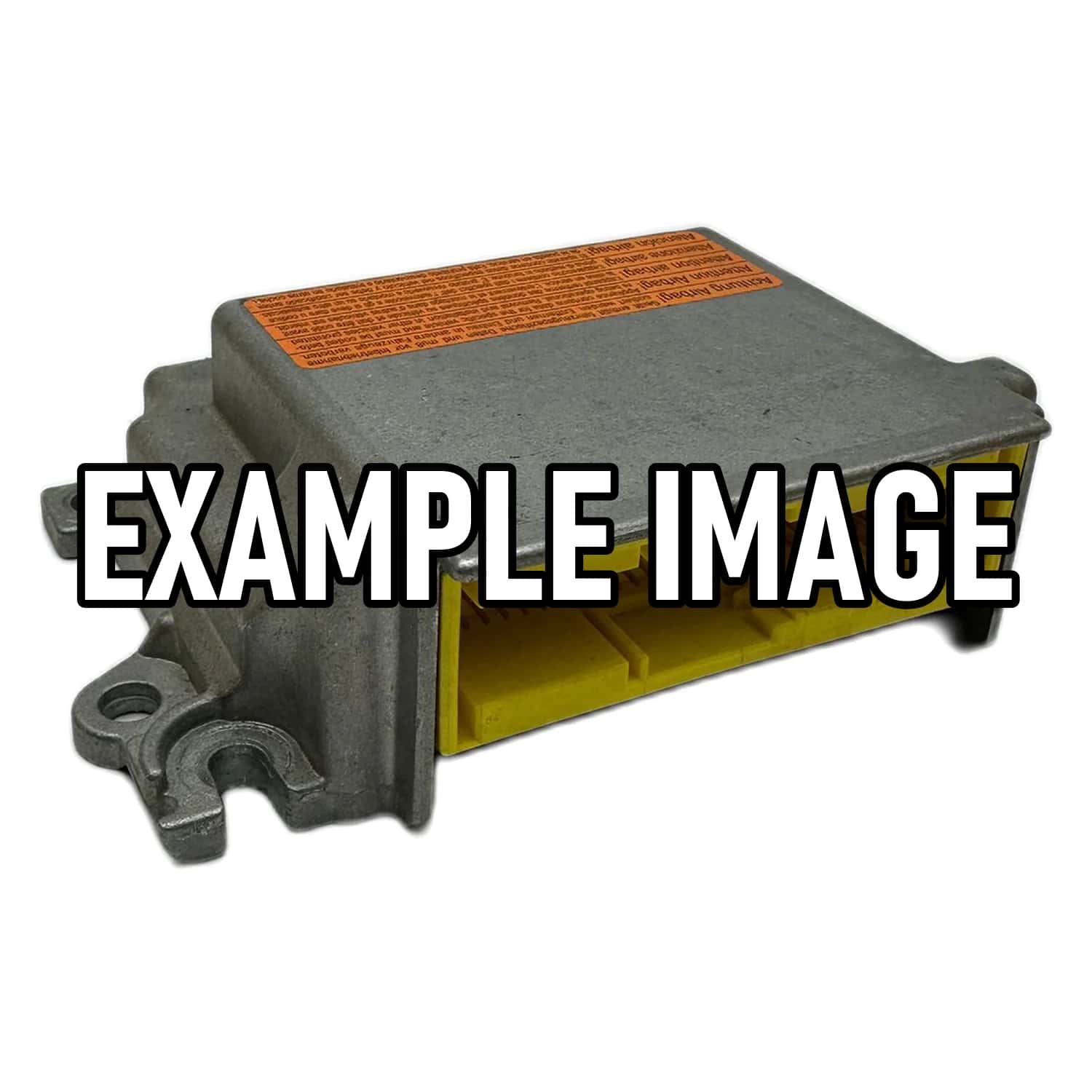
The part number of the airbag control unit is the most important clue for correct identification. This number is usually printed directly on the control unit housing and should match the information in the spare parts catalog or vehicle information.
The year of manufacture of the Iveco Eurocargo provides information about the vehicle's generation and the airbag system's technology generation that may be installed. For an accurate identification, it is crucial to compare this data, as an incorrect control unit version can lead to malfunctions or incompatibilities.
What airbag equipment does the Iveco Eurocargo have?
The airbag configuration of the Iveco Eurocargo varies greatly depending on the model year, equipment line, and vehicle class. While early models used basic airbag systems, newer generations feature enhanced safety packages with additional airbag modules and integrated assistance systems.
In the first generations of the Iveco Eurocargo, airbags were often limited to a driver's airbag or were not available at all in basic models. As a commercial vehicle for freight transport, robustness and functionality were still the primary focus in the 1990s.
With later generations, especially from the second and third series onwards, airbags were increasingly offered as standard or as a major option. These often included passenger airbags and, later, head or side airbags, especially in models designed for long-distance travel or with enhanced comfort features.
The latest Iveco Eurocargo models (third and fourth generation) feature a comprehensive safety package. This includes not only multiple airbags, but also Electronic Stability Control (ESC), Advanced Emergency Braking (AEB), and other driver assistance systems that ensure maximum safety in urban and distribution traffic, as well as on construction sites.
This development underlines that the airbag control unit in the Iveco Eurocargo is not only responsible for deploying the airbags, but also plays a central role in the overall active and passive vehicle safety and is tailored to the specific requirements of the medium-sized truck class (6.5 to 26 tonnes).
Common fault codes in this category
Shipping & repair from Germany
Airbag24 repairs your component in Berlin — usually within 3–4 working days.
Standard shipping within Germany is free; we normally return your part by UPS.
You pay for and insure the inbound shipment to us. On explicit request we ship by express — the extra cost is borne by the customer.
If you withdraw from the contract, you bear the cost of returning the item.