
Jeep Wrangler airbag control unit repair(4)
4 products
What should I consider with Jeep Wrangler airbag control units?
The airbag technology used in Jeep Wranglers varies by model year. Professional repairers repair control units for all Jeep Wrangler generations with original functionality and a two-year warranty.
The Jeep Wrangler, an iconic off-road vehicle, has undergone remarkable evolution since its introduction in 1987. Over four major generations, it has been continuously refined to meet evolving demands for safety and driving comfort.
This evolution is particularly reflected in airbag technology. From the spartanly equipped early models to the state-of-the-art safety systems of today's vehicles, the airbag control unit in the Jeep Wrangler has changed significantly and become more complex, requiring specific expertise for repair.
Which Jeep Wrangler generations are there?
The Jeep Wrangler has been produced in four main generations, each with different airbag control units. The evolution of the safety system reflects technological advances from 1987 to the present.
The first mass-produced Wrangler, the Jeep Wrangler YJ (1987-1995), was very basic and featured few airbags. It was followed by the Jeep Wrangler TJ (1996-2006), which was the first to be equipped with standard airbags and ABS, representing a significant advance in passive safety.
The third generation, the Jeep Wrangler JK (2007-2017), featured more advanced multi-stage front airbags and improved sensor technology that could respond to more complex impact scenarios. The Jeep Wrangler JL, launched in 2018, offers the highest safety standards with the latest airbag systems and extensive assistance features, continuing the technological evolution.
How do I identify my Jeep Wrangler airbag control unit?
Jeep Wrangler airbag control units can be uniquely identified by part number, model year, and vehicle identification number (VIN). Each generation uses specific control unit variants for optimal compatibility and safety.
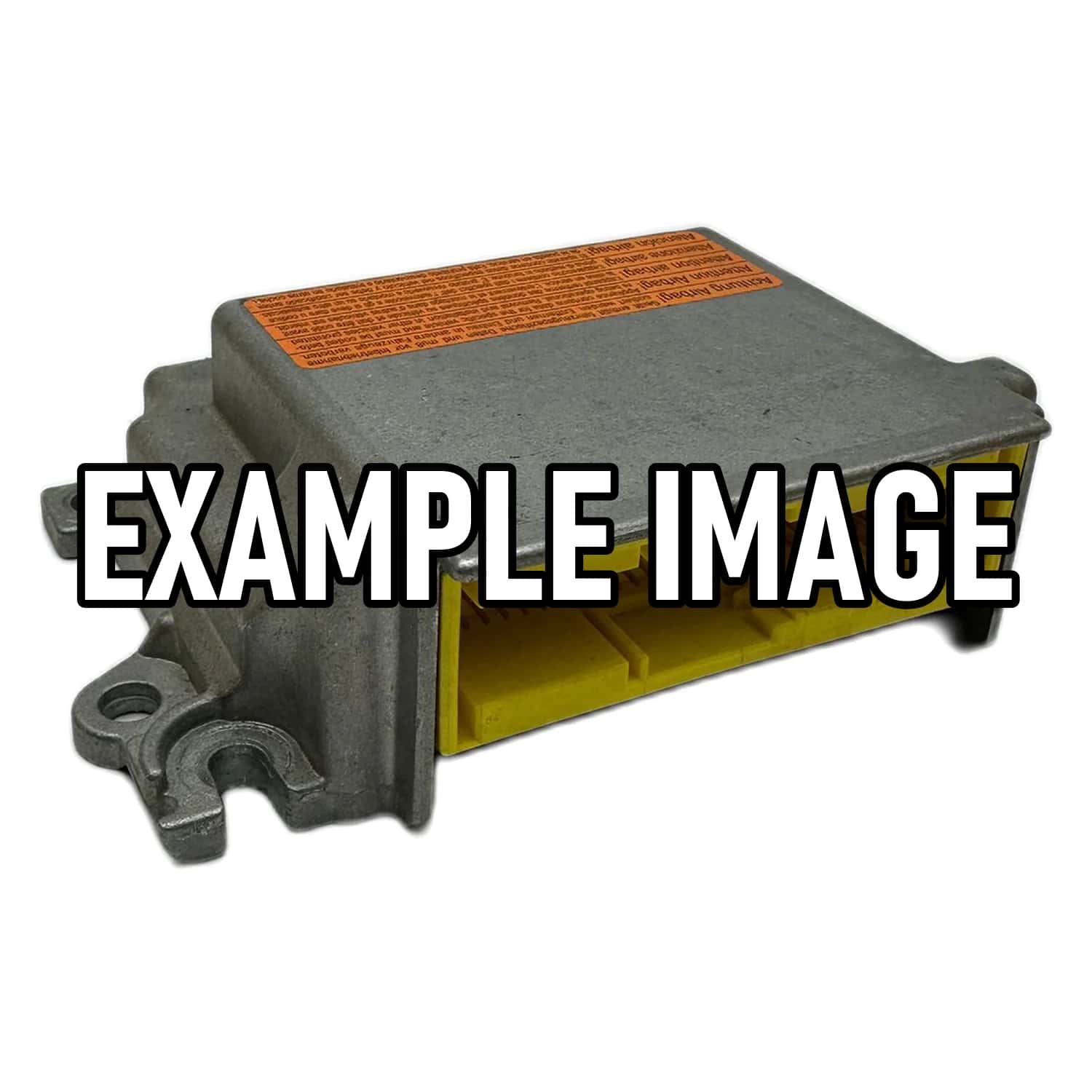
Accurately identifying your airbag control unit is crucial for a successful repair or replacement, especially since each Jeep Wrangler generation has different systems. The part number can usually be found directly on the unit, which is often located under the driver's seat or in the center console.
The vehicle's year of manufacture also provides important clues, as the airbag systems installed have varied considerably over the course of production, requiring specific repair expertise. For absolute certainty and correct identification, the Vehicle Identification Number (VIN) of your Jeep Wrangler is essential, as it provides precise information about the original equipment and possible modifications relevant to repairing the defective airbag control unit.
What airbag equipment does the Jeep Wrangler have?
The Jeep Wrangler's airbag configuration varies considerably depending on the model year and trim level. While early models use basic airbag systems, newer generations feature enhanced safety packages with additional airbag modules and intelligent sensors.
The Jeep Wrangler YJ (1987-1995) had very basic safety features; airbags were either barely available or very limited. This generation, popular for its off-road capability, focused primarily on ruggedness and adventure.
The Jeep Wrangler TJ (1996-2006) marked a significant leap in safety features. Airbags and ABS became standard for the first time, significantly increasing comfort and passive safety. Front and even side airbags were available as options in some configurations.
The Jeep Wrangler JK (2007-2017) introduced more advanced airbag systems. Multi-stage front airbags were standard, capable of adaptive deployment depending on the severity of the impact. Side airbags were mostly optional in this generation, and the entire airbag system's sensor technology became more complex to ensure more precise deployment and thus improved occupant safety.
The current Jeep Wrangler JL (since 2018) continues the evolution with even more comprehensive safety packages. Multi-stage front airbags are standard, and since 2024, side curtain airbags have been standard for all seats. This is complemented by modern driver assistance systems such as adaptive cruise control, which communicate integrally with the airbag control unit to provide maximum safety and everyday usability.
Common fault codes in this category
Shipping & repair from Germany
Airbag24 repairs your component in Berlin — usually within 3–4 working days.
Standard shipping within Germany is free; we normally return your part by UPS.
You pay for and insure the inbound shipment to us. On explicit request we ship by express — the extra cost is borne by the customer.
If you withdraw from the contract, you bear the cost of returning the item.