
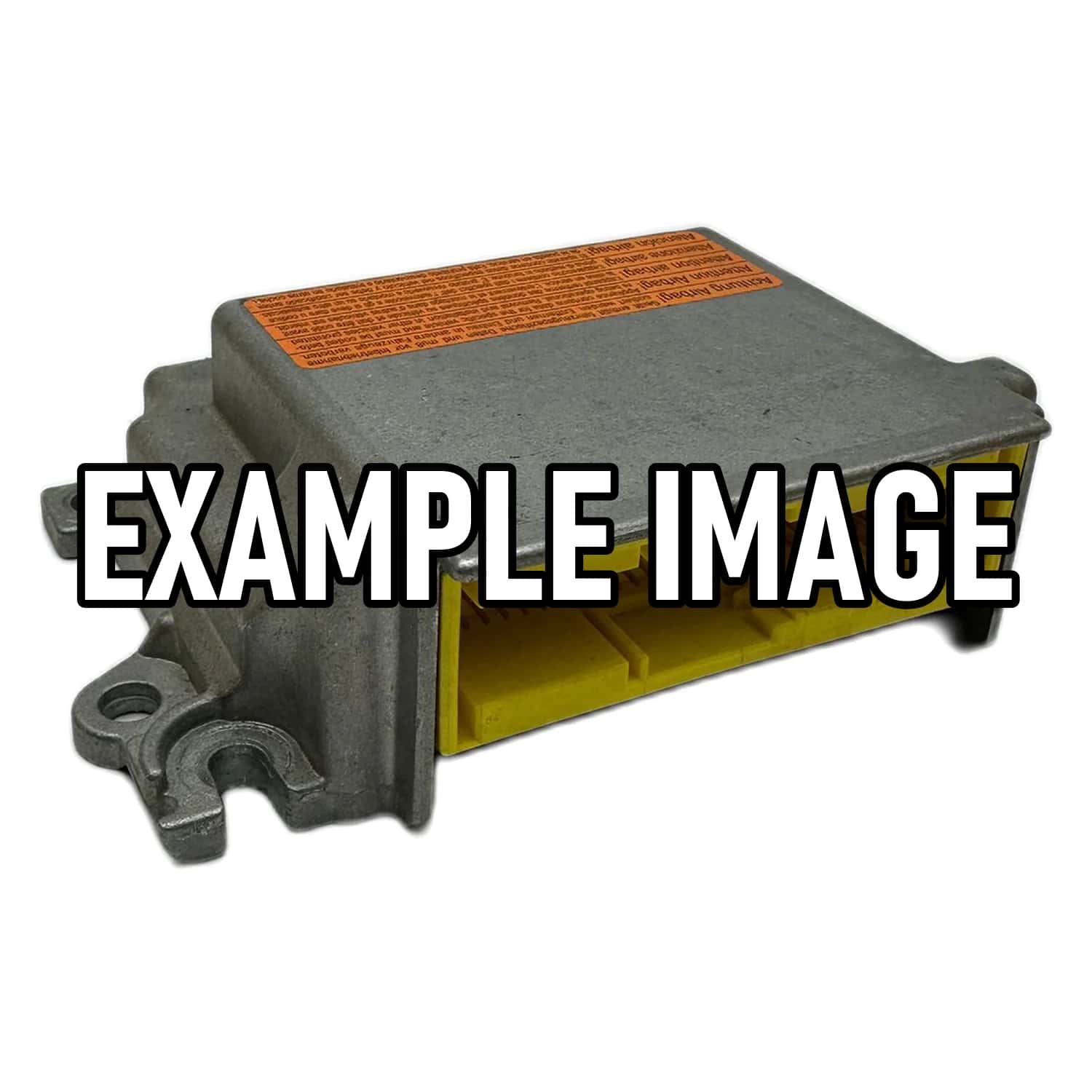
Lamborghini Diablo airbag control unit repair(7)
What should I consider with Lamborghini Diablo airbag control units?
The airbag technology used in the Lamborghini Diablo varied depending on the model year and market. Airbag control units in the legendary super sports car require specialized repair to ensure their original functionality, which is crucial for the longevity of these exclusive vehicles.
The Lamborghini Diablo was produced from 1990 to 2001 and underwent significant development during this time, which was also reflected in its safety systems. From the first purely rear-wheel drive variants to the later all-wheel drive models and limited editions, the vehicle adapted to increasing safety standards.
The earliest Diablo models, especially for the US market, already featured driver airbags as standard equipment. Throughout the 1990s, and especially after 1996 with legal requirements in the US, passenger airbags were also integrated, increasing the complexity of the airbag control units.
This technological evolution means that airbag control units for different Diablo years and models have specific characteristics. A professional repair takes these differences into account and ensures that the repaired control unit is a perfect fit for the specific vehicle.
Which Lamborghini Diablo generations are there?
The Lamborghini Diablo was produced in several development stages and model variants, with each generation using different airbag control units. The development of the safety system reflects technological progress from 1990 to 2001.
The Lamborghini Diablo's production history is rich in various models, spanning two main generations and numerous facelifts. These include the base Diablo model (1990–1998), the Diablo VT (all-wheel drive, from 1993), the Diablo VT Roadster (from 1995), and special models such as the Diablo SE30.
Later, performance-enhanced rear-wheel-drive versions such as the Diablo SV, as well as the final production model iteration, the Diablo 6.0 (introduced in 2001), and the racing version, the Diablo GTR (2000), represent the more advanced stages of development. Each of these variants could feature special modifications to the electronic system, which also affected the airbag control unit.
The different models, from the early V12 models to the powerful 6.0-liter versions, required customized electronics. This also applies to the airbag control units, whose configurations and part numbers are closely tied to the respective production year and specific equipment.
How do I identify my Lamborghini Diablo airbag control unit?
Lamborghini Diablo airbag control units can be uniquely identified by the part number on the unit, the vehicle's year of manufacture, and, if applicable, the vehicle identification number (VIN). Each generation and model variant uses specific control unit versions for optimal compatibility and functionality.
Correctly identifying the airbag control unit is crucial for a successful repair and to ensure safety. The control unit's part number, often found on a label directly on the unit, is the most important clue. These numbers vary depending on the model variant, such as the Lamborghini Diablo VT, SE30, SV, VT Roadster, GT, GTR, 6.0, or 6.0 VT.
The year of manufacture of the Lamborghini Diablo is also an important factor, as airbag technology was continuously developed throughout the production period from 1990 to 2001. The vehicle identification number (VIN) can provide additional information to determine the vehicle's exact configuration.
When repairing a faulty airbag control unit, it is essential to ensure the exact hardware and software match. This ensures proper communication with the supercar's other safety systems and correct function in the event of an impact.
What airbag equipment does the Lamborghini Diablo have?
The Lamborghini Diablo's airbag configuration varied depending on the model year and target market. While early models, especially in the US, were equipped with driver airbags, later generations and export models increasingly featured enhanced safety packages with additional airbag modules for the driver and front passenger.
In the early 1990s, airbag technology was not yet standardized in all markets. Lamborghini Diablo models for the US market were often equipped with a driver airbag from the start of production in 1990. This was a response to local safety regulations and increased customer expectations.
Starting in the mid-1990s, and especially in 1996, the passenger airbag became mandatory in the USA. This presented Lamborghini with technical and design challenges in integrating it into the Diablo's exotic interior. Nevertheless, dual airbags (driver and passenger) increasingly became standard from this point onward, often in conjunction with ABS and traction control.
In some very special or race-oriented variants, such as the Diablo GT, airbags could even be optionally omitted to save weight. This underscores the flexibility of the equipment, but essentially, airbags were part of the safety-relevant standard equipment of the Lamborghini Diablo in major markets from the mid-1990s onwards.
Common fault codes in this category
Shipping & repair from Germany
Airbag24 repairs your component in Berlin — usually within 3–4 working days.
Standard shipping within Germany is free; we normally return your part by UPS.
You pay for and insure the inbound shipment to us. On explicit request we ship by express — the extra cost is borne by the customer.
If you withdraw from the contract, you bear the cost of returning the item.