
Lancia Delta airbag control unit repair(2)
2 products
What should I pay attention to with Lancia Delta airbag control units?
The airbag technology used in the Lancia Delta varies depending on the model year. Professional repair of airbag control units for all Lancia Delta generations ensures true-to-original functionality and safety.
The Lancia Delta is a vehicle with a rich history, spanning three main generations from 1979 to 2014. Each of these generations introduced its own developments in vehicle safety.
Over the years, airbag systems have evolved from a rare feature to a comprehensive standard. This is reflected in the different requirements and technologies of the respective airbag control units, which must be precisely tailored to the vehicle series.
Which Lancia Delta generations are there?
The Lancia Delta was produced in three main generations, each using different airbag control units. The development of the safety system reflects technological advances from 1979 to 2014.
The first generation, known as the Lancia Delta Type 831, was built from 1979 to 1994. It established itself as a compact hatchback sedan and became a rally icon, particularly thanks to the legendary HF Integrale models.
The second generation, the Lancia Delta Type 836, followed from 1993 to 1999. This model positioned itself as a more comfortable compact car and moved away from the sporty image of its predecessor.
The third and so far final generation, the Lancia Delta Type 844, was produced from 2008 to 2014. It presented itself as a modern compact mid-size sedan with a focus on design, comfort, and advanced safety features.
Special sporty offshoots such as the Lancia Delta HF Integrale, Evoluzione and Evoluzione II were based on the first generation and were partly equipped with airbags in their later years of production.
How do I identify my Lancia Delta airbag control unit?
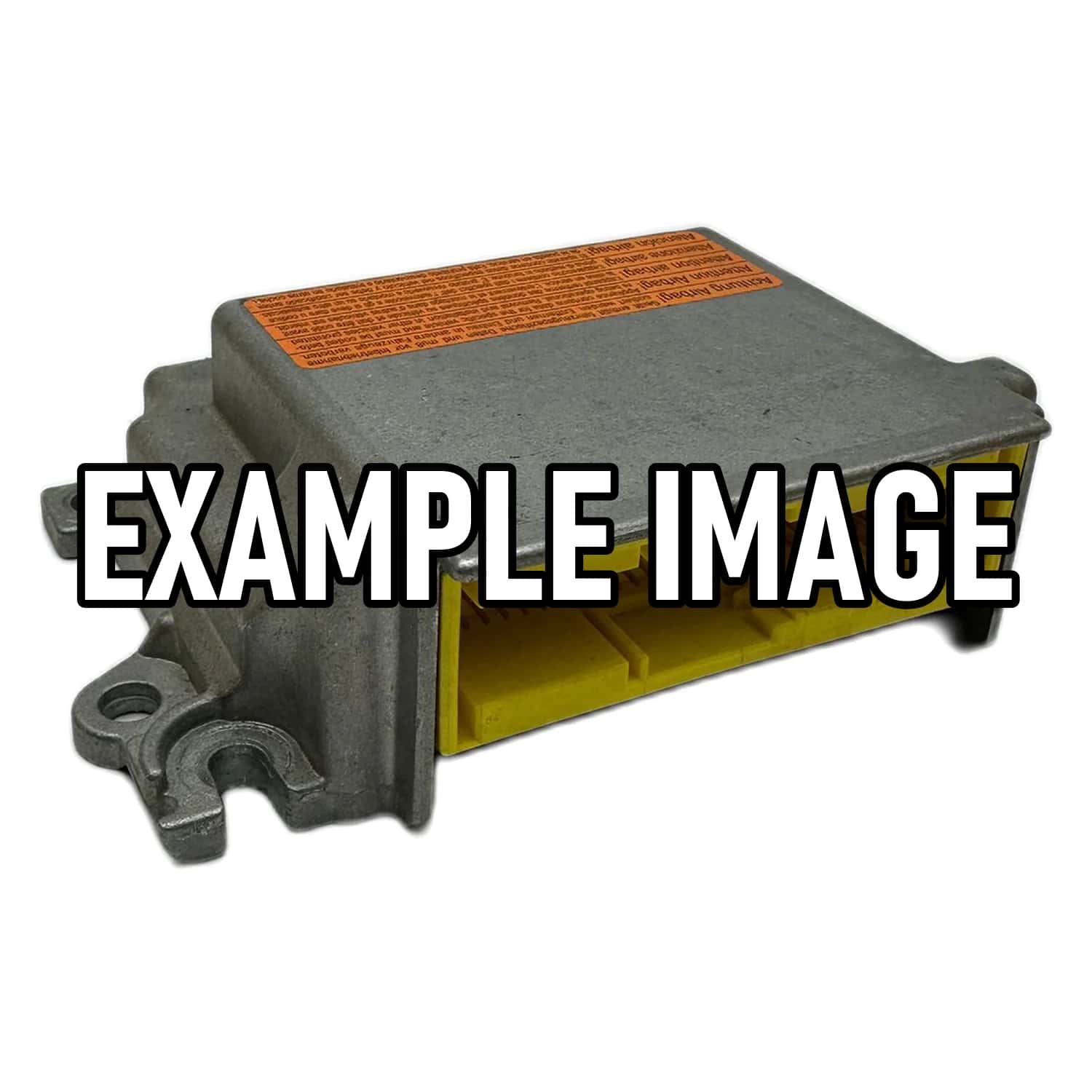
Lancia Delta airbag control units can be uniquely identified by part number, year of manufacture, and vehicle identification number (VIN). Each generation uses specific control unit variants for optimal compatibility.
Correctly identifying the airbag control unit is crucial for a successful repair or replacement. The control unit's part number is usually printed directly on the unit and provides information about its exact specifications.
In addition, the year of manufacture of the vehicle is an important indicator, as the airbag systems and their control units have evolved significantly over the production periods of the Lancia Delta models (type 831, 836, 844, HF Integrale, Evoluzione).
The vehicle identification number (VIN) provides further detailed information about the original equipment and the installed components, which helps with troubleshooting and compatibility testing of the airbag control unit.
What airbag equipment does the Lancia Delta have?
The Lancia Delta's airbag configuration varies considerably depending on the model year and trim level. While early models used basic airbag systems or had no airbags at all, newer generations feature enhanced safety packages with additional airbag modules.
In the first generation of the Lancia Delta (Type 831, 1979–1994), airbags were rare. If they were available at all, they were only offered as an option or in special versions in some markets from the mid-1980s onwards, with the focus on passive safety belts.
With the introduction of the second generation (Type 836, 1993–1999), airbags increasingly became standard. Driver and passenger airbags were already available as standard or as an important option in many trim levels and markets, significantly raising overall safety standards.
The third generation of the Lancia Delta (Type 844, 2008–2014) features a modern and comprehensive airbag system. This typically includes multiple airbags, including driver, passenger (often with a deactivation function), side, and curtain airbags. These are complemented by seatbelt pretensioners and a variety of sensors for precise deployment in the event of an impact.
The sporty Lancia Delta HF Integrale and Evoluzione models, based on the first generation, also focused primarily on driving performance. Their airbag configuration corresponded to the respective model year; in later versions, airbags could occasionally be optionally installed or retrofitted, while early rally cars relied almost exclusively on robust belt systems.
Common fault codes in this category
Shipping & repair from Germany
Airbag24 repairs your component in Berlin — usually within 3–4 working days.
Standard shipping within Germany is free; we normally return your part by UPS.
You pay for and insure the inbound shipment to us. On explicit request we ship by express — the extra cost is borne by the customer.
If you withdraw from the contract, you bear the cost of returning the item.