
Lancia Thesis airbag control unit repair(1)
1 product
What should I pay attention to with Lancia Thesis airbag control units?
The airbag control units used in the Lancia Thesis are central components of the passive safety system and require professional repair in the event of a defect to ensure full functionality. Lancia Thesis models feature a comprehensive airbag package that was advanced for their production period.
The Lancia Thesis (Type 841) was produced from spring 2002 to summer 2009 and was designed as a luxury sedan. From the outset, its safety system included a comprehensive airbag package designed for maximum occupant protection.
Airbag control units can fail due to various factors, such as crashes, water damage, or internal faults. Repairing such control units is often a cost-effective and environmentally friendly alternative to purchasing a new one, although the specific design and technology of the Lancia Thesis must be taken into account.
Which Lancia Thesis generations are there?
The Lancia Thesis was produced exclusively in a single generation, the 841. Contrary to the typical model development of many vehicles, there were no official generational changes or major facelifts during its production period from 2002 to 2009.
The Lancia Thesis' facelift was limited to minor adjustments, primarily in the area of engine variants. For example, the 3.0-liter V6 engine was replaced with a more powerful 3.2-liter V6, and the diesel engines were optimized.
Therefore, the Lancia Thesis' airbag control unit is primarily tied to the production year within that single generation, not to different model generations. The development of the safety system has remained largely consistent over the years, simplifying spare parts and repair compatibility.
How do I identify my Lancia Thesis airbag control unit?
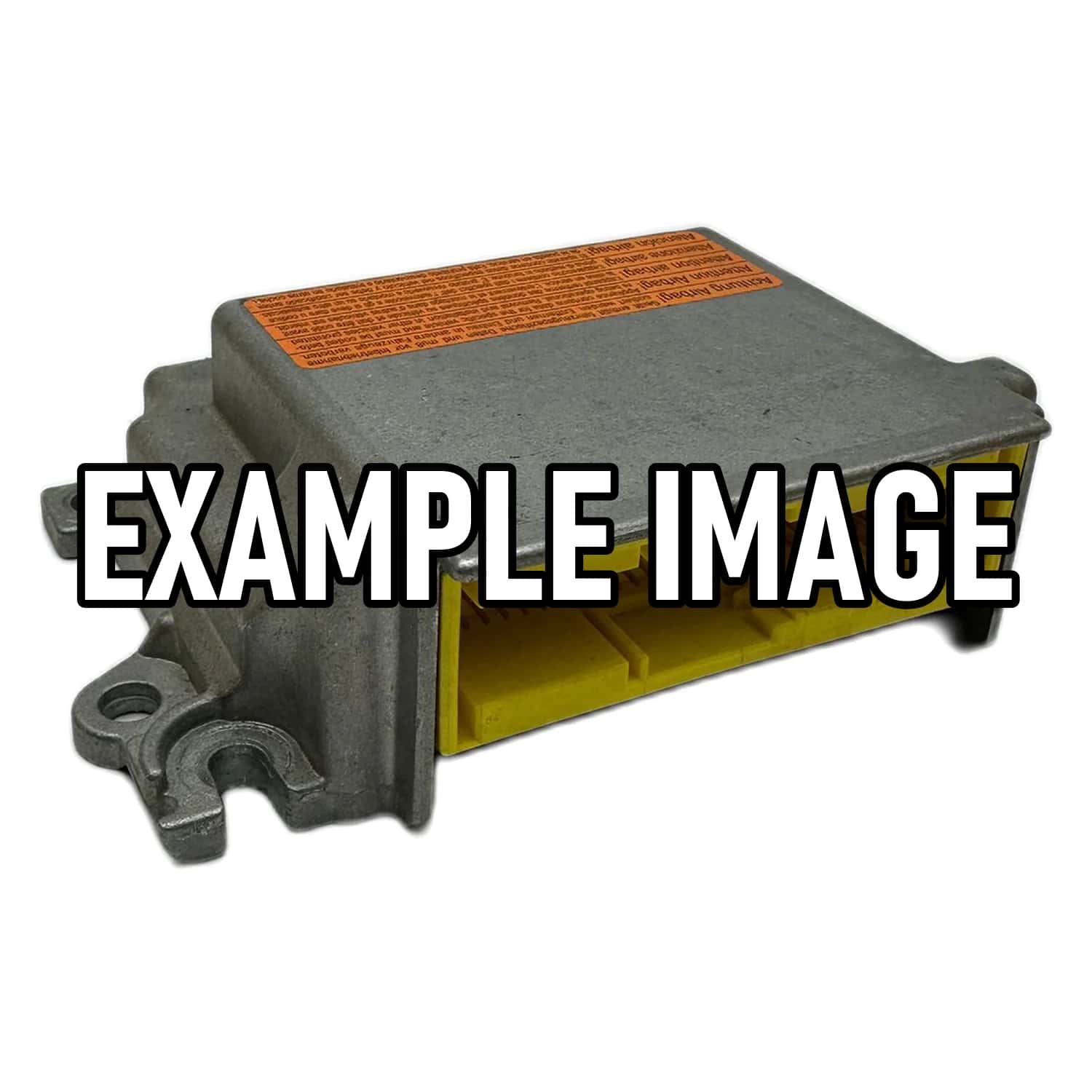
Lancia Thesis airbag control units can be clearly identified by their part number, which is located directly on the unit. In addition, the vehicle's year of manufacture and the vehicle identification number (VIN) are important features for correct identification and compatibility testing.
Each variant of the Lancia Thesis, even within a single generation, can have specific control unit variants, which are crucial for optimal compatibility. It is crucial that the part number of the defective control unit exactly matches that of the replacement or repair unit to avoid malfunctions.
For precise identification, it is advisable to check the exact part number of the removed airbag control unit before repairing. This ensures that the defective module is repaired accurately and functionally.
What airbag equipment does the Lancia Thesis have?
The Lancia Thesis was equipped as standard with a comprehensive airbag package that was considered particularly advanced for its class and model year. This system included a total of eight airbags plus additional safety features.
The passive safety features of the Lancia Thesis include two multi-stage front airbags for the driver and front passenger. These are designed to optimally distribute impact energy in a frontal collision.
The Lancia Thesis also features four side airbags, which provide additional protection in the event of a side collision, both in the front and rear seats on the outer seats. The system is complemented by two window airbags, also known as head airbags, which extend along the side windows from front to rear and protect the occupants' heads.
In addition to the airbags, the Lancia Thesis' seat belts are equipped with pretensioners and force limiters. These elements tighten the belt in the event of an impact while simultaneously reducing the force exerted on the body to minimize injuries.
A special feature of the Lancia Thesis airbag system is the ability to deactivate the front passenger airbag, which is particularly relevant for the safe installation of child seats in the front passenger seat. The rear side airbags can also be deactivated if necessary, ensuring flexibility in the use of the rear seats.
The Lancia Thesis' comprehensive airbag and belt system equipment underlines its claim as a luxury sedan that, despite its unconventional design, places great emphasis on occupant protection.
Common fault codes in this category
Shipping & repair from Germany
Airbag24 repairs your component in Berlin — usually within 3–4 working days.
Standard shipping within Germany is free; we normally return your part by UPS.
You pay for and insure the inbound shipment to us. On explicit request we ship by express — the extra cost is borne by the customer.
If you withdraw from the contract, you bear the cost of returning the item.