
Land Rover Discovery Airbag Control Unit Repair(5)
5 products
What should I consider with Land Rover Discovery airbag control units?
The airbag technology used in the Land Rover Discovery varies considerably depending on the year and model series. Professional repair of the airbag control units in all Land Rover Discovery generations is crucial to ensuring the original functionality of the safety system.
The Land Rover Discovery, first introduced in 1989, has evolved over five major generations from a rugged off-roader to a luxurious family SUV. This continuous evolution has also been reflected in the advances in safety technology, particularly in the airbag systems and their control units.
Airbag system development began with basic systems in early models and culminated in the highly complex, networked safety packages of the latest generations. Each generation of the Discovery uses specific airbag control units tailored to the respective vehicle architecture and equipment, making specialized knowledge essential for professional repair should a control unit fail.
Which Land Rover Discovery generations are there?
The Land Rover Discovery has been produced in five main generations, each with different airbag control units. The evolution of the safety system reflects technological advances from 1989 to the present.
The first generation, the Discovery 1 (L318), was produced from 1989 to 1998 and established the Discovery as a versatile off-roader. It was followed by the Discovery 2 (L319) from 1998 to 2004, which took the first steps toward increased comfort. Both series used comparatively basic airbag systems.
A significant leap forward came with the Discovery 3 (LR3, L319), produced from 2004 to 2009, which introduced an innovative "Integrated Body Frame" construction and more advanced electronics. The subsequent Discovery 4 (LR4, L319), marketed from 2009 to 2017, further refined these premium attributes and safety systems.
The Discovery 5 (L462) has been available since 2017, completing the transformation into a luxury SUV and boasting comprehensive standard airbag equipment and modern driver assistance systems. In addition to these main models, there is also the Land Rover Discovery G4, a special off-road variant, and the Discovery Sport (L550), a separate, more compact SUV model launched in 2015, which also feature specific airbag control units.
How do I identify my Land Rover Discovery airbag control unit?
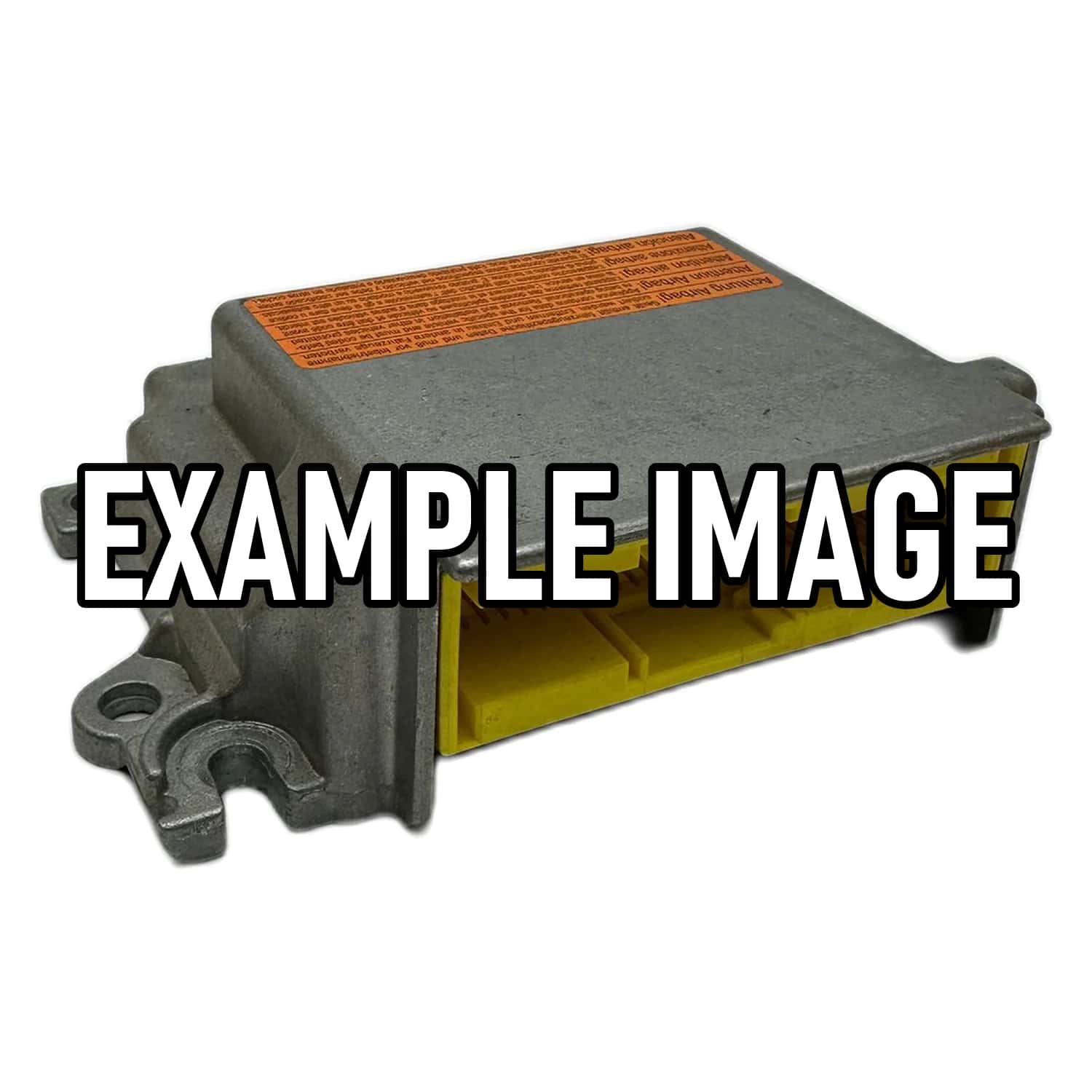
Land Rover Discovery airbag control units can be uniquely identified by the part number printed on the unit, the vehicle's year of manufacture, and ideally the vehicle identification number (VIN). Each generation and even facelifts often use specific control unit variants to ensure optimal compatibility and functional reliability.
Correctly identifying the airbag control unit is crucial for a successful repair or replacement. Because control units have undergone complex development over the years, units from one generation rarely fit into another.
To determine which airbag control unit is installed in your Land Rover Discovery, it's best to read the part number directly from the control unit. This number will provide information about the exact model and compatibility. When repairing a defective airbag control unit, precise matching to your vehicle model and year is essential to restore full functionality of the safety system.
What airbag equipment does the Land Rover Discovery have?
The Land Rover Discovery's airbag configuration varies greatly depending on the model year, trim level, and the specific model of the respective generation. While early models used basic airbag systems, newer generations feature enhanced safety packages with additional airbag modules and integrated assistance systems.
In early models such as the Discovery 1 and Discovery 2, a driver airbag was usually fitted as standard, while a passenger airbag was often optional. These vehicles laid the foundation for the model's passive safety.
Starting with the Discovery 3 (LR3), airbags, including driver, passenger, and side airbags, became standard. This generation already integrated more advanced electronic driver aids that worked hand in hand with the airbag systems.
The Discovery 4, and especially the current Discovery 5 (L462), offer a very comprehensive range of standard airbags. These typically include front airbags for the driver and front passenger, side airbags for chest protection, and curtain airbags that extend across the entire window to minimize head injuries. In addition, many of these newer models are equipped with a variety of optional active assistance systems that further enhance safety and provide the airbag control unit with important data in the event of a collision.
Common fault codes in this category
Shipping & repair from Germany
Airbag24 repairs your component in Berlin — usually within 3–4 working days.
Standard shipping within Germany is free; we normally return your part by UPS.
You pay for and insure the inbound shipment to us. On explicit request we ship by express — the extra cost is borne by the customer.
If you withdraw from the contract, you bear the cost of returning the item.